3 months ago
132
3 months ago
132
Writer Dennis Kelly has a few mantras he’s always lived by. They’re all there, clearly defined in his very earliest interviews, right from the start of his career. Write like you mean it (perhaps that’s why his plays have so much heart and drive). Never write for money and never compromise (maybe that’s why two of the best TV shows he had a hand in, the controversial conspiracy drama Utopia and the Sharon Horgan comedy Pulling, were cancelled after two series). And finally: make sure your writing always contains a secret.
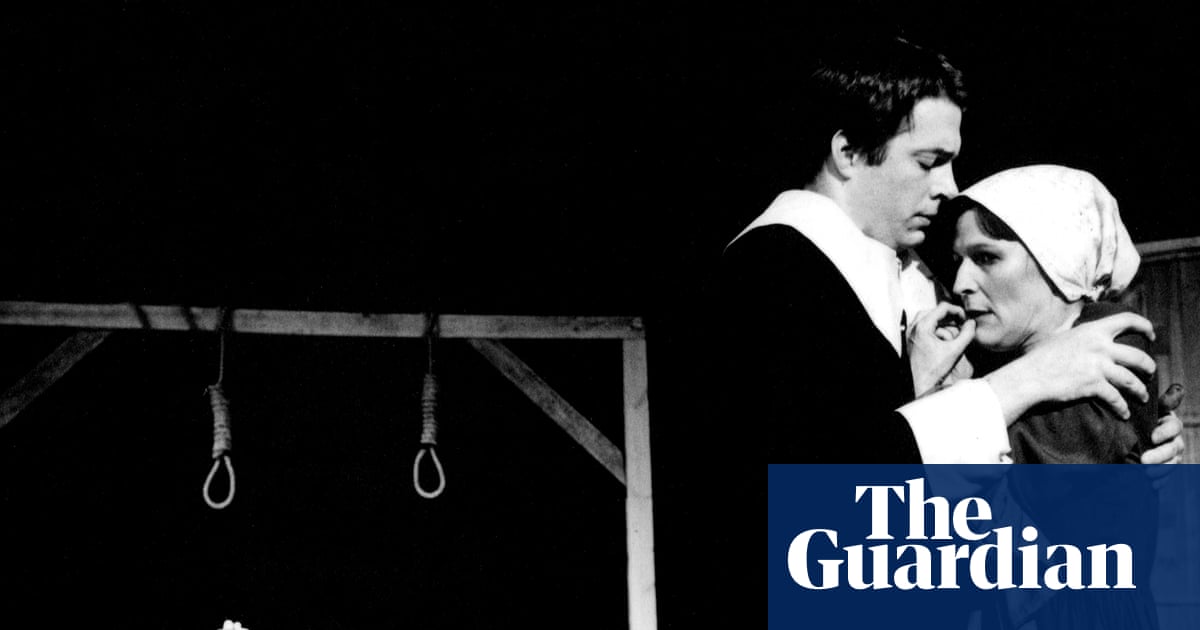
In the case of Matilda, the smash-hit stage adaptation he wrote alongside Tim Minchin, Kelly only figured out the secret hidden inside his writing long after the awards came flooding in. It turns out that Matilda, a show that glows with love but also aches with a sense of a loss, was all about Kelly’s longing to be a father – a longing that was met just a few years after the premiere with the birth of Kelly’s now six-year-old daughter, Kezia.
As we chat over video about his upcoming BBC prison drama, Waiting for the Out (WFTO), I repeat Kelly’s mantras back to him. So, what’s the secret contained inside his latest TV series? Kelly laughs and, after a thoughtful silence, offers up his answer. The secret to WFTO, which is all about men living in the shadow of a life in prison, is fear. Fear of speaking out. Fear of being vulnerable. Fear of simply being oneself. It’s the kind of fear that Kelly knows intimately: “I spent the first 30 years of my life utterly fucking terrified but always pretending I wasn’t scared. I thought it was blasphemy to admit fear. I’m not an idiot but that’s what I felt.”
What was he afraid of? “Everything! I was scared of what people thought of me. I was scared physically in situations. I was scared of who I was or who I wasn’t. I was just a fearful individual but then, at the same time, I would constantly say I wasn’t scared.” It was only in his 30s, when Kelly confronted his alcoholism, sorted his life out and started to write in earnest, that his unspoken fears finally disappeared.
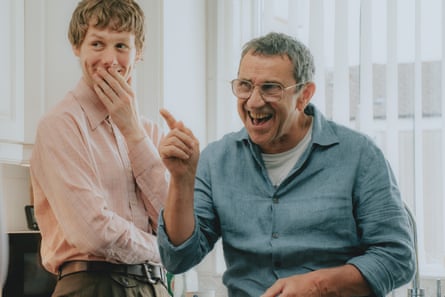
The day after our interview, Kelly – who has now been sober for 25 years – explains over email just how close he came to blowing up his life: “Living in addiction is a very fearful way to live but, for me, alcohol was the answer to the fear and shame I generally carried around with me every second of the day. It was only through catastrophic fucking up that I was able to get to a point where I could admit weakness and fear. Many men never get there and that can lead them to do stupid and terrible things.”
His upcoming series is based on Andy West’s memoir The Life Inside, which explores West’s time spent teaching in prison and the illuminating – but also deeply unsettling – impact this had on his own life. While researching the show, Kelly clocked this same debilitating fear in some of the inmates he observed inside: “I’m always amazed by how many of those big scary blokes doing hard time are really just terrified little boys. That’s not to excuse what they’ve done. It’s just to try to understand it.”
WFTO centres on philosophy teacher Dan, who has a lot in common with the real-life Andy West. In fact, for a long time the central character was called Andy West – until Kelly started to tinker with Andy’s story and felt it best to change his name to Dan. Real-life Andy, for example, isn’t in the least bit interested in finding his absent father, a man who spent a lot of time in prison and has been a difficult presence in Andy’s life. But in the show, Dan grows dangerously fixated by his father and tries to track him down.
Both Kelly and West come from working-class backgrounds and grew up in London. West’s childhood was spent in the shadow of prison, with lots of his family – his dad, brother and uncle – serving time. Thanks to hard work, determination and perhaps a smattering of luck (all ideas the show grapples with), West managed to break the cycle and carve out his own successful and very different life.
Kelly grew up in north London to relatively poor Irish immigrant parents. His father was a heavy drinker who worked on buses and his mother was a cleaner. For both Kelly and West, there’s a disconnect between who they are today and where they come from: “I’m from a fairly poor background yet I do this job. It’s the least working-class job you can have. So there’s a contradiction between those two parts of yourself,” says Kelly. “And that’s OK. I think humans are totally capable of those two contradictions. It’s OK to be working class and eat olives. It’s not some sort of betrayal.”
The show was always going to be about Andy, says Kelly: “He’s easily the most interesting person involved in this project, and I include myself in that. He reads like this very middle-class person and, because we’re so weird about class in this country, your brain turns off. You start to think you know who he is. But then Andy tells you these incredible stories and he upends your prejudices. His existence is a challenge to some of the things you didn’t even know you thought but you really fucking do.”
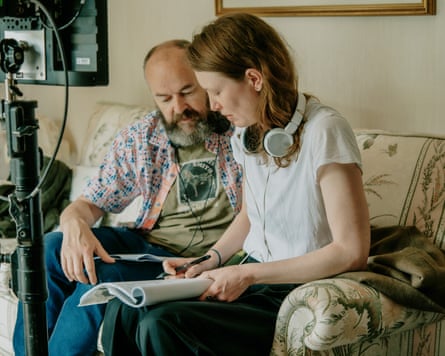
Kelly visited a number of different prisons – Grendon, Isis, Belmarsh – while writing the show. These trips were partly about seeing Andy at work but also about trying to find a new way to depict prison on screen. Something quieter, slower, hopefully a bit more truthful: “Very often when we have prison dramas they’re very tense. They’re about people getting stabbed or being extorted. It’s not that those aspects aren’t there but the truth is that a lot of what prison is about is waiting. You basically get a couple of hundred people, you put them in a building that they can’t leave and they just have to wait.”
Some of the episodes were written alongside Ric Renton, who has served hard time and was really helpful in fleshing out the show’s gently simmering depiction of life behind bars, including as an actor: “There’s a speech later on in the series when Ric talks about leaving prison and it’s his real-life experience. In prison, no one moves quickly because you don’t want to get where you’re going.”
The first few episodes are directed by Jeanette Nordahl, who also directed the show’s star, Josh Finan, in The Responder. She has a deliberately still style of directing, often sitting with her characters and just letting the silence spool. In many ways, suggests Kelly with a chuckle, it’s a decidedly old-fashioned way of making television: “A lot of modern TV feels like it did a line of speed before coming out and talking to you. And I’m not knocking that TV. I’ve made that TV. Sometimes it’s great. But after a while you just feel a bit drained by it all. We didn’t want to do that. We wanted to tell the story in a different way.”
Many of the still scenes are spent quietly observing Finan, who instils teacher Dan with an aching innocence but something much jitterier and darker, too. As the episodes unfurl, Dan’s doubts begin to crowd in on him and the mistakes of his father start to feel like his own. By the end of the series, Dan’s story is relatively resolved – although Kelly believes there’s potential for further exploration. Another series, perhaps? Kelly lets out a wry laugh: “I’ve sort of given up thinking about that sort of thing. I’ve had too many shows cancelled, to be honest. Two series and I’m out!”
There’s talk of reviving Kelly’s recent stage play, The Regression, about a movement rebelling against technological advancement. So far the play has only run in Germany, to frankly terrible reviews. Kelly, who seems equally at ease with failure as he is with success, laughs at this critical mauling: “It’s this odd fucking play but I’m going to try to make it work. Let’s see if I can get people in this country to hate it, too!” And with that, we end our interview where his career began, with a total refusal to compromise. Write like you mean it – and to hell with the consequences.
Waiting for the Out is on BBC One and iPlayer in January.