5 hours ago
9
5 hours ago
9
In the summer of 2012, Britain was in a festive mood. It was the year of the queen’s diamond jubilee and the London Olympics, and the country was celebrating. But for former hairdresser Hannah Deacon and her young family in Warwickshire, it was a summer of ambulances, hospital wards and doctors rushing in and out of emergency rooms.
Eight months earlier, Deacon had given birth to a healthy baby boy named Alfie. The early months of his life had been challenging for her and her partner, Drew, as they are for any first-time parents, but by the summer, Alfie was sleeping and feeding well, and it felt like the family was settling into the new rhythm. However, one night the couple woke up to find their baby’s little body gripped by a paralysing seizure.
The family lived in the market town of Kenilworth. They immediately rushed Alfie to their local hospital, in Warwick, but it lacked an intensive care unit and the staff had no experience of these types of seizures. Alfie’s health worsened by the hour. At first the doctors followed the protocols for an infant heart attack. When this failed, they switched to the treatment for someone suffering a febrile seizure, the convulsions that a child can suffer when they have a particularly high temperature. Alfie’s seizures were whole-body. Each time they struck him, his tiny frame would strain and convulse, and he would stop breathing. Deacon watched in horror each time her baby began to turn blue. The doctors called a number of paediatric specialists but couldn’t get Alfie into Birmingham children’s hospital – the nearest big specialist unit – as it was already overcrowded. He was finally given a bed at Stoke hospital, which had an intensive care unit for children.
In Stoke, Alfie was put on life support. “The doctors said they had to do this just to give his brain a chance to calm down,” Deacon said. “They would periodically take him off life support to see if he would stop seizing, but he wouldn’t, so they would put him back on.”
This continued for two weeks. Doctors told the family he had a virus, but they couldn’t explain what the virus was. Eventually Deacon snapped. “I just thought, sod this. He’s going to die if I don’t do something. So I found my voice, perhaps for the first time in my life. I stood up for myself and my family.”
She demanded that Alfie be moved to the best children’s hospital in the country – Great Ormond Street in London. The doctors there gave him steroids, and after three and a half weeks of seizures, Alfie’s body finally stilled.
But this month-long ordeal was just the beginning. Alfie continued to suffer seizures every few months until, age five, he was diagnosed with a condition called PCDH19, a very rare form of epilepsy. Deacon could no longer carry Alfie as he was large for his age and the seizures were no longer knocking him out, meaning that she and the doctors would have to wrestle him down to give him steroid injections. “I remember one particular night when we were holding him down,” she recalled. “I think the doctor tried 10 times to get a needle into his hand and he was screaming and screaming and crying ‘Mummy!’ It was really traumatic.”
All the options offered to the family looked bleak. Alfie’s physical and mental development had been seriously impaired by his condition. The medication he was on was destroying his quality of life while also failing to stop his seizures. Deacon decided once again to take matters into her own hands. One night she opened her laptop and typed “natural remedies for epilepsy” into a search engine. To her surprise the page was filled with links to articles proclaiming the medicinal powers of cannabis.
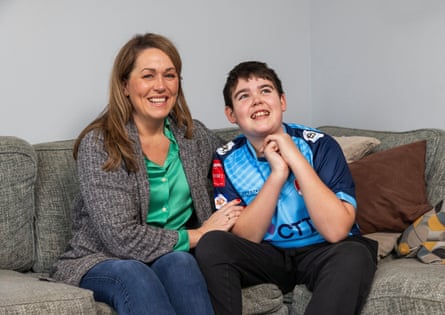
When Deacon began her research in 2017, the UK was one of the few jurisdictions in the west to classify medicinal cannabis as illegal. Cannabis had become legal for medical use in California in 1996. Since then, patients suffering from a range of ailments, including multiple sclerosis, chronic pain, glaucoma and forms of complex epilepsy, have been able to access medicinal cannabis legally, on prescription, in more and more US states and other countries every year. But in Britain it remained classed as a schedule 1 substance, the strictest level of control for drugs that were seen to have no accepted medical value. There were greater controls around medicinal research and use of cannabis than there were for even heroin and cocaine.
Today things are different. There are more than 30 private clinics currently prescribing medical cannabis in the UK. You can find them in Sunderland, Leicester and London. Adverts on the London Underground or plastered on billboards recommend that you contact clinics to discover how you might treat your chronic pain, your sleep deprivation or your anxiety with vague-sounding “exciting new herbal treatments”. Claudia Winkleman and world champion boxer Anthony Joshua have partnered with cannabidiol (CBD) companies to promote products that offer the health benefits of cannabis free from tetrahydrocannabinol (THC) – the part of the cannabis plant that causes a high.
That shift is partly thanks to campaigners like Deacon – but the reality on the ground is that, at least when it comes to accessing treatment via the NHS, far less has changed than it might seem.
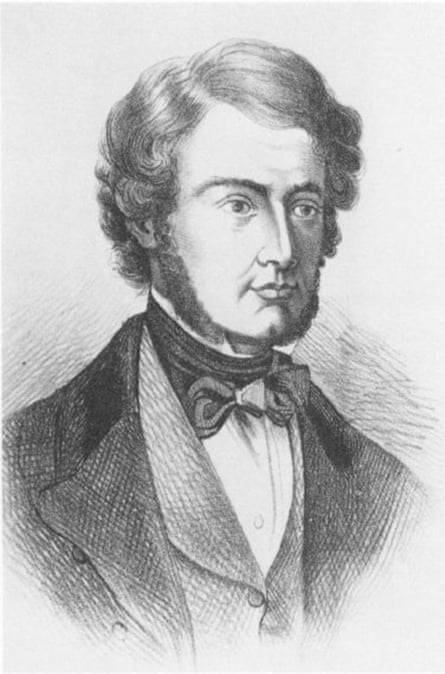
William O’Shaughnessy is remembered as one of the great medical innovators of the Victorian age, celebrated for his contributions to the treatment of cholera, by developing an early form of intravenous rehydration. He also conducted trials to show that cannabis could treat a range of human diseases. O’Shaughnessy graduated from the University of Edinburgh in 1829, just before a devastating cholera outbreak hit British shores in 1831, and his new IV treatment saved countless lives. But his maverick, experimental approach made O’Shaughnessy a controversial figure among his peers and he was passed over for the position of professor of medical jurisprudence at the University of London. With opportunities in London curtailed, O’Shaughnessy joined the East India Company as a surgeon in the Bengal service in 1833.
At the time, and for more than a century afterwards, the vast territories of the Indian subcontinent were the chief source of revenue of the British empire. With the territory came control over the world’s largest supply of the cannabis sativa plant, otherwise known as Indian hemp. At first, to the British, the plant’s value lay in the strength of its fibres. Hemp was used to make the navy’s ropes and rigging, among other commodities. The British also took an interest in the way people in India used the plant for medicinal treatments and the pleasure of intoxication.
The East India Company’s shareholders began to see an exciting new income stream. They developed a monopoly system whereby cultivators could only sell to licensed suppliers; meanwhile the East India Company controlled the trade, collecting taxes at multiple points in the supply chain. And when Britain transported indentured labourers en masse from India to the Caribbean, they brought cannabis with them to ensure that, during the long days on tropical plantations, the workers could at least comfort themselves with a traditional smoke. The transfer of populations between the West and East Indies led to a cross-cultural pollination that is embodied in the shared language, iconography and philosophy that surrounds the use of ganja in places as distant as Jamaica and India.
Upon his arrival in India at just 24 years old, O’Shaughnessy developed a fascination with the local medicinal uses for cannabis. In 1839 he wrote a monograph on Indian hemp that remains one of the most extensive scientific studies into the properties of the cannabis plant ever written. By conducting trials on fish, birds and eventually, controversially, children, O’Shaughnessy revealed the potential of cannabis in pain management. His investigations also found that cannabis was particularly useful in treating “convulsion disorders” – or what we now call epilepsy. O’Shaughnessy began sending botanical specimens to contacts at the Royal Botanic Garden in Edinburgh, spreading curiosity about the drug to the medical establishment in Britain.
Cannabis was never wholly free from controversy in Victorian Britain. But once its medical properties were known, and with both the East India Company and the British colonial authorities profiting greatly from the world’s largest cannabis-producing regions, it didn’t have the stigma and fear that would be attached to it during the 20th century. In the face of a growing temperance movement, British politicians undertook a review of the supposed dangers of the plant as part of the Indian Hemp Drugs Commission of 1893, but declared cannabis a relatively mild intoxicant. However, as the US began to push for drug control legislation at a global level, things started to change. A moral crusade against drugs became one of the first foreign policy interventions of the United States at the start of the 20th century – a crusade that was carried forward by the League of Nations, which in 1925, at the Second Opium Convention, expanded its list of prohibited drugs to include cannabis.
The new international drug laws led to domestic legislation reinforcing the bans on the non-medical use of certain drugs. The 1928 Dangerous Drugs Act prohibited cannabis in the UK for the first time (the first Dangerous Drugs Act of 1920 had criminalised opium and cocaine). Cannabis products began to slowly disappear from the shelves of apothecaries. However, it wasn’t until after the second world war that cannabis was strictly policed in the UK, where cannabis smoking was associated with degenerates, alternative lifestyles and a Black immigrant population many were suspicious of.
The creation of the National Health Service in 1948 gave people free access to highly skilled medical practitioners for the first time. But the NHS also centralised and standardised medical knowledge, pushing alternative health care approaches to the margins. Respectable British society was gripped by a moral panic about drug-taking subcultures, and any potential medical benefits of cannabis disappeared under an avalanche of scare stories.
The NHS was approaching its 70th anniversary when Hannah Deacon began researching medical cannabis for her son. The NHS is the closest thing to a unifying national symbol Britain has. Nearly 90% of British people support the idea of a free-at-the-point-of-use health service. But decades of underfunding by successive governments has weakened the NHS’s ability to keep up with new understandings of health care and, some argue, this has produced a culture that is suspicious of innovation.
Deacon’s experience of the NHS following Alfie’s diagnosis was a daily round of frustrating conversations with doctors dismissive of any suggestion that cannabis might help her son’s epilepsy. She began to connect online with families in other countries who had used cannabis effectively alongside anti-epileptics for children, and joined Facebook groups where parents shared advice about different plant strains and THC/CBD balances.
Eventually she plucked up the courage to approach Alfie’s doctors about the possibility of trying Alfie on cannabis. Medical cannabis was illegal in the UK at the time, and Alfie’s doctors stuck to traditional anti-epileptic treatment: drugs, a ketogenic diet, even surgery. Every time Deacon responded with an inquiry about cannabis, she would be shut down. One day, after Deacon asked one particular doctor again about cannabis as an alternative treatment, he put down his pen, peered over at her and muttered: “If you speak to me again about cannabis, I am going to report you to social services.”
Faced with the impossibility of getting Alfie access to cannabis treatment in the UK, Deacon began to look abroad. Most of the families she had engaged with online were in North America, but she couldn’t afford to take Alfie to the US or Canada. In the Netherlands, medical cannabis was a mainstream treatment for issues such as neurological disorders, chronic pain, musculoskeletal disorders and cancer. However, the family would have to move quickly. Brexit was looming, and once that was finalised they would lose their EU health insurance, and another door would close.
In September 2017, the family left the UK for the Netherlands. They packed their Renault Megane with toys, clothes and medication shoved alongside their two children, Alfie, then six, and his three-year-old sister. Then they drove on to a ferry. “It was fucking terrifying, the most terrifying thing I’ve ever done,” Deacon recalled when we met for breakfast in London years later. “We would have no support, no social worker and we were leaving our families behind. But it was either that or face Alfie’s death.”
In Rotterdam, Alfie began a new treatment programme with medical cannabis at the heart of it. At first, it seemed that all their efforts had been futile, as the treatment seemed to have no effect on Alfie’s condition. But the doctors kept slowly increasing the percentage of CBD – a non-psychoactive but potentially therapeutic compound found in cannabis – and when they had reached 150ml of CBD, he went 17 days without having a single seizure.
“It felt like he just opened his eyes to the world,” Deacon said. For the first time, her six-year-old son suddenly began to show an interest in playing with his little sister.
By the time the family returned to the UK, less than a year later, Alfie had gone 40 days without a seizure. Medical cannabis had proved to be essential in stabilising Alfie’s condition. Now Deacon would set about campaigning for a change in the law in the UK, to allow him to access this treatment at home.
Returning to Britain meant taking Alfie off his medication. The family knew that he would get ill again as a result. Supported by medical cannabis advocates, Deacon began a media tour, making it clear that her family were in a race against time to change the law on medical cannabis before the seizures shortened her son’s life. The family’s story captured the imagination of television producers and newspaper editors. Deacon appeared on morning breakfast shows and news panels to talk about the importance of changing the drug laws. In March 2018 she received an invitation to meet the then prime minister, Theresa May.
Over tea at Downing Street, May promised that she would instruct the NHS to work with the Home Office to secure Alfie a licence for the use of medical cannabis, and then the government would look at the law on cannabis more broadly. However, shortly after this meeting, Alfie’s application for cannabis was rejected again. Deacon redoubled her media appearances, saying she felt the government had lied to her and was risking her son’s life.
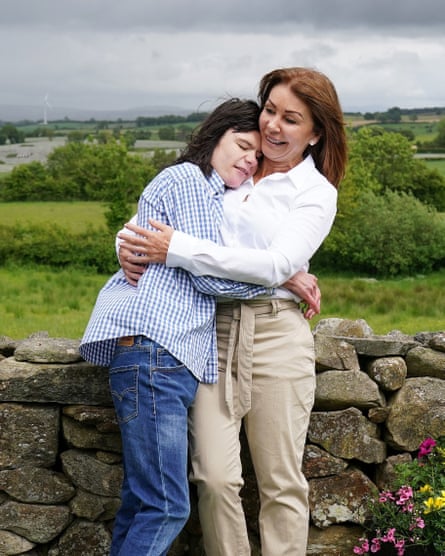
In the same year, Charlotte Caldwell from Northern Ireland, mother to Billy, another young child suffering with epilepsy, was told her doctor could no longer prescribe the cannabis oil that her son needed to control his seizures. Caldwell decided to take action: she flew back from Canada with cannabis oil for his treatment. It was confiscated by UK customs officials. Billy had a seizure just hours afterwards. National media reported the story of how the Home Office was denying a sick child his life-saving medication. The two stories created a groundswell of public sympathy. Here were two mums, from different corners of the UK, each with a story about how the government’s regressive drug laws made it impossible for them to care for their children. How many others might be out there?
Eventually, on 19 June 2018, Deacon received a phone call from one of the government’s ministers, Nick Hurd. “He told me: ‘Sorry it’s taken so long, but today you and I have changed history.’”
The law on medical cannabis across the entire United Kingdom of Great Britain and Northern Ireland would be updated, Hurd told her. Deacon breathed a sigh of relief. Perhaps hundreds of thousands of people across the UK would now be able to use medical cannabis on the NHS, to deal with a range of chronic issues.
“But then,” Deacon said, “it became clear that changing the law wasn’t actually going to help people.”
When Alfie finally received his prescription for medical cannabis in 2018, in the form of a drug called Bedrolite, it was free on the NHS. However, since then, it has not been easy for other patients to access. For the past few decades, consultancy firms have been brought in to reshape the NHS in the image of the market, introducing cuts in the name of efficiency. As a result, Britain has seen a huge growth in private health care, with 32% of Britons surveyed in 2024 now stating they have previously gone private for health treatment. The total value of the UK’s private health care market rose to £12.4bn in 2024, indicating the UK’s drift towards a two-tier medical system. And few things illustrate this two-tier system more clearly than the way medical cannabis has been rolled out since 2018.
In the years since Deacon’s efforts helped to pressure the government into legalising medical cannabis in the UK, only a handful of others have been able to enjoy the same access as Alfie. According to the NHS Business Service Authority, a total of 89,239 prescriptions for unlicensed cannabis medicines were issued between November 2018 and July 2022, but fewer than five of these prescriptions were issued by the NHS. The rest have had to go private.
In November 2018, the UK moved cannabis from schedule 1 to schedule 2, thereby allowing doctors to offer prescriptions to patients. However, resources were not invested into improving understanding of the medication among doctors, or putting in place the structures that would provide regular access for patients. Making a medication legal isn’t enough to get the doctors to prescribe it to patients. It needs a licence, which is usually obtained after verified clinical trials. Then, once it gets its licence, Nice, the UK’s National Institute for Health and Care Excellence, which provides guidance on medication and cost effectiveness, should include the medication as one of its recommended options from which NHS doctors can select.
The government has kept tight controls on the research into cannabis-based medicines, making it prohibitively expensive and a bureaucratic nightmare for scientists to build up the evidence base that would be needed for a wide rollout of the treatment on the NHS. Most cannabis-based medicinal products, while no longer legally prohibited, are unlicensed. Doctors need to apply for specialist funding when they want to prescribe it for an individual patient or request for their trust to fund it directly. NHS doctors are wary of taking up the issue of medical cannabis, and most just stay clear of it. (In 2019, the NHS launched a review into the barriers patients faced to access cannabis and admitted that many clinicians “do not have the specialist professional education” to feel confident prescribing cannabis, even when it could be the appropriate medication.)
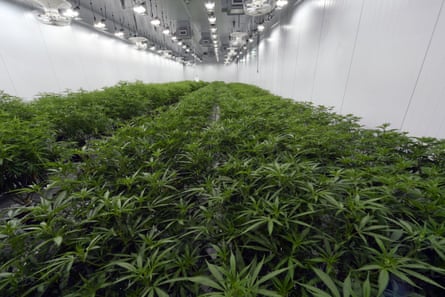
At the same time, the private medical cannabis industry in the UK has been quietly expanding. In August 2024, ITV News reported that the UK’s medical cannabis market was growing at a dramatic rate: about 10% a month, with companies launching aggressive digital advertising campaigns on Instagram and TikTok.
Pushing back against decades of stigma surrounding the drug, these marketing campaigns do an essential job in educating the public about the potential medical benefits of cannabis. But they also help promote the private clinics that are now competing to be the big winners in this area.
When medical cannabis was legalised in the UK, it was introduced in haste, under pressure, because the government feared negative press about sick children being denied medicine they had been able to access in neighbouring countries. Then the government washed its hands of the issue. Hannah Deacon was disappointed that the change in law meant so little change at clinical level. “They changed the law to shut me up,” she told me.
Today, medical cannabis in the UK is ultimately driven by profit. This means potential patients receive targeted ads on their smartphones. And NHS professionals don’t always feel comfortable providing private cannabis clinics with the full medical information about the people who walk through their doors.
The emergence of a booming private medical cannabis industry across Britain has sporadically been in the news. Recently, medical cannabis returned to the national headlines after the death of Oliver Robinson – a 34-year-old man with a history of depression and cannabis dependency who took his own life in November 2023 after being prescribed medical cannabis by a private clinic.
The renewed panic about cannabis has focused on long-held associations between the drug and mental health problems including psychosis. But it is through better regulation of private providers that the risks of medical cannabis can be minimised, while the relief it provides to patients suffering from conditions such as MS and epilepsy can be made available to many at affordable rates.
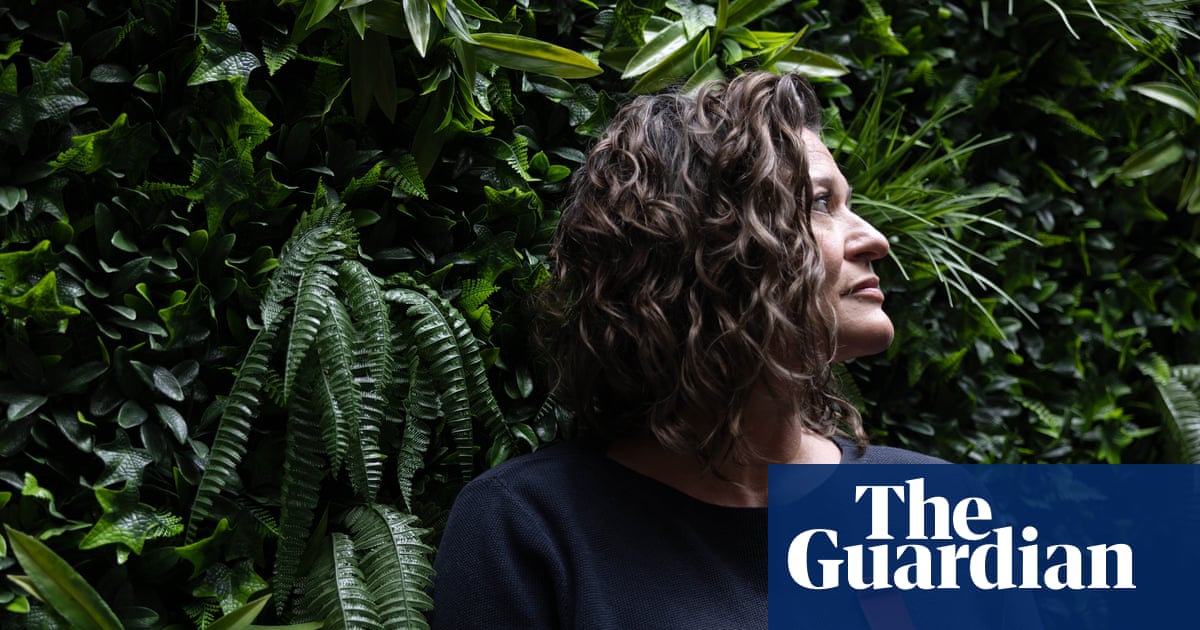
A year ago, in May 2025, Hannah Deacon passed away from cancer. She was survived by her partner, Drew, and their children. “I want Alfie to be safe and well when he’s an adult and I’m not here,” Deacon had said to me. “I don’t want him not to be able to access what helps him to be well.”
Deacon had always stressed throughout our conversations that it was important to her that the medicine would be available not only to her son, but to everybody who needed it. Her mother is carrying on her campaign. If Deacon was faced with Alfie’s illness today, while she would have been legally entitled to access medical cannabis in the UK, she would probably be forced to pay through the nose (potentially as much as £1,000 a month) to get it through the private market. For our future wellbeing as a society, we need to think seriously about how we design a post-prohibition framework for regulating drugs. With a bit of work, ours could be a society that minimises the harms of drugs while also sharing their life-changing potential benefits as widely as possible.
This is an edited extract from The Next Fix: The Winners and Losers in the Future of Drugs published by John Murray on 4 June (£22). To support the Guardian, order your copy at guardianbookshop.com. Delivery charges may apply.