3 months ago
92
3 months ago
92
With the hosts, Morocco, taking on the island nation of Comoros in the Africa Cup of Nations opener in Rabat on Sunday, there is no mistaking the excitement across the continent. Football is akin to a religion among Africa’s largely young population, with 60% of its 1.5 billion people under the age of 25.
But the timing of this Afcon, to be played over the Christmas and New Year period in Rabat, Casablanca, Marrakech, Agadir, Tangier and Fez, has never happened since the tournament began in 1957, igniting a storm of anger throughout the African football community.
Patrice Beaumelle, Angola’s 47-year-old French coach, spoke the minds of his colleagues when he excoriated the Confederation of African Football (Caf) and Fifa for shortening pre-Afcon team preparation time from two weeks to less than seven days. “Releasing a player on the 15th [of December] for an Afcon that kicks off on the 21st … it’s nonsense,” he said. “You can’t prepare a serious team in just two or three sessions.”
Gernot Rohr, who is coaching Benin in Morocco and was in charge of Gabon and Nigeria at the 2012 and 2019 Afcons respectively, says: “There is a serious lack of respect that is being shown to the Afcon. In a meeting that the technical staff of all the qualified teams had with Caf, we asked them when our players, most of whom are in European clubs, will be released, for us to begin our preparations. Caf was not able to give us a clear answer.”
The unspoken reason for that related to discussions between Fifa and European clubs, which resulted in Fifa stating on 3 December, taking a cue from the Qatar 2022 World Cup, that 15 December was the release date.
Fifa’s notice said the Caf executive committee had agreed to stage the Afcon “from 21 December 2025 to 18 January 2026, to avoid any conflicts with the Uefa Champions League and the Uefa Europa League”.
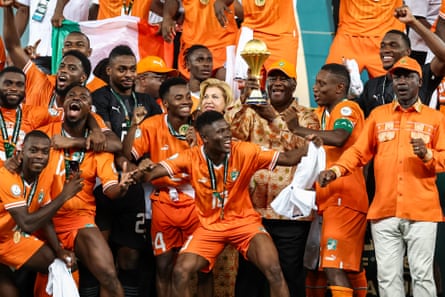
The former Cameroon goalkeeper Joseph-Antoine Bell said with characteristic sardonic wit: “This is really a special Afcon … Finding a proper fixed period for the Afcon is a priority.”
A senior Fifa official with knowledge of Afcon scheduling problems admitted to the Guardian that the current management of the congested global football calendar, directly responsible for the timing of this tournament, “is not working”.
He said: “It is clear that there needs to be a wider discussion within football, to solve the problems that come with this calendar. We must sit down, look at all the competitions and find the right compromise, to end all these problems.”
But how much respect does Gianni Infantino have for Africa’s premier football competition? In February 2020, speaking to a Caf executive committee in Rabat, Fifa’s president described the biennial Afcon as “useless” and recommended that it be played every four years, like the European Championship.

“The competitions don’t give us what they should give us,” Infantino said at the time, suggesting Afcons could be in January or June, depending on the weather conditions.
Then, in December 2021, before the January-February 2022 Afcon in Cameroon, Infantino had a volte-face and suggested the Afcon should take place between September and November. “If we can streamline the calendar and make sure that an Africa Cup of Nations could be played as part of a longer international window in the autumn, then I think we would have already achieved something quite important,” he said.
Infantino clearly did not know – or ignored – two things: that the Afcon is the major money-spinner for Caf in a way that the European Championship isn’t for Uefa, whose cash cow is the Champions League; and that the sharply contrasting climatic conditions across Africa make a singular, firm date for the tournament extremely difficult, if not impossible.
The more than $1bn (£750m) that Caf is hoping to get in guaranteed income from an impending eight-year media and marketing rights contract – for which IMG and Iris Sport Media are the final bidders – is dependent on a biennial Afcon. Caf’s president, Patrice Motsepe, has played a central role in negotiations.
But that is of no concern to Moroccans, for whom winning the Afcon is a priority before the country co-stages the World Cup with Spain and Portugal in 2030.
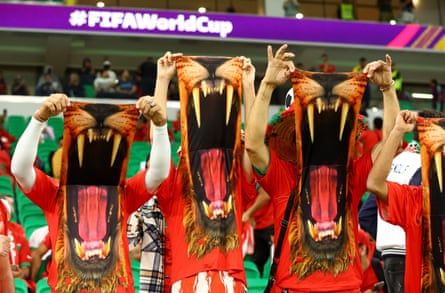
Morocco have not won the Afcon since 1976 in Ethiopia or reached a final since Tunisia 2004. And the Atlas Lions, as those of a certain age in the country well remember, failed to reach the final the last time they staged the tournament in 1988, losing to the eventual winners, Cameroon, 1-0 in the semi-finals.
“I also think of the sadness we caused Morocco,” Bell told Caf’s website. “It was a huge disappointment for them: eliminated by us, then forced to watch the final at home without their team. The stadium supported Nigeria [in the final], but we still won. We had just one Moroccan supporter that day: our bus driver! Looking back, it makes me smile, but it was a powerful moment.”
Walid Regragui is, unsurprisingly, very popular in Morocco after piloting the team to a World Cup semi-final in 2022 – a first for an African team. But the coach is acutely aware that this feat may not serve as a sufficient reservoir of goodwill to keep his job should Morocco fail to end their 50-year drought and not become champions of Africa on 18 January in Rabat.