2 months ago
100
2 months ago
100
A version of this story was published in Spanish in La Opinión.
When Jennifer Andrea Porras, a non-binary, Indigiqueer, Coahuiltecan artist and cultural worker from the San Francisco Bay Area, first found out about the New York Times investigation detailing allegations by multiple women of sexual abuse by civil rights icon Cesar Chavez, they were not surprised. The news confirmed their own experience with the co-founder of the United Farm Workers (UFW) union.
“I knew this was coming. I didn’t know how or in what direction it was coming, or who was speaking,” said Porras, now 53. “But I knew because a comadre told me about the cancellation of the Cesar Chavez Day events, and she told me: ‘Sister, I think it’s going to be time.’”
Days after the news broke, as cities across California worked to remove murals, rename streets and get rid of statues of the late Chavez, Porras was dealing with the rumbling and resurfacing of their own trauma tied to the labor movement.
While the news left many in shock and feeling disappointed, some calling it a “huge blow” to the Latino community, the testimonies of the women, Ana Murguia and Debra Rojas, also created space for other survivors of abuse to speak out. It was a point of entry for dialogue, action, care, accountability, recovery and responsibility, said Porras, a reckoning that demands justice and that goes beyond the late Chicano activist.
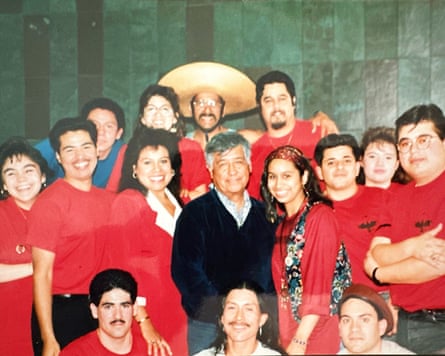
“This is really about survivors talking to survivors and those around them,” said Porras, who spoke out publicly for the first time about what they endured when they were brought into Chavez’s inner circle at his La Paz headquarters in the 90s. “And it’s really about having caregivers, parents, guardians, having everyone be vigilant and believing people and kids the first time they say something.”
The Bay Area artist disclosed in detail how Chavez had groomed them from a young age and eventually sexually harassed them on multiple occasions during their time spent at the day laborers’ headquarters in the summer of 1990.
Several people corroborated Porras’s allegations, including relatives, friends and others involved in the labor movement. They said Porras told them at different points in their life about Chavez’s abuse. Through interviews with these sources and by reviewing dated and signed photographs and other documents, details related to Porras’s accusations were verified, including locations, dates and the names of union organizers who were told at the time of the abuse.
Porras is speaking out now in hopes of creating positive change, healing and dialogue within the Latino community, and as a way to end the hush-hush culture that exists there. They hope that the wave of support and truth-telling rising from the investigation will change the calladita te vez más bonita mentality.
“Believe children of all genders, believe survivors. This is also for the kids and other people who may be going through this right now,” Porras said, noting that abusers are still present in today’s movements, homes and places of worship and power. “Those things stick with you over the years. My body still remembers, my cells remember, my bones remember.”
Porras was born in Texas into a family that has been heavily involved in the Chicano and labor rights movements, with much of their work with farm workers dating back to before Porras was born.
When Porras was 18, they were brought to live in La Paz, in Keene, California, the home and headquarters of the labor leader and the United Farm Workers. Chavez had said Porras would be an intern working as a field organizer for the union.
“Looking back, I can see how my family as a unit was convinced that this was a Chicano dream, a safe and honorable space. Working for la causa, along with our then family’s hero,” said Porras about that summer. “The whole time [Chavez] was figuring out how to get in my shirt, in my pants, how to force his mouth on me, and had me locked in my head that it was a place I could not escape.”
Like Murguia and Rojas, Porras grew up in the Chicano and UFW movements; their parents, Josie and Andy Porras, were longtime community organizers and public school teachers who worked in Texas and California school districts. The summer breaks would allow the family to often travel and work, serving and supporting campesino communities in educational settings.
In the 70s, Porras’s mother worked for Head Start in the fields in Stockton and San Jose. The program provided low-income preschool children with a comprehensive program to meet their emotional, social, health, nutritional and educational needs. Their dad, a syndicated columnist, also helped organize early conferences for Chicanos and Central and South American communities to help them explore and learn about high school and college education opportunities.
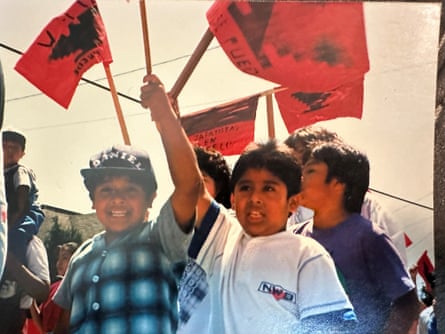
“I didn’t know any other life than the movimiento,” said Porras. “I learned how to march before I learned how to walk, sitting on my father’s shoulders or my mother’s hips, raising my fist up high like I’d see everyone around me do.”
In a column that Porras’s father wrote about the first time Porras met Chavez, he describes his child “painting her own version of the UFW eagle on the walls of child-care centers”, while other kids drew stick figures.
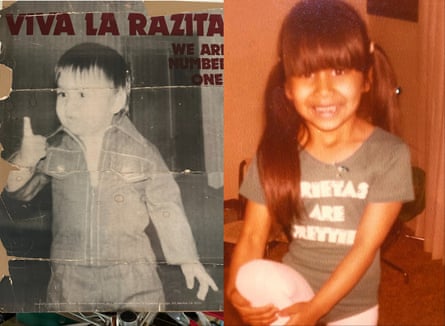
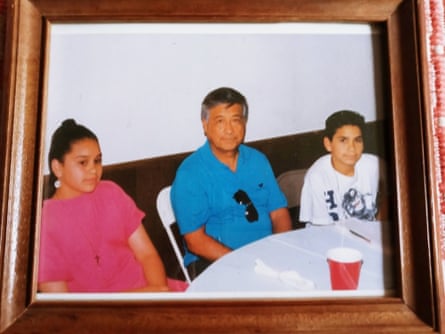
Porras said that while most of their interactions with Chavez took place when they were 18, the grooming began when they were 16, after meeting him for the first time in Stockton at St Mary’s Hall.
The moment was documented by their father in a column he wrote about the experience, and later published on multiple platforms, including Hispanic Link and the LA Times Syndicate. La Opinion reviewed a printed copy of the text.
“My dad and I were hero-struck, completely in awe of the request to have me join the union at La Paz,” Porras recalled.
In the column, Porras’s father recounts how tears of joy ran down his child’s brown cheeks at the sight of Chavez.
When Chavez approached them, asking for their name, Porras “recalled the many chats we had about respect for other human beings, the suffering of migrant children, and the reasons for the marches”, their father wrote.
Porras caught Chavez’s attention as they stood in the driveway with others while he was leaving in his car, their father wrote. At the time, Chavez was well into his 60s.
“Cesar ordered the car to stop, and he called her name, ‘Give me your address and come visit us someday,’ Chavez told her,” the column reads.
According to Porras, their father and Chavez had spoken that day, during which their father disclosed his daughter’s plans to pursue higher education in Sacramento after graduating from high school. Chavez asked Porras’s father to send them to work with him during their first summer break of college, said Porras.
Chavez acted like a sports scout that day, Porras said, and they were the athlete waiting to be recruited.
“My dad was ecstatic,” Porras said. “So it was a good opportunity in hindsight for me, for our family who is in this movement, right?”
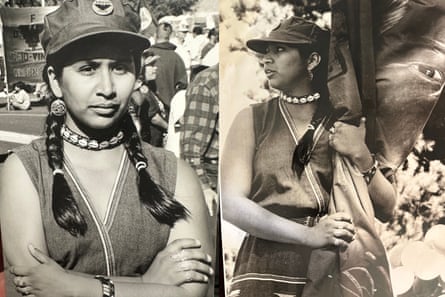
From civil rights hero to predator
From there, further attempts at communication began.
“The next thing I know, Cesar is sending me letters from La Paz, to me, not my parents,” Porras recalled. “‘Hi, how are you? It was great to meet you.’ But none of us thought anything about it at the time.”
Porras said that over the years, as a form of cleansing, they have burned some pictures, T-shirts, posters and letters from their time in the movement. Porras also can’t remember what their written responses to him were. But they said that seeing the New York Times article, which mentioned and showed proof of letters from other girls before them, was a gut-wrenching affirmation.
“It was disturbing and like a knife cutting away all the old scars of abuse and secrets,” Porras said. “The letters [to me] weren’t constant, but they always said he really looked forward to my coming to California.”
It wasn’t until Porras arrived at Sacramento State University in 1990 that things began to escalate from friendly gestures to unwanted and unsolicited attention.
At the time, Porras was 18, a freshman, and part of MEChA (Movimiento Estudiantil Chicanx de Aztlán), a political, educational and cultural organization and club on university campuses that focuses on fostering awareness of social justice issues affecting underrepresented communities. In 1990, Porras invited Chavez to be a guest speaker.
He visited, introduced himself to everyone and asked Porras to call him Tata. The visit turned into another attempt to get Porras to La Paz, Porras said.
“He really wanted to talk with me about what I would be doing with the union once I got out of school for the summer,” Porras recalled.
That same day, Chavez took Porras out to dinner with two girls, with whom he traveled to Sacramento, Porras recalled. According to Porras, Chavez insisted on riding to the restaurant alone with Porras, while the two girls took separate transportation. Once at the restaurant, he ordered vegetarian plates for all four of them, Porras said.
“He said once I moved to the compound, I would have to become a vegetarian because our body has to be ready to fast. He said our body has to be clean cause you have to be this pure machine for the union,” Porras said. “They sold me this idea that I would have the experience of becoming an organizer. Instead, I was told I would be his personal assistant and personal driver.”
“Cesar said that when I got there, ‘You are going to spend all your time with me,’” Porras recalled.
Porras vividly remembers when their parents dropped them off at La Paz, where they would live in a trailer with a woman who was like an aunt to them.
Chavez introduced Porras and their parents to the entire compound, Porras recalled, stopping at each department and office.
“He said: ‘I want them to know you’re leaving her with me, and that she’s part of our family now,’” Porras recalled. “He made all my family feel so much love, and we were all clueless. If you look at pictures, we are all smiling.”
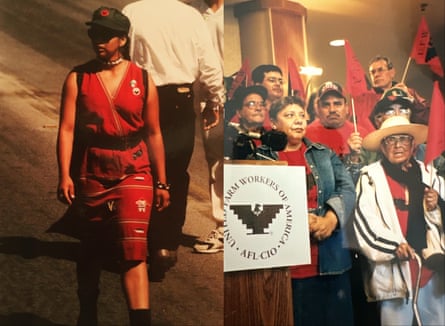
Porras would work side by side with Chavez the rest of the summer. They drove him to his meetings with growers and to speaking gigs that involved long rides on deserted dirt roads, Porras said.
In the final month of their internship, he asked Porras to meet him after hours in his office, they said, to teach breathing techniques and pressure points.
“He would insist on the door being locked more days than not, and these breathing techniques and pressure points are where he would begin to fondle parts of my body that had no business in his hands,” Porras recalled.
When Porras drove him in the car that month, they were often alone. He’d ask inappropriate questions about Porras’s virginity and sexuality, Porras said. He tried to fondle Porras on several occasions, Porras said. He would also talk to Porras about how, in other cultures, young girls being with older men was considered acceptable.
“From forced kisses, petting, to groping, that was the majority of what he would do on the roads. I had to be vigilant and ready to protect myself from his hands,” Porras recalled. “Like how many times am I going to have to hit hands or push him away or yell at him ‘No!’ because it got to a point that I couldn’t take it any more.”
For Porras, it wasn’t the first time they had been hurt by someone they trusted. When Porras was younger, they were sexually assaulted by family friends, they said.
Porras is not alone in that experience. According to the Centers for Disease Control and Prevention (CDC), more than four in five female survivors of sexual violence in the US reported that they were first raped or sexually assaulted before age 25, and almost half were first raped as a minor, before or by age 18.
For LGBTQ+ youth, the rates of sexual violence are higher. Nearly two in five LGBTQ+ youth (39%) have reported that at some point in their early life they had been forced to do “sexual things” against their will or had been sexually assaulted, according to a 2024 study by the Trevor Project.
In the US, 68.5% of sexual assaults occur at or near a victim’s home or at a “trusted” relative or friend’s home.
Porras said they do not blame their parents or hold any resentment towards them, saying they, too, were fooled.
“The hard part was our parents not really understanding the very unsafe places that they would leave us at sometimes, with people they thought they trusted,” Porras said.
When Chavez started his physical advances, it triggered and set off alarms.
Porras remembers the day they had had enough. Often, they would be driving long distances to different locations before eventually stopping along the way to rest at what Chavez called “safe houses”.
“I went to the restroom, and when I got out, he was at the door, and he bumped into me on purpose, went into the bathroom, closed the door and forced his mouth on me,” Porras recalled. “I said, ‘What the fuck are you doing?’, and I ran out. I think it was already bad to be touched by him while driving, and a whole other level to have him stick his tongue and face on me.”
After a summer of enduring inappropriate conversations, fondling and unwanted advances, Porras decided not to return to La Paz.
“I mean, I wanted to get the hell out of there. I was repelled,” they said.
“I have been telling people since this happened to me. I would just tell people: ‘If you know of someone going to that place, you tell them to give me a call. Keep your loved ones away from that place.’”
Porras recalled telling Chavez that they would out him, to which, according to them, he responded with threats.
“You will never tell people because if you tell anybody anything, no one will believe you, and you will cause everybody’s life to mean nothing, you will cause this movement to end, and for what?” Porras recalled him saying at the time. “And if you don’t believe me, try me. Do you want me to hurt your parents? Everybody knows to leave me alone.”
Porras said they told several people with close ties to the movement about what they endured that year, but some told them to keep quiet. From then on, they would only tell those they trusted after leaving La Paz.
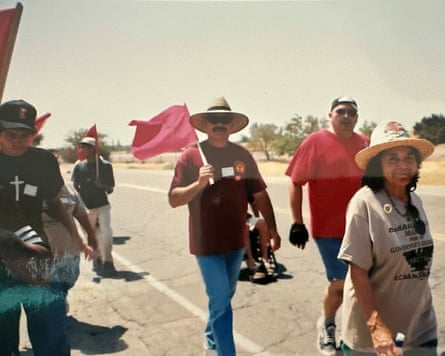
“That’s why I want to talk about this now, because we have to listen to people the first time, and we can’t question their sanity, why they are telling us, or questioning what we were wearing. We just need to listen to people when it happens,” said Porras.
When news of the accusations came out, Porras said it was the first time in years that their body had remembered certain memories, smells and details from that time – like the way the floors creaked in the housing at La Paz.
“It was very visceral, very gross, gross in that I felt I could taste and smell Cesar again,” Porras said, physically showing discomfort at the thought. “Which I thought I was over ever smelling or sensing him in that way for a long time.”
When asked whether what they experienced led them to stray away from the movement, Porras said no; they always maintained their involvement to an extent, while staying away from anything organized by Chavez. For Porras, it was important to remain involved in the movement even after his passing, for the sake of the campesinos they worked with.
As for Chavez’s legacy, Porras said the movement was never about him.
“I have chosen to hold on to the few special and unique relationships that came out of that time, who to me even today are my mentors, my friends and loved ones, people that I consider my chosen family,” Porras said.
Throughout the years, Porras has become a well-known member of their community, not just for their advocacy work in the Chicano movement but also for their artistry as an Indigiqueer artist, which they have used to tell stories of murdered and Indigenous women, among other things.
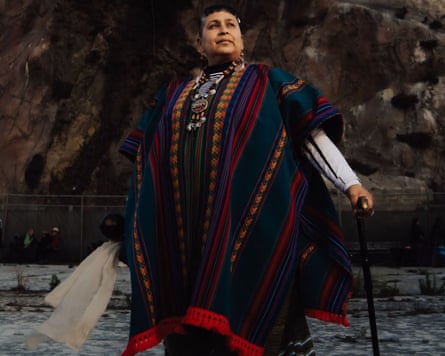
“I am only alive right now because of my son, art and because of the Black, brown, Indigenous and Indigiqueer community who listened to me, who have held me, in times where I did not want to be here,” Porras said. “For years, I allowed myself to believe that I wasn’t worthy of real peace, real happiness or just anything good.”
For Porras, the last few weeks have not been easy; to survive, they have leaned on friends, family, prayer and ceremony to heal wounds that have reopened. But they said the revelations have finally allowed them to lift the weight off their shoulders, and hopes others are able to do the same as they, too, speak their truth.
“It reminded me that life is worth living and that it wasn’t our fault,” Porras said. “The suffering that [Chavez] has caused and the lives that he has curbed and everything we have lost because of what’s been stolen from us, it ends here. It’s now time to pull ourselves back together and know that we are better than OK. We are holy, we are divine and we are sacred.
“Let us love ourselves more, let us recognize our wholeness and self-worth to acknowledge ourselves as human beings that deserve peace.”
This article was produced by a reporter who is under the California Local News Fellowship program at the University of Berkeley