3 months ago
112
3 months ago
112
Marcelino Sambé is hanging upside down from a scaffold tower. “It’s scary,” he tells me. Nevertheless he swings, he swoons, he balances with limbs entwined around the narrow bars, reaching up to an imagined starry sky (it’s actually the high ceiling of a Royal Ballet rehearsal studio in Covent Garden). This is the iconic opening of the ballet Pierrot Lunaire, where a childlike clown is wonderstruck by the sight of the moon.
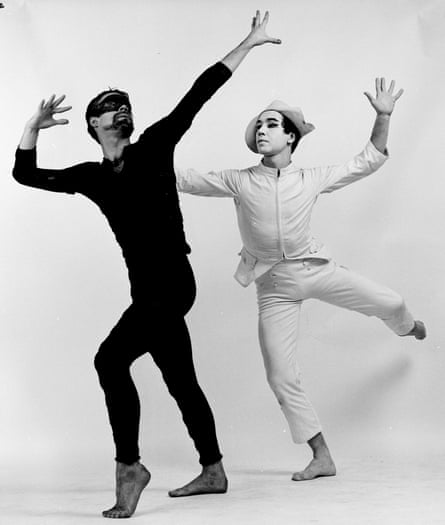
Made in 1962 by the US choreographer Glen Tetley – whose centenary is celebrated this year – Pierrot Lunaire is a distinctive, eccentric, challenging work, set to Arnold Schoenberg’s atonal song cycle of the same name. It’s based on poems by Albert Giraud, delivered in sprechstimme, a vocal style halfway between song and speech that sounds sometimes like singsong nursery rhymes, elsewhere like a ghostly aural apparition. The ballet is not regularly performed – the last time the Royal Ballet danced it was 20 years ago – but it has a special status in the ballet rep, as a pioneering example of blending modern dance with classical, and as a juicy role for its male lead as the sad clown Pierrot, the commedia dell’arte stock character here given an emotional journey of surprising depth. It was Rudolf Nureyev’s favourite ballet, apparently.
This season Pierrot will be danced alternately by Royal Ballet principal Sambé, one of the company’s leading men, and soloist Joshua Junker. Sambé is much loved for his winningly sunny energy but here he’s tapping into his wide-eyed vulnerable side, as Pierrot’s hopeful naivety is punctured by encounters with Columbine, the object of his unrequited affection, and the antagonist Brighella, whom Tetley called “the dark clown of experience”.
“For a while I found it really hard connecting with this piece,” says Sambé, seeing the stock character as two-dimensional, but working with Christopher Bruce, who was a famed interpreter of the role in the 1960s, unlocked it. “What makes it so poignant and emotional is that this archetype is full of human traces,” says Sambé. “It’s about bringing something of my DNA to it. It’s deeply layered, comedic but based in darkness, a place of huge contemplation, self-discovery and curiosity.”
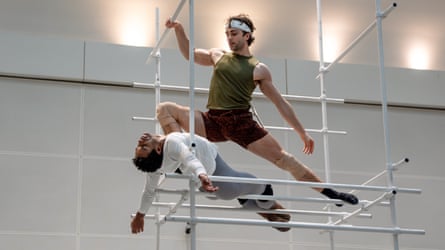
Junker sees the piece as a journey from innocence into adulthood and its harsh realisations: “There is pain, there’s suffering, there’s responsibility”. “It’s a really symbolic piece,” he says. “Brighella is his own character but also represents Pierrot’s internal relationship with himself, like the shadow in Jungian psychology.”
Both dancers initially found the music a challenge. “In the beginning I was horrified by it!” says Sambé. He’d previously danced to Schoenberg’s earlier, more Romantic string sextet Verklärte Nacht, which he loved, “but this was probably his least accessible work for me.” The mercurial sounds of the small instrumental ensemble and the soprano’s swooping delivery makes for a mood that’s eerie, fantastical, funny and strange. Music is often a rhythmic driver for a dancer, “but with this score, music becomes a feeling,” says Sambé. “Almost like an organism in itself, with its own veins and blood.” He’s acclimatised to it. “Now I find myself in the kitchen, chopping onions, listening to Pierrot Lunaire.”
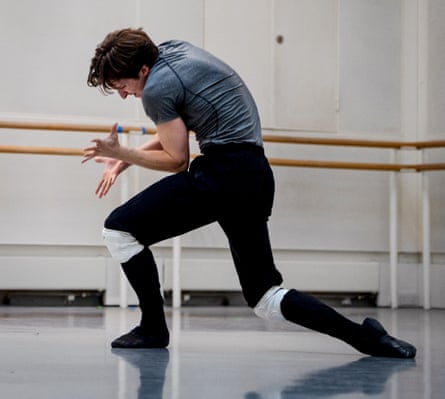
Tetley himself was the first Pierrot. His early dance career in the 1940s and 50s was spent with classical companies (Joffrey Ballet, American Ballet Theatre) and at the vanguard of modern dance, working with Hanya Holm and Martha Graham. He brought all of those influences to his own choreography, mixing a more contemporary use of the body with classical steps – revolutionary at the time. He was instrumental in bringing that style to the UK as well, helping the company then called Ballet Rambert transition into a modern dance troupe.
Pierrot Lunaire is 40 minutes long and, unusually, for these performances the ballet will be performed as a standalone piece, rather than as part of a double or triple bill. “It’s going to be a very intimate experience,” says Junker. “Just the three of us, close up on a small stage, so there can be a real focus on the dancers and the music.” (The music will be played live.) Sambé describes it as “putting a magnifying glass to [Tetley’s] vision”. Learning the ballet has been an education for Sambé, “to understand a bit more about this modernist moment in dance, the influence of Martha Graham and this new age of movement, the high level of craftsmanship.”
He’s inspired by the fact that choreographers and composers of the era were deliberately challenging their audience. “It’s something that is confronting, not just ballet that is comforting,” he says. “We don’t experience work so much like this any more, at least in the dance that I see. It’s going to be uncomfortable and funny, poignant, sad and beautiful at the same time,” he predicts. “It leaves you with more questions. And I love work like that.”