3 months ago
130
3 months ago
130
Some traditions are getting harder to maintain. Among them, my own custom of devoting the last column before Christmas to reasons to be hopeful. In recent years, amid war and bloodshed, that task has been especially challenging – and this week was no exception.
It began with the news from Bondi beach, where 15 people were gunned down and dozens more injured, most of them Jews celebrating the festival of Hanukah. That came just two-and-a-half months after the deadly attack on Heaton Park synagogue in Manchester, on the holiest day of the Jewish calendar, Yom Kippur. To be a Jew at the end of 2025 is to fear that to gather together, whether at moments of joy or sorrow, is to take a mortal risk. That even to do relatively ordinary things together has become a matter of life and death.
But Hanukah is not over, and its defining theme is finding light in the darkness. And so, in that spirit, I’ll keep up my own little tradition – and, as it happens, the massacre in Sydney is the ideal place to start. For there, in the pitch black of a murder spree fuelled by hate, were multiple points of light.
The global imagination has been captured, rightly, by the heroism of Ahmed al-Ahmed, the passerby who, with no weapon of his own, tackled one of the two attackers, even wresting his gun from him. In an instant, al-Ahmed disproved the very case the gunmen were doubtless trying to make: that Muslims are somehow commanded to see Jews as their enemy, a foe to be destroyed. In an act of mind-boggling courage, he showed that the human urge to save the life of a fellow human being is more powerful.
Al-Ahmed was not the only one to feel that urge. Footage has emerged of a retired couple, Boris and Sofia Gurman, both in their 60s, making a similar move, tussling with one of the gunmen and grabbing his rifle. For a moment Boris seemed to succeed, wrestling the man to the ground. But the attacker apparently had another gun, and he used that to shoot Boris and Sofia dead.
Meanwhile, 14-year-old Chaya Dadon gave up the place of shelter she had found – hiding under a bench as the bullets flew – to heed the plea of a mother desperate to save her children. Chaya came out from her spot under the bench and lay her own body on top of the little ones, shielding them from the gunfire until, a few moments later, she herself was shot in the leg.
In each case, and during a moment of absolute terror, these people demonstrated immediate, instinctive and unfathomable courage. If there is a reason for hope this year, this might just be it: that courage is to be found, even in the bleakest places.
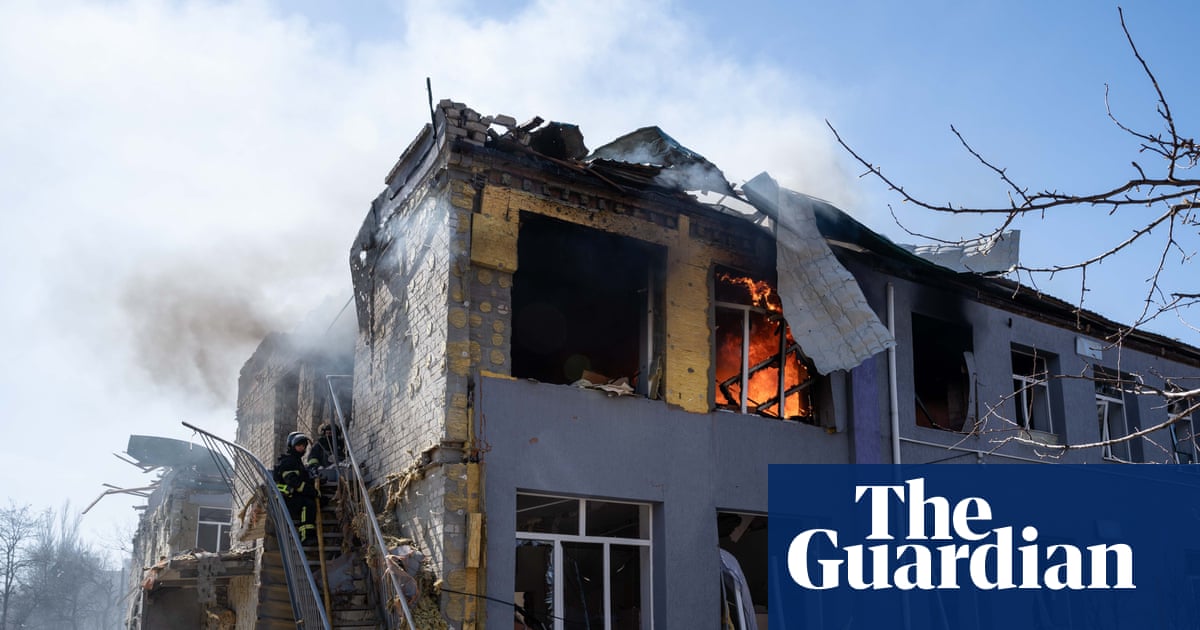
So it’s easy, when following the diplomatic twists and turns, to forget that the people of Ukraine have been enduring persistent Russian bombardment for nearly four straight years. Just to keep living, as deadly drones circle overhead, requires a bravery those of us who live in a country that last came under attack 80 years ago can scarcely imagine.
Or think of the people of El Fasher, the Sudanese city where huge piles of bodies are heaped on the streets, from where more than 150,000 residents are missing, feared dead – with as many as 60,000 believed to have been killed in three weeks. Humanitarian observers say El Fasher now looks “like a slaughterhouse”, even as the paramilitaries of the Rapid Support Forces are hard at work destroying the evidence of the massacre they committed. Think of the strength it must take to keep going, day after day, in Sudan, where this latest round of bloodletting has gone on since April 2023 but which has known brutal conflict for decades.
The same is true of the Palestinians of Gaza, many of whom have spent the past two months returning to homes utterly destroyed by an Israeli bombardment that went on for two years, after the Hamas attacks on southern Israel of October 2023. Just to endure, to put one foot in front of the other amid so much grief, with as many as 70,000 killed and whole neighbourhoods obliterated, is an act of bravery.
Imagine, then, the courage of those who have not only withstood the Israeli onslaught, but have dared to protest against their Hamas masters. According to an Amnesty International report in May, hundreds if not thousands of Palestinians demonstrated against Hamas rule, only to face “interrogations and beatings by Hamas-run security forces”. After the Hamas-Israel ceasefire and partial Israeli withdrawal in October, the punishment became more severe: footage emerged of Hamas staging public executions in a Gaza City square. And yet, there are still Palestinians in Gaza who dare stand up and say no.
I think of someone I have got to know these last two years. On 7 October 2023, Sharone Lifschitz learned that her parents had been seized from their kibbutz, Nir Oz. Her mother, Yocheved, then 85, was held hostage until she was released 16 days later, famously parting from her Hamas captors with a handshake and the word “shalom”: peace. In February of this year, Sharone received confirmation that her father, Oded, had been killed.
Throughout, Sharone campaigned for the return of the Israeli hostages – but she also campaigned, tirelessly, for an end to the war. You would find her outside Downing Street, standing among those Israelis holding photographs of Palestinian children killed by Israeli airstrikes. Her family has been stricken by terror conducted in the name of the Palestinians; but she has never stopped demanding justice and statehood for the Palestinians, even when that puts her at odds with many of her fellow Israelis. She is brave.
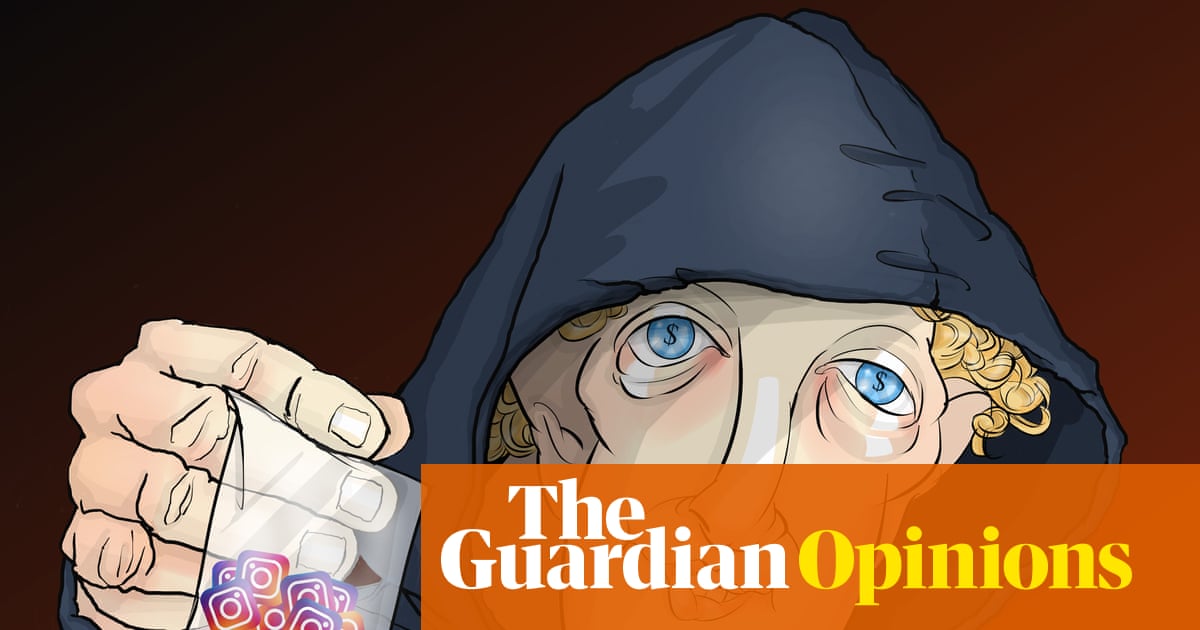
And I think of those not confronted by war, but who nevertheless find the strength to face down the mighty. It could be the Indiana Republicans who dared defy Donald Trump by refusing to go along with a gerrymandering scheme that would have handed him a partisan advantage. Or the Scottish couple, Ros and Mark Dowey, now taking on one of the world’s most powerful corporations, suing Meta for the alleged wrongful death of their 16-year-old son, Murray, who took his own life after falling prey to a “sextortion” gang on Instagram. The Doweys know what they’re up against. But they are determined that a seemingly all-powerful body finally be held to account.
This week and last, I saw what that kind of courage looks like. I sat in on several sessions of the public inquiry into undercover policing, watching as one of the women deceived into a long-term relationship with a man who turned out to be a cop told her story – and as that former police officer wriggled and wormed his way through his own testimony, repeatedly confronted with the hard, documented evidence of his deception. Full disclosure: the woman, known as “Alison”, is an old friend of mine. Even so, I was awed all over again by the courage she and the other women have shown for decades in refusing to be cowed by the Metropolitan police, insisting instead on hunting down the truth and demanding that a police force that countenanced this sex by deception – which the women involved regard as rape by the state – explain itself.
For much of the past three years, I have been immersed in the story of a handful of anti-Nazi Germans who dared resist the tyranny of the Third Reich, several of them paying for their defiance with their lives. I’ve told their story in a book, The Traitors Circle. Many readers, daunted by the jaw-dropping bravery of those long-ago men and women, have assumed such courage exists only in the past. But that’s wrong. It lives on now, all around us. It’s there if we look for it – lighting up the dark.
-
Jonathan Freedland is a Guardian columnist and the author of The Traitors Circle: the Rebels Against the Nazis and the Spy Who Betrayed Them
-
Do you have an opinion on the issues raised in this article? If you would like to submit a response of up to 300 words by email to be considered for publication in our letters section, please click here.