3 months ago
138
3 months ago
138
The number of people who die within two weeks of being released from prison in England and Wales has reached a record high, a Guardian investigation has found.
Seventy-seven people died within 14 days of being released from prison in 2025, 28% higher than the 60 deaths recorded the previous year and the highest since records began in 2021.
Experts said a primary driver of the crisis was a rise in prisoners being released into homelessness, with too many falling through “trap doors to crisis” owing to a lack of available housing.
Analysis of Prisons and Probation Ombudsman (PPO) reports published to date found that one in four people who died were released homeless. Separate Ministry of Justice data showed that almost 13,000 people left prison homeless or as rough sleepers in the year to April 2025, a 39% rise from the previous year.
The reports detail cases including that of Robert Barraclough, who died the day after being released from HMP Nottingham in October 2022, aged 47. He had told staff he was afraid of having to sleep in a tent in the cold on his release, and began to self-harm in prison.
Darren Docherty, 48, had a history of mental ill health and self-harm, and killed himself six days after being released from HMP Stoke Heath in August 2023. He had told his GP that stress of having nowhere to live was affecting his mental health, and he had been living in a tent after being turned down for emergency accommodation via the council.
Enver Solomon, the chief executive of the social justice charity Nacro, said the deaths were a “hidden tragedy”.
“People come out of prison, they die and it goes unnoticed,” he said. “And these deaths are avoidable. We shouldn’t see it as something which is an inevitable consequence of people that have got a whole range of issues and challenges in their life.
“We see every day the difference having somewhere safe and secure to live, and the right support, can make to someone and how it can be a matter of life or death, tragically.”
Solomon said shortages of social and supported housing, and the inaccessibility of the private rented sector where landlords often require guarantors and deposits, left people with nowhere to go.
“We come across people who commit offences so they can go back into custody to get a bit of respite, because they know they will have a roof over their head, they will get food, they might get access to the medical wing, they will get some substance misuse support,” he said.
While there is no directly comparable data before 2021, research published in 2019 found the number of people who died while under post-release supervision in the community increased each year from 2014.
The report by the charity Inquest found that 2,297 people died between 2010 and 2019, against a backdrop of major changes to probation services.
The PPO has carried out independent investigations of complaints and deaths in prison since 2004. In September 2021, it started investigating deaths that occur within 14 days of a person’s release.
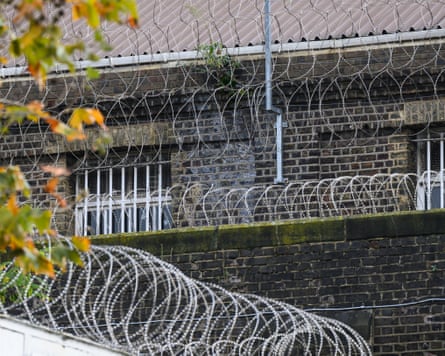
The number of people who were released homeless before they died is likely to be an underestimation as more than 100 reports are still under investigation. In total, 308 deaths have been recorded within 14 days of release from prison since September 2021, according to the latest data.
Data released recently by the Ministry of Justice also showed that the number of prisoners on licence being recalled to prison had reached 14,349, a record high in October to December last.
A quarter of these recalls were for a “failure to reside”, meaning a released prisoner was not living at an approved address.
Pavan Dhaliwal, the chief executive of Revolving Doors, a charity that works with repeat offenders, said secure housing was the “one core element to any form of rehabilitation”.
“Prisons are already overcrowded and then you’re sending people back because they don’t have accommodation. It is absurd,” she said. “The prison gates you’re being released through should be a bridge into rehabilitation when actually it’s a trap door into cycles of crisis and crime.”
The charity is working with Stephen*, 31, who has been in prison dozens of times over the past decade, often being recalled for not living at an approved address.
“They were releasing me sometimes with a fiver in my pocket and they were putting me out on the streets. I would only be out for two or three days. Sometimes I even got arrested the same night,” he said. “I slept on the streets a lot of the times, in doorways around town. They just release you with nothing.”
If he was not recalled for breaching his licence conditions, his unstable living situation often pushed him back into crime. “I couldn’t get a job. What employer wants to hire a lad who hasn’t got anywhere to live? Who hasn’t got shower facilities? Crime was easier to just keep going back to for a very long time,” he said.
Stephen said in the last eight weeks of a sentence he would try to access housing support in prison, but the waiting list was so long he would not have received any help by the time of his release.
“There were just so many people in the same boat. They may as well just turn around and say: ‘Sorry, there is nothing for you’, but they dangle a carrot and keep saying: ‘We’ll find somewhere’, and then at the end of the day, they never do,” he said.
“Some people are getting out and they’ve got their own house and a missus, but if you’re a single lad and you’ve not got much, you’ve lost all the ties with your family and nobody wants to know you, you’ve got nothing.”
* Name has been changed to protect anonymity