2 months ago
142
2 months ago
142
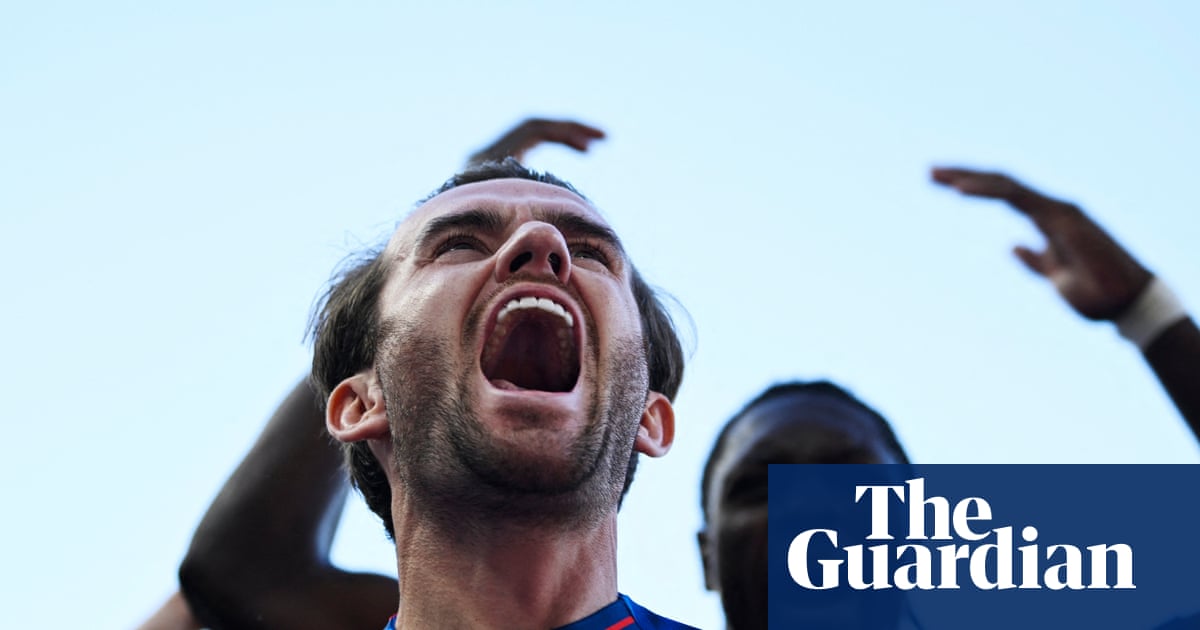
France will look a little different this summer. “Naturally, it seems a bit more attacking than usual,” Adrien Rabiot says. “I think it is good because we have the players for it.” Lucas Hernández adds that France have “the best attack in the world” and Rayan Cherki talks about “crushing” opponents at the World Cup.
Rabiot says: “I think that we have one of the most well-equipped teams in an attacking sense. We have real threats from the start but also from the bench and that is very important in a World Cup … it is great to have all of this quality.” If France seem more attacking, it is because they are.
In his final tournament as Les Bleus’ manager, Didier Deschamps has taken nine forwards, including a new “Fab Four” consisting of the captain, Kylian Mbappé, Ballon d’Or winner Ousmane Dembélé, the mercurial Michael Olise and the silky Cherki. Add to that Désiré Doué, Bradley Barcola, Maghnes Akliouche, Jean-Philippe Mateta and Marcus Thuram, and you have an unrivalled attacking armada. The aim, in Deschamps’ words, is to be “less predictable, less readable”.
But beware. Arsène Wenger says that “the danger is becoming a bit offensively unbalanced”. Rabiot shares the former Arsenal manager’s sentiment and expects to play his part in being part of the solution. “I have spoken with the manager and my role on the pitch with France is different to that which I have at Milan [where he is a box-to-box player]. At this level, balance plays a big part.”
Rabiot’s task is primarily to allow others to shine rather than stealing the limelight himself. “We all have a role. You have to be humble about that,” he says. “I try to do my work as well as possible to allow the players in front and behind to perform as well as possible … attackers and goalscorers are valued more than midfielders or defenders. There is no problem about that.”
It is a role that N’Golo Kanté is accustomed to playing, not that it has stopped him from earning plaudits. “There are players who play an important role but who are maybe promoted less. That’s the case for N’Golo. He gives everything when he’s on the pitch. Even if he isn’t always the best player, he is someone who has that desire, that determination to give everything.”
At 35, Kanté is now rarely a starter, but that doesn’t prevent him from being “a very important player in the team”, according to Rabiot. The ground covered by the former Chelsea and Leicester midfielder once allowed attackers to be absolved of defensive duties. Football has changed. “Nowadays, it can’t just be nine or 10 players defending. You need everyone. You’ve seen it recently in the Champions League. Those that make the effort, all together, go furthest. We need a whole team that knows how to attack and knows how to defend. That’s modern football. You have to recognise that,” says Rabiot.
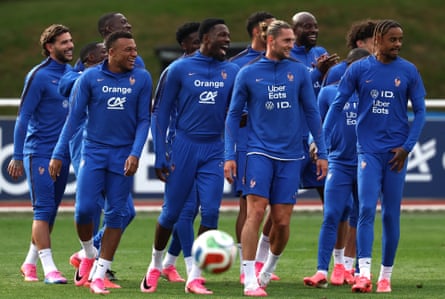
The Milan midfielder, capped 59 times for his country, speaks more of “accompanying” the attackers, “providing a link between the attack and defence”, allowing them to “express themselves” and giving them “freedom”; a facilitator more than simply a compensator, the difference is subtle but important. If Deschamps has released the handbrake, Rabiot is there to keep control of the car.
And Rabiot has discerned a shift. “In training, there is this freshness, this technique, this enthusiasm,” he says. Its importance transcends the pitch: “What makes this squad work well is the ability to be able to express oneself. Everyone has free rein to [show] their talent. In training, we really have a great time together, and that is the most important thing in a long competition.”
France’s stay at their base in Boston is not expected to be a short one. Les Bleus have been to the past two finals. Rabiot, 31, missed out in 2018, but was involved in the defeat against Argentina in Qatar in 2022. “Since then, we have wanted revenge,” he says.
Rabiot adds that victory in North America would also be “a beautiful homage” to Deschamps, who will leave his post at the end of the tournament. He is “very close” to Deschamps, despite his omission from the 2018 World Cup squad. Rabiot was selected as a reserve for the tournament in Russia but refused the position.
It would be more than two years until his next call-up, but since his return in September 2020, he has been an ever-present; of the players in the current squad, only Mbappé and Kanté have played more matches during Deschamps’ reign. Even when Rabiot was cast out at Marseille at the start of the season after a dressing-room incident with his teammate Jonathan Rowe, he was still selected. “I’m taking him for who he is, what he has done with us and what he can bring us. It is always good for him to be with us,” Deschamps said.
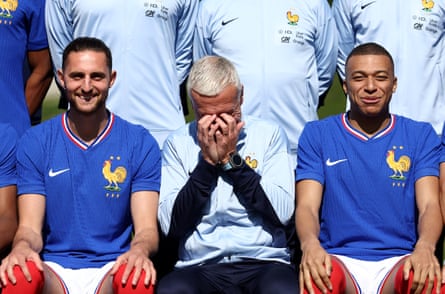
“The manager has given us a lot,” Rabiot says. “For the most part, he has selected us often; he has shown confidence in us in the big competitions – it is obviously an objective for us to pay him back for that.”
In the Guardian’s recent interview with Deschamps, the France manager expressed a lack of interest in notions of “legacy” and perception as he heads into his swan song. It is a topic of greater concern to Rabiot. “You always want to finish on a good note; it is the image that you leave that lingers longest in the mind.
“I think, in France, people don’t realise what the France national team has achieved in these past few years. I think people abroad are more admiring, quite simply because they want it to happen to them.
“And I think that if they had a manager like Deschamps, who has had as many results as he has, they would be extremely happy. I don’t think you should get used to [the levels of success] because it isn’t normal … sometimes we have highlighted how things happened too much instead of looking at what actually happened.”
Substance over style: that defines the Deschamps era. Rabiot, one of his most tried and trusted, embodies that too. Leave the style to the attackers, Rabiot is simply there to facilitate it.