3 months ago
132
3 months ago
132
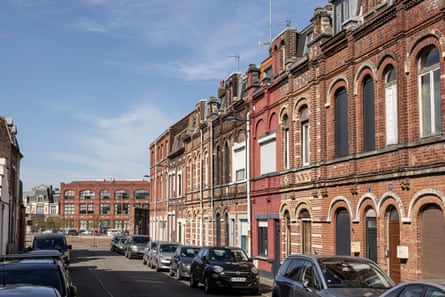
Farouk stood at his doorstep on a row of redbrick terrace houses in the northern French town of Roubaix – once the glory of the textile industry before decades of factory closures and unemployment made it the poorest town in mainland France.
“It feels like there’s a lot of darkness in the world and we just want to let in a little light,” said the 73-year-old former market shoe trader and father of seven, before Sunday’s local elections.
Farouk said he would vote for Jean-Luc Mélenchon’s radical left party, La France Insoumise (LFI), because its “straight-talking” approach would boost Roubaix.
Farouk settled in the town after leaving Algeria during the bloody civil war of the 1990s and said he wanted more equality, kindness and respect for local people. “It would bring some positivity,” he said.
The final round of French mayoral elections this weekend is seen as a test of the political temperature before a crucial presidential race next year, when Emmanuel Macron’s two terms in office end, with Marine Le Pen’s far-right National Rally party polling high nationally.
With a population of 100,000 and currently run by the right, Roubaix is expected to become one of the biggest towns won by the LFI this Sunday – in the first round, its candidate won more than 46%.
Victory in the runoff would be a boost for Mélenchon’s intended fourth bid for the presidency next year, when he would like to position himself as a key opponent of the far right.
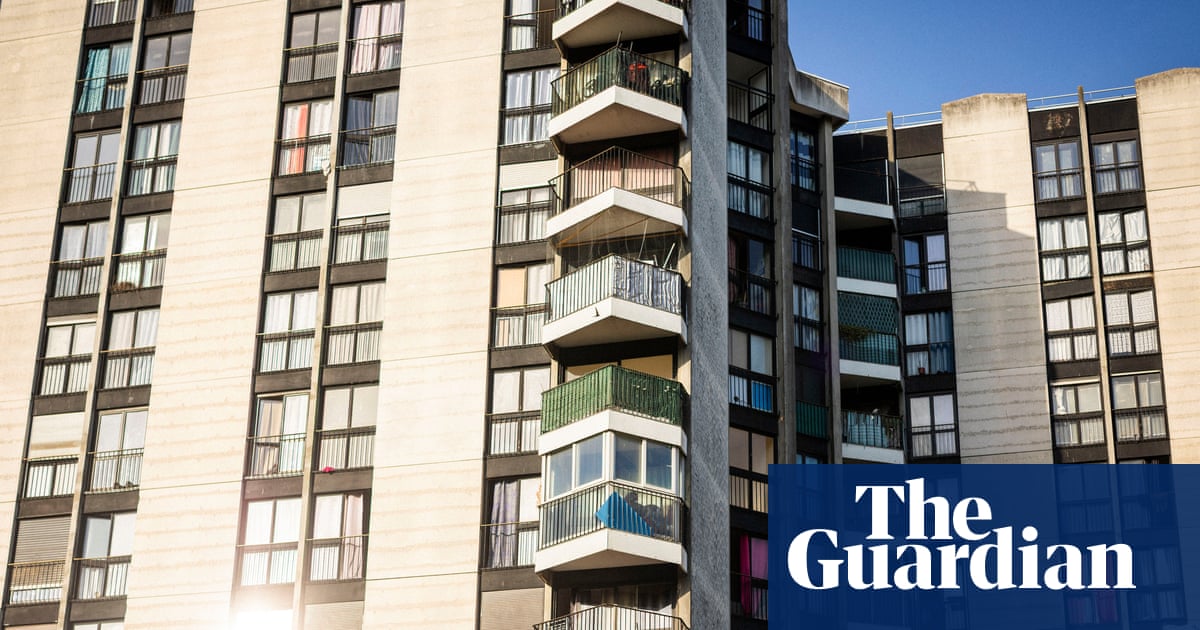
Roubaix, tucked between the northern city of Lille and the Belgian border, with a long history of immigration, is deeply symbolic. Its factories once rivalled Manchester, but about 46% of its residents now live below the poverty line.
Youth unemployment is as high as 50% in the poorest neighbourhoods and hundreds of families live in dilapidated housing, often at the mercy of slum landlords.
Yet the town, with a vibrant arts scene and striking industrial architecture, has pockets of wealth. It is also the birthplace of France’s richest man, the luxury goods magnate Bernard Arnault, the owner of brands including Louis Vuitton and Dior, who began work here in his father’s building firm.
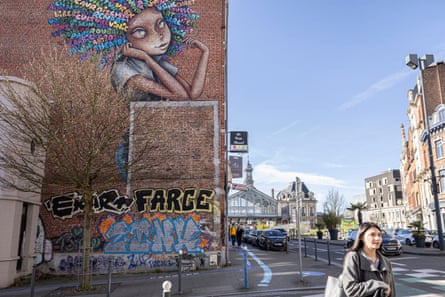
Roubaix’s contrast between rich and poor illustrates the LFI’s position that inequality is damaging France. But the LFI’s strong local election scores in Roubaix – as well as in Saint-Denis near Paris and Toulouse in the south-west – are significant because they come amid intense criticism of Mélenchon by other parties in recent weeks.
The Socialist party national bureau accused Mélenchon this month of “intolerable antisemitic comments” and “caricature conspiracy theories” after public rallies in which he first questioned the pronunciation of the Jewish name of the late sex offender Jeffrey Epstein and then appeared to deliberately stumble over the Jewish name of the French centre-left member of the European parliament Raphaël Glucksmann.
Glucksmann said that Mélenchon, by mocking Jewish or foreign-sounding names, had become the “Jean-Marie Le Pen of our times” and was “playing with the worst codes of the French far right and antisemitism”.
Mélenchon then posted on social media saying he was sorry and that he had accidentally mangled Glucksmann’s name among others during a speech in Perpignan. He denied any antisemitism, saying: “I’m the first one who is sorry, thinking about those it hurt.”
He also faced criticism last month that he had not distanced himself from street violence by antifascist groups after the killing in Lyon of a far-right activist.
In a polarised French political landscape, Mélenchon is seen by opponents as an increasingly divisive and provocative figure; several polls at the end of 2025 found he was the political figure in France who attracted the most hatred from voters.
Yet now the LFI’s first substantial local election campaign – after a decade spent focusing more on national politics – has shown that Mélenchon’s electoral base, including young people and those in multicultural urban neighbourhoods, is holding firm.
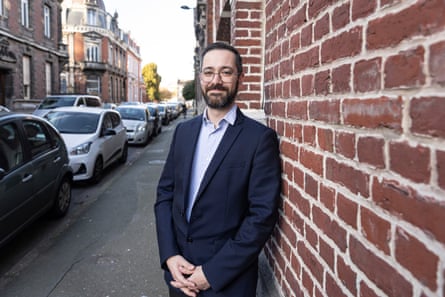
On a residential street in Roubaix’s town centre this week, David Guiraud, 33, the LFI mayoral candidate, was handing out leaflets as passing drivers sounded their horns in support and shouted: “Resistance!”
Guiraud, who has been LFI’s MP for Roubaix since 2022, is well known for his criticism of Israel’s military action in Gaza. He faced a legal complaint from the French-Israeli MP Meyer Habib after the two men had a public row over Gaza in the lobby of the national assembly in 2024. In January, a court found Guiraud not guilty of antisemitism, ruling that his use of the word “pig” did not amount to an antisemitic insult. The case will now go to appeal.
Guiraud denied the accusation of antisemitism. He dismissed the case as “a way to silence voices for peace” and said he would continue to speak out on the current Israeli political leadership: “It’s their actions that are criticised, not their beliefs.”
His mayoral campaign has been grassroots-focused, run under the banner “Proud of Roubaix!” and the vote is playing out on local issues from street-cleaning to housing and policing.
His campaign leaflets do not carry the LFI logo, and on issues such as armed municipal police, his position differs from his party. Guiraud has expanded his list of potential councillors beyond the LFI party. Voter turnout in Roubaix remains a challenge: less than 38% voted in the first round.
Guiraud was leafleting near the home of the former rightwing mayor Guillaume Delbar who was convicted of tax fraud and had to leave office late last year.
Saïd, 38, a Roubaix resident who worked in town hall services setting up public events, said the tax fraud scandal had damaged the town: “We need a breath of fresh air now.”
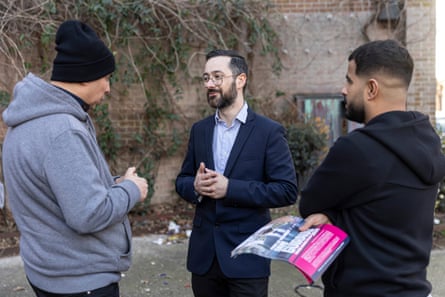
Guiraud said: “Rebuilding close contact between residents and their elected representatives is the most important thing.
“Many people living here, even in the more affluent neighbourhoods, never see their representatives … there’s no local consultation. We’ll bring local democracy. Great swathes of public policy has been abandoned – housing is one of the biggest problems.”
Guiraud dismissed the recent national controversies. “Our results across France in these local elections show that the blows levelled at LFI, and in particular at Jean-Luc Mélenchon don’t work,” he said. “We’re a force on the left, we’re anchored locally and nationally, and we have no intention of keeping our head down.”
Rémi Lefebvre, a professor of political science at the University of Lille, said the LFI’s strong local election score was noteworthy because, after weeks of accusations against Mélenchon, many observers might have thought the LFI leader would be weakened.
“But in fact he is not at all weakened,” Lefebvre said. “And you have to remember that barely three weeks ago he was a total pariah.”
Lefebvre said Mélenchon had reinforced his electoral base, which stood at approximately 10% nationally.
But although the radical left leader is seeking to reach the second round of the presidential race next year – he was 400,000 votes off in 2022, coming just behind Marine Le Pen – Lefebvre said the wider electorate’s high feeling of antipathy towards him would prevent him from winning.
In Roubaix, Karim Amrouni, an orthodontist working in low-income areas, was running as mayoral candidate for a rival union of centre-left parties. He said LFI had made “promises” to instantly fix all the town’s problems, “but people will realise magic doesn’t exist in politics”.
In the town centre, Stéphanie, 48, had been looking for work for months as a carer with elderly people or children, and had never voted.
“Why would I vote, what will it change?” she said. “It’s so hard to find a job here and when I say I live in Roubaix, I just get a negative response, there’s a stigma. It feels like we’re abandoned here.”