2 months ago
43
2 months ago
43
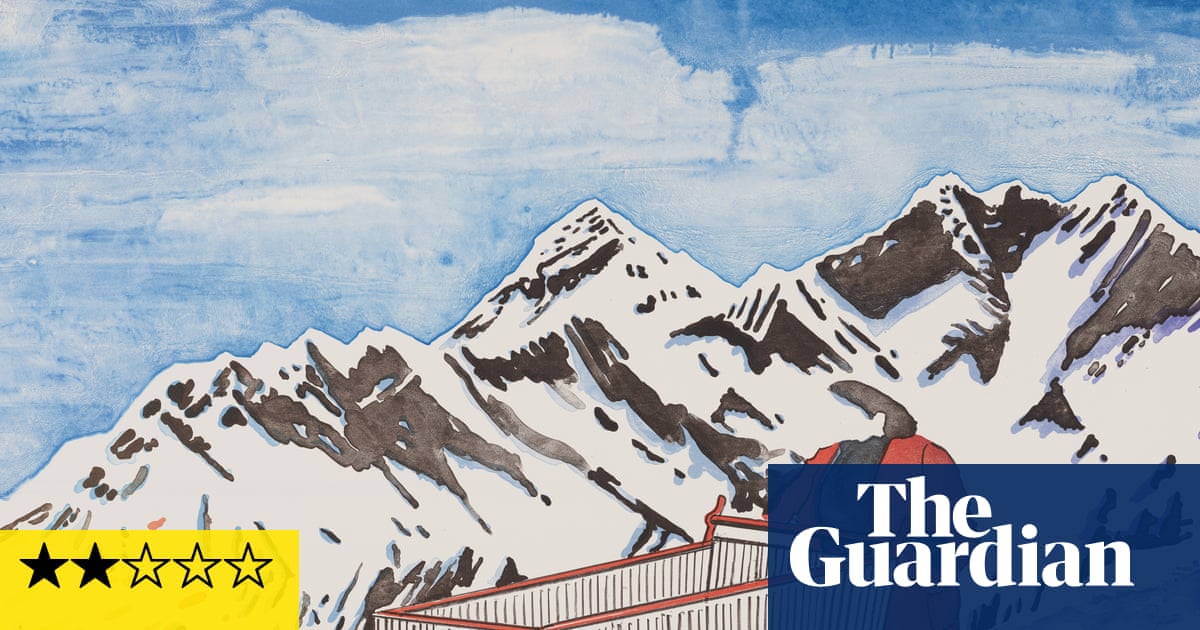
‘What disgusts me the most are good men,” says a Bissau-Guinean sex worker to Sérgio (Sérgio Coragem), a Portuguese environmental engineer working for an NGO on a road construction project in the country. He’s struggling to perform, as if his private life is letting slip some fundamental doubt about his role in Africa.
There’s a good dose of self-flagellation about western paternalism and hypocrisy in Pedro Pinho’s fifth feature, but it’s smart enough to know that this hand-wringing, extended over three hours, is yet another form of white man’s privilege. First seen driving through a sand blizzard like one of Antonioni’s existential wanderers, Sérgio seems to want to avoid thinking about the power dynamics at play around him. Being “here now”, in the moment, is his superpower – as he tells Gui (Jonathan Guilherme), the lofty Brazilian drag queen he dallies with. Gui’s gender-fluid posse, who hang out at the bar run by market hustler Diara (Cleo Diára), is a racial and sexual utopia ready to accept anyone, including this white expat. But, as Gui intuits, Sérgio’s bisexuality mirrors something noncommittal, even opportunistic, about him. He both lives in the expat enclave and the streets, without belonging to either.
But Sérgio’s nonaligned status makes him the perfect vehicle to eavesdrop on postcolonial relations in all quarters. Opinion is divided on whether the road will be an economic boost or an environmental blight; questions underscored by poverty, corruption and violence, as emphasised by the mysterious disappearance of Sérgio’s predecessor; smooth local businessman Horatio, hymning progress, won’t discuss this. These numerous shades of grey are obscured by Guinea-Bissau’s cacophonous paradise, but Pinho never loses sight of white hypocrisy. Scruples are a luxury, Diara reminds Sérgio when he refuses Horatio’s €150,000 bung.
With his long, meandering conversational scenes, Pinho doesn’t possess the kind of visual concision that film-makers such as Claire Denis or Ulrich Seidl bring to similar neocolonialist probings. But there’s something warm and human in how he lets everything hang out in these long, ruminative exchanges, including, by proxy through Sérgio, his own complicity as a white onlooker. The film is continually fumbling after, and negotiating for, its position on economic and racial questions – nowhere more so than in a bracing last sex scene where Sérgio finds himself once more in the middle. For all his uncertainty, Pinho knows the personal is always political.