3 months ago
159
3 months ago
159
As you listen to a Christmas performance of Handel’s Messiah, it is easy to persuade yourself that all is still well with music and the arts in Britain. I again felt the familiar potency of both Messiah and of music more widely in London’s St Martin’s-in-the-Fields on Tuesday this week. When the musicians and singers launched into the fabulously affirmative final chorus, Worthy is the Lamb, towards which Handel and his librettist Charles Jennens have all along been building, the annual ritual poured forth Messiah’s deep sense of shared security and allayed doubt afresh.
I’ve been going to Messiah at Christmas for decades now, at one venue or another, and the experience never ceases to lift the spirits in this darkest of seasons. This year, though, more disturbing feelings were also in play. The tender balm of Messiah’s opening lines for the tenor – “Comfort ye, comfort ye my people” – has rarely sounded more necessary and consolatory than it did this week. The austere solemnity of the oratorio’s collective reprimand against “the iniquity of us all” felt very contemporary too, especially at the end of such a dismal, demented and dangerous year.
Yet music and the arts are not secure in Britain today. Instead, they are becoming increasingly insecure, as well as more marginal and marginalised. There are lots of different reasons for this process. But there should be absolutely no mistaking that it is happening. It would be dishonest not to admit that the media’s own steady marginalisation of the arts and culture, notably but not only at the BBC, is one of the important causes.
Britain’s long and stupid psychodrama over so-called cultural elitism certainly doesn’t help. As Someone Else’s Music, the title of Alexandra Wilson’s brilliant new book on Britain’s tragicomic modern agonising about opera, implies, ours is often a society of culturally closed minds. How can an opera ticket costing £100 (and plenty of opera tickets cost less than that) be denounced as elitist when most World Cup tickets are costing thousands of dollars? This country has a pathetic capacity for concentrating on silly partisan squabbles while resolutely ignoring the bigger picture.
Educational inequality is fundamental to this. Kids at state schools simply have far less access to the arts than kids in private schools. You can see the results in our often socially top-heavy conservatoires and arts colleges. With a few brilliant exceptions, like Trinity Laban Conservatoire in south-east London (where I was on the board for some years), it’s the expensively educated who get most of the chances, not those from less privileged backgrounds. Labour says it wants arts subjects to be central to the school curriculum, but until that actually happens and works its way through the system, we will continue to reproduce the widening unfairnesses of today.
Not all of the problems of the cultural sectors come down to money. But an awful lot of them do. Whether at the individual, the corporate or the state level, we are simply too mean. Too many rich people do not put anything back (all credit to the few who do, but shame on the rest). Too many companies have minimal sponsorship or charitable budgets (hats off to the exceptions here too). And governments, whether local, devolved or national, are under spending pressures that make it easy to treat culture as an optional extra, which they do.
In her hugely welcome and satisfyingly coruscating report on the iniquitous work of Arts Council England (ACE) this week, Margaret Hodge reminds us that Britain spends significantly less per head on culture (widely defined) than almost every country in Europe. Greater Berlin alone spends more on culture than the entire combined arts and culture budgets of ACE and the London mayor. German public funding is under a lot of pressure itself right now, but this is a societal choice, and Britain is making the wrong one.
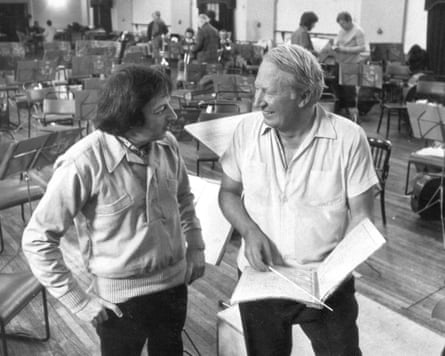
There is something depressing about the fact that, in Keir Starmer, Britain now has its first prime minister with a musical training since Edward Heath more than half a century ago. I am always pleased when Starmer mentions the importance of music or talks to the media about the music he likes. But the time for talk really is over. It’s time for deeds, commitment and results. Time for leadership.
The Hodge report offers a blueprint for overdue change. At its heart is the vital recognition that excellence and access should not be pitted against one another as alternatives. If its findings are to be listened to, it ought to mean the application of the lessons of sports funding to arts funding, in which the best and the rest both matter. For Team GB and your local running track, read English National Opera and your local playhouse. It also ought to mean a clearout of ACE leadership and a restructuring. But will Starmer’s government embrace it, own it and drive it? The suspicion is that the government, struggling in the polls, will neither care enough nor dare enough.
Yet government has a unique responsibility that civil society, however strongly motivated, cannot equal. When the audience stands for the Hallelujah chorus at the end of part two of Messiah, we are not just taking part in a quirky British tradition (audiences in other countries tend to stay seated). We are also making a collective avowal. We are recognising the worth of what we have all inherited, should all cherish, and, echoing the lines that bring Alan Bennett’s The History Boys to its close, should all pass on. That is the government’s duty too. Yes, we must all do our bit, but it is government’s turn now.
-
Martin Kettle is a Guardian columnist