3 months ago
102
3 months ago
102
Labour has announced wholesale changes to policing with a pledge to increase crime fighting, but faces warnings that at the plan’s heart is an unprecedented centralisation of powers.
Shabana Mahmood said policing in England and Wales was the last public service to have survived unreformed for 50 years, despite being too costly and failing in parts.
After a week of headlines outlining the overhaul, the details of the white paper revealed that the crown jewel measures were years away from being seen, if at all.
Officials hope the bill will become law by 2027 but a new National Police Service (NPS) – labelled the British FBI – will not become the home of counter-terrorism until the end of this parliament in 2029 or later, sources say.
Mergers of the 43 local forces will not be completed until 2034, according to the white paper, with one or two mergers possibly happening by 2029 to test the theory that bigger means better.
Mergers and the addition of counter-terrorism to the NPS may need backing from the next government.
The home secretary will regain the power to sack chief constables and set crime-fighting and service targets. That has triggered warnings about future home secretaries abusing the power, after senior figures in Reform UK – which currently leads opinion polls – discussed curtailing the operational independence of policing.
Peter Fahy, a former chief constable of Greater Manchester police, told the Guardian an NPS made sense but carried dangers if overseen by unscrupulous politicians.
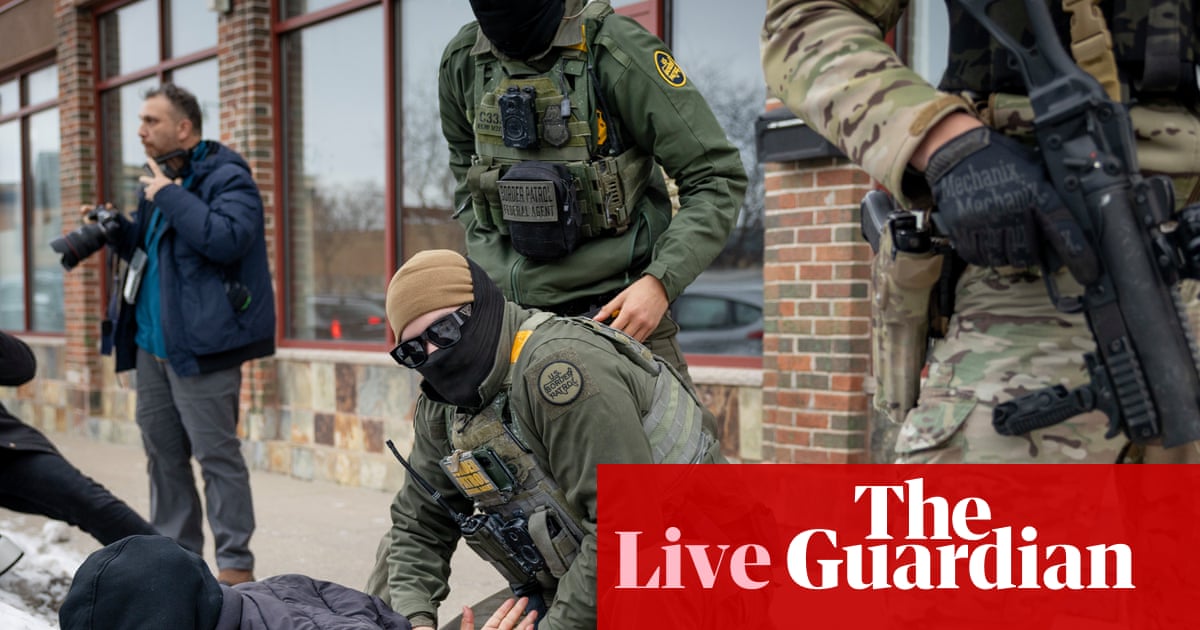
“I worry if a future government makes the head a political appointment and directs it to focus on illegal immigrants or a particular racial group it suits them to blame, we could end up with a Minnesota situation where local politicians and the local chief are against the deployment and see other priorities,” he said. “The crucial importance here will be the operational independence, the oversight and independence.”
Emily Spurrell, the chair of the Association of Police and Crime Commissioners, whose roles will be abolished in 2028, said: “Policing must be rooted in the local communities it serves, and this planned structure will place unprecedented power in the hands of just two people at the centre – the home secretary and the commissioner of the new National Police Service. This concentration of policing power in England and Wales is constitutionally alien and brings enormous risks.”
The group Spotlight on Corruption said: “These proposals risk unprecedented centralised political control of policing, which could seriously undermine police independence and leave it at the mercy of the whims of a home secretary.
“In particular, the proposal for the home secretary to be able to issue directions to police forces and require them to comply with the home secretary’s priorities enables a very clear route for political interference in national policing.”
Gavin Stephens, the chair of the National Police Chiefs’ Council, said: “The policing by consent model is going nowhere, nor is the operational independence of policing that’s strongly set out in the white paper.”
Matt Jukes, the deputy commissioner of the Met police and frontrunner to be its next leader, said “power and decision making” in British policing was distributed and he saw nothing in the white paper nor from this government that threatened that.
Mahmood told the House of Commons: “An elite national force will tackle nationwide crime, regional forces will conduct specialist investigations and local policing will tackle the epidemic of everyday crime.
“Our structures are outdated and so is our adoption of the tools and technology that could make our policing both more effective and efficient. Criminals are operating in increasingly sophisticated ways. But in policing, in all honesty, our response is mixed. While some forces surge ahead, with the results to show for it, others are fighting crime in a digital age with analogue methods.”
The shadow home secretary, Chris Philp, attacked Labour over a fall of 1,000 in officer numbers after Labour’s first year in power, down from 149,769. “She is presiding over falling police numbers and the public will be less safe as a result,” he said of Mahmood.
Chief constables believe the political obsession with officer numbers has meant those with modern skills are not being recruited.
Forces will be freed to change who they employ, with rules tying money to how many fully warranted police officers they employ now scrapped. The topic has been politically sensitive with politicians of both parties promising more officers at election times.
A commission will decide by the summer on mergers, an attempt that failed under the last Labour government. People in more rural areas fear they would rarely see an officer, with them being concentrated in more urban areas with higher crime.
Mahmood says thousands of police in back-office roles should be freed to get out on the frontline. Local areas will be promised a neighbourhood guarantee of a local policing team, with research finding 25% of people in 2010-11 said they never saw an officer on foot, rising to 54% in 2024-25.
An Institute for Fiscal Studies report in 2024 found the first phase of the Conservatives’ austerity measures brought a 20% reduction in funding to all police forces.
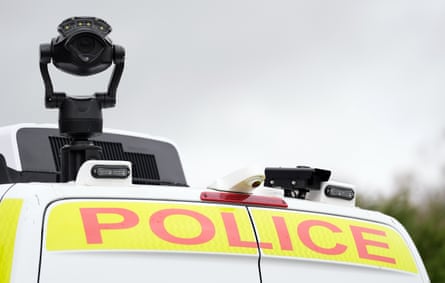
Labour’s overhaul backs a big expansion in facial recognition vans, from 10 to 50 mobile units, and greater use of artificial intelligence.
Part of policing’s problem is rising demand, in part picking up mental health work, in part because of technological changes meaning most crimes have a digital element.
The Police Superintendents’ Association president, Nick Smart, said: “There is no true picture of police demand, but we know without doubt that it is overwhelmingly high and that the majority of it does not relate to crime … from missing people to complex safeguarding issues.”