1 month ago
76
1 month ago
76
Ecstatic baroque and early music
If 19th-century repertoire thrives on scale and scope, baroque and early music is all about intimacy: the husk of bow on gut strings, the purity of an unaccompanied voice. It’s music that often struggles to find a place at the Proms, but clever choices make for an intriguing lineup this year.
Lutenist Thomas Dunford’s Ensemble Jupiter is a period band with the swagger and spontaneity of a rock group. They’re joined by exciting young tenor Laurence Kilsby for a late-night programme of Purcell, Handel, and John Dowland (21 July). Cabaret vibes meet immaculate style.
There’s further blurring of the edges in Notre-Dame organist Olivier Latry’s recital (26 July) – an all-Bach programme including transcriptions by Duruflé and Widor, and an improvisation by Latry himself on the letters of Bach’s name – as well as by the Swedish Chamber Orchestra (16 August), who trace the evolution of dance through works by Rameau, Bach and Handel, along with Beethoven.
The Orchestra of the Age of Enlightenment and a dream team of soloists pair spiritual music by the Czech composer Jan Dismas Zelenka and Haydn (9 August), but crowning the season is Arcangelo’s performance of Bach’s mighty Mass in B minor (10 September): the summation not just of a career but a life of faith, which closes with an ecstatic apotheosis of voices, brass and timpani. Alexandra Coghlan
A Berlioz blowout
With the exception of the Symphonie Fantastique, Hector Berlioz is still a relative rarity in British concert halls. So it was refreshing to spot three major works at this year’s Proms without the special pleading of an important anniversary.
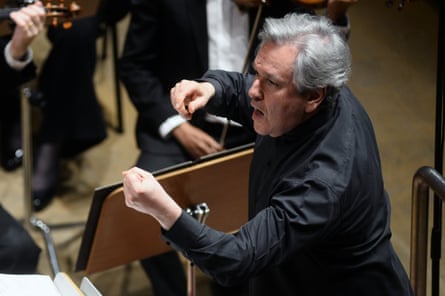
The biggest beast is the Requiem (15 August), the so-called Grande Messe des Morts, written in remembrance of French soldiers killed in the revolution of July 1830. With its humungous chorus and orchestra – including eight bassoons, 12 horns, 16 timpani and 10 pairs of cymbals – plus extra brass choirs dotted around the Albert Hall, it should play perfectly into the dramatic hands of conductor Sir Antonio Pappano.
La Damnation de Faust is no less ambitious a work. A quasi-operatic hybrid for orchestra, chorus and soloists, it will be performed here by French period-instrument wizards Les Siècles under conductor Jakob Lehmann (30 August). An experienced cast includes John Osborn, Véronique Gens and Gerald Finley.
The emotionally unfettered Symphonie Fantastique blew the cobwebs off the Parisian musical establishment when it premiered at the Conservatoire in 1830. This is young man’s music, and so a fitting choice for the National Youth Orchestra. Thomas Adès will conduct the work alongside the Purgatorio movement of his own ballet, Dante, and Liszt’s Mephisto Waltz (8 August). Clive Paget
The new contemporaries
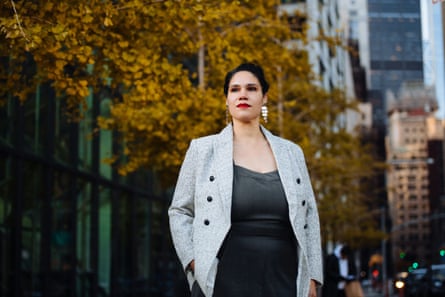
The Royal Albert Hall was tailored to classical music’s behemoths and this Proms season has plenty for anyone seeking symphonic bombast. But the Proms have also long been a vital supporter of new music in the UK. There seem slightly fewer premieres compared with some recent seasons (I count 18), but music by living composers is scattered widely.
Look out for the two parts of Thomas Adès’s Dante ballet score, played by the National Youth Orchestra (8 August, as above) and the Los Angeles Philharmonic (11 August); a movement from Caroline Shaw’s Pulitzer-prize-winning Partita in a late-night performance by the Fantasia Orchestra (11 August), and a rare outing of Stele by centenarian György Kurtág, played by the BBC Symphony Orchestra (22 July). The UK debut of US composer Jessie Montgomery’s These Righteous Paths, her cello concerto for the shapeshifting South African musician Abel Selaocoe, will surely be a highlight from the BBC Philharmonic (20 July).
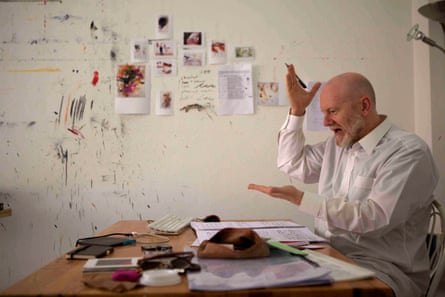
Among the world premieres, eminent Scottish composer Thea Musgrave’s Bassoon Concerto Out of the Darkness performed by Amy Harman and the Academy of St Martin in the Fields is instantly intriguing (23 August). And don’t miss the BBC Scottish Symphony Orchestra and soprano Claire Booth’s premiere of The World’s Wife by Brett Dean – the latest work from this remarkable Australian violist-turned-composer (29 July). Flora Willson
Magnificent minimalism
Steve Reich, giant of minimalism, will be 90 in October, a milestone being marked in two concerts. His epoch-making Music for 18 Musicians will be played by Charles Hazlewood’s Paraorchestra on 7 August, promising a remarkable sound experience with the performers ranged on plinths across Bristol’s Beacon Hall, up close and among the audience. Tehillim, for voices and ensemble, which Reich based on traditional Hebrew psalms, will then feature in the late-night RAH Prom given by the Gesualdo Six with the Colin Currie Group on 2 September.
Reich has some way to go to match the Kurtág, who turned 100 in February. Sakari Oramo will conduct the BBC Symphony Orchestra in his orchestral elegy Stele on 22 July; then, on 9 August, to close the Proms Bristol weekend, Oramo, the violinist, joins his soprano wife, Anu Komsi, for the Kurtág masterpiece Kafka Fragments. In the Beacon’s Lantern Hall, this gem of a concert promises to be exceptional.
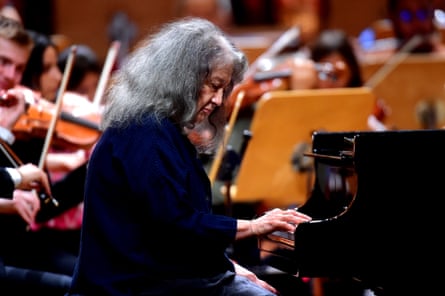
Of starry Proms soloists, violinist Vilde Frang in Berg’s Violin Concerto on 10 August is a must, while Martha Argerich appears on 5 September, almost 60 years since her 1966 Proms debut, playing Beethoven’s Piano Concerto No 2. Simply the queen of pianists. Rian Evans
Sizzling Strauss
There’s always a buzz around the Glyndebourne Prom, and this year the new production that will be transferring, semi-staged, from the Sussex opera house for the night is potentially a particularly good fit. Strauss’s Ariadne auf Naxos has a scenario that nods to both the festive and serious sides of the Proms: two competing theatre troupes, one comic, one tragic, have to shoehorn their performances into a single show on the whim of their patron. Expect wit and inventiveness from the director Laurent Pelly and sumptuous singing from a cast led by Rachel Willis-Sørensen and David Butt Philip, with Robin Ticciati conducting the London Philharmonic (19 August).
There’s more Strauss, lots of it, in the first of two concerts (26 August) by the orchestra of New York’s Metropolitan Opera – a relatively rare visit from one of the world’s outstanding opera-house bands. Meanwhile, those whose operatic taste leans towards the 19th century will look forward to Weber’s opera Oberon, with Mark Elder conducting the Orchestre Révolutionnaire et Romantique and a cast led by the tenor Nicky Spence (6 August), limbering up for his appearance on the Last Night. Erica Jeal