2 months ago
150
2 months ago
150
In February 1977, George Lucas screened a rough cut of his science-fiction fantasy Star Wars, devoid of any music or special effects, to a select audience at his home in northern California. Among those in attendance, reported Peter Biskind in his book Easy Riders, Raging Bulls, were studio executives from 20th Century Fox, colleagues such as the screenwriter Gloria Katz and the director Brian De Palma. Katz recalled that the screening was greeted by “stunned silence”. De Palma was heard asking: “What is this shit?”
Lucas’s wife Marcia, who had edited Star Wars with Richard Chew and Paul Hirsch, was in tears, convinced the film was doomed. Katz advised her: “Don’t cry when there are people from the studio there.”
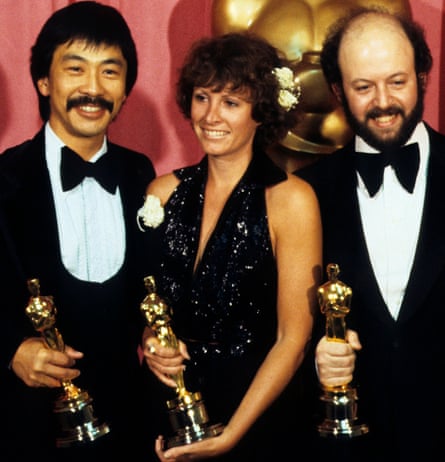
Marcia, who has died of cancer aged 80, won an Oscar the following year for her work on the picture, sharing it with Chew and Hirsch. George Lucas’s biographer, Dale Pollock, called her the director’s “secret weapon”.
Nevertheless, she rejected the misapprehension that it was she who supplied the movie’s heart, or even, as some claimed, that she was “the woman who saved Star Wars”. “I wouldn’t think so,” she told the film historian JW Rinzler. “I definitely made scenes work … [but] George came up with all of it using his amazing imagination.”
Still, she never seemed entirely at home with the film. She left the editing room in December 1976, where she had been busy cutting the climactic assault on the Death Star, to take over on Martin Scorsese’s musical New York, New York (1977) after the death of that picture’s original editor.
“Marcia respected Marty above all other directors, and didn’t believe in Star Wars terribly much,” Hirsch told Biskind. “It was not her thing. She abandoned George to work on this serious, artistic film.”
According to Katz, Marcia told George: “New York, New York is a film for grownups, yours is just a kids’ movie, and nobody’s going to take it seriously.”
She was not alone in undervaluing Star Wars – the whole industry was sceptical about its chances – but by the time the finished cut was previewed publicly in San Francisco later in 1977, things were looking up.
Marcia maintained that the success of the picture could be measured by how the audience reacted to the moment in the final battle when the rickety Millennium Falcon spaceship, piloted by Han Solo (Harrison Ford), swoops unexpectedly to the rescue. At that public preview, writes Hirsch in his memoir A Long Time Ago in a Cutting Room Far, Far Away, “the audience leaped out of their seats cheering. I looked over and caught Marcia’s eye. She was grinning, and so was I. She shrugged, as if to say: I guess it works.”
The movie went on to gross more than $775m and was instrumental in creating the blockbuster model that still dominates Hollywood today.
Marcia did minor uncredited work on the next Star Wars film, The Empire Strikes Back (1980), and co-edited Return of the Jedi (1983), though her contributions to blockbuster cinema were not restricted to the Star Wars franchise. She offered editorial notes on the ending of Raiders of the Lost Ark (1981), co-created by George, as well as playing an inadvertent part in naming the film’s archaeologist-adventurer hero, played by Harrison Ford. Who knows what he might have been called had Marcia not owned an Alaskan malamute named Indiana?
Like George, Marcia was born in Modesto, California. Her father, Thomas Griffin, was an air force officer who left her mother, Mae (nee Ebeling), when Marcia was two. Mae found work as an insurance clerk while she raised Marcia and her sister in north Hollywood. “It wasn’t a sad, bad time,” Marcia recalled. “But economically it was very hard on my mother.”
After graduating from high school, she worked at a mortgage banking firm and then as an apprentice film librarian at the Sandler Film Library, where she worked her way up from locating footage in the archives to editing. Her love of the job eclipsed the meagre pay and the struggles of working in a sexist industry. “I would have cut films for free because I enjoyed it so much,” she said.
She met George, who was cripplingly shy, when they both worked under Verna Fields, who later edited Jaws, on the short Journey to the Pacific (1968). “It was really hard to get him to speak at all,” Marcia said.
While he shot documentary footage of the making of Francis Ford Coppola’s drama The Rain People, Marcia worked as an assistant editor on Coppola’s film and then on Haskell Wexler’s Medium Cool. Both movies were released in 1969, and the couple married the same year.
Marcia was assistant editor on George’s debut, the science-fiction thriller THX 1138 (1971), but said “it left me cold. When the studio didn’t like the film, I wasn’t surprised. But George just said to me, I was stupid and I knew nothing. Because I was just a Valley Girl. He was the intellectual.”
The film flopped. “After THX went down the toilet, I never said: ‘I told you so’, but I reminded George that I warned him it hadn’t involved the audience emotionally … So finally, George said to me: ‘I’m gonna show you how easy it is. I’ll make a film that emotionally involves the audience.’”
That was the fizzy, nostalgic comedy American Graffiti (1973), which became a runaway hit. Marcia received her first Oscar nomination – sharing it with her husband and Fields – for editing the movie, an apparently loosey-goosey affair built on deft cross-cutting between different stories and characters.
It was helpful for Marcia to be asked by Scorsese to edit Alice Doesn’t Live Here Anymore (1974), starring Ellen Burstyn as a widowed waitress with aspirations to be a singer. “I thought, If I’m ever going to get any real credit, I’m going to have to cut a movie for somebody besides George,” she reasoned. The director kept her on board for his masterpiece Taxi Driver (1976), starring Robert De Niro as a disturbed cabby with vigilante leanings.
When Marcia and George were divorced in 1983, she received a reported $50m settlement. “For me, the bottom line was just that he was all work and no play,” she said of her ex-husband. “I wanted joy in my life. And George just didn’t.” She also felt underrated by him. “When we were finishing [Return of the Jedi], George told me he thought I was a pretty good editor. In the 16 years of our being together, I think that was the only time he ever complimented me.”
At least she knew her own worth. “I love editing and I’m real gifted at it,” she said in 1983. “I have an innate ability to take good material and make it better, or take bad material and make it fair. I’m compulsive about it. I think I’m even an editor in real life.”
In 1997, she confessed to Biskind that she harboured mixed feelings about the impact of Star Wars. “There are so few good films, and part of me thinks Star Wars is partly responsible for the direction the industry has gone in, and I feel badly about that.”
While calling George “a good guy and a talented film-maker”, she admitted in 2021 to lamenting his return to Star Wars with the prequel The Phantom Menace (1999), and to crying after she saw the movie: “I cried because I didn’t think it was very good.” About the latter-day Star Wars instalments made by Disney she was more vituperative. “The storylines are terrible. Just terrible. Awful.”
In 1983 Marcia married the stained-glass artist Tom Rodrigues, whom she met when he was employed as a designer and production manager at the Skywalker ranch; they divorced a decade later. She is survived by two daughters, Amanda, from her marriage to George, and Amy, from her marriage to Tom.