2 months ago
60
2 months ago
60
A month before she was shot, Katrina Brownlee had a premonition. It came to her in a dream: the 22-year-old saw her former fiance, a law enforcement officer who had been abusing her for years, try to kill her, but she survived. She had experienced premonitions from a young age – she later came to see them as guidance from God. On the way to the house she had shared with him, she could hear a voice in her head pleading with her: don’t go back there.
It was a freezing January morning in 1993. Brownlee was five months pregnant and had taken a cab with her two-year-old daughter through the snow to the house she had shared with her ex in Long Island, New York state. Her elder daughter, then seven, was at a playdate. A few weeks earlier, Brownlee had left her fiance for good and she and her daughters had been living in a motel to hide from him. However, over the last few nights, she had spoken to him on the phone. He seemed to have accepted their relationship was over and agreed she could come and collect her belongings.
“I just wanted to retrieve the little I had,” she says. “I didn’t have money. I was homeless, pregnant, with two young children. Just in a bad space.”
He let her into the house. Once inside, she put her daughter down in her bedroom and went into the master bedroom to gather her clothes. The house looked just as she had left it: the same beige carpet and white walls, the bed made. But when she opened her drawers, they were empty. Her heart began to race. Had her ex lured her there under false pretences?
She turned the corner to the living room. There, she found her ex, gun aimed squarely at her stomach. He fired three times. Brownlee remembers the smell of gun smoke and seeing her pregnancy bump “go flat”. Falling on to the couch, she was shocked not to see blood. Somehow, she was able to run into their bedroom to try to call 911, but there was no dial tone: the line had been cut. She tried to escape through the windows, only to find he had nailed them shut. She thought he would kill her and her daughter, before turning the gun on himself. Miraculously, her daughter remained quiet in the next room: “I think he just forgot about her,” she says. Brownlee screamed, but, “I realised nobody knows I’m here. Nobody comes to visit us. This is it. It’s over.”
Over the course of an hour and a half, he shot her 10 times: three times in the stomach, once in the arm, once in the buttock, once in the hip and four times in the vagina. He beat her over the head with a wooden board. “You don’t want to be with me?” she recalls him shouting. “I gave you everything you wanted, and it still wasn’t enough!”
In Brownlee’s dream, she played dead so her attacker would leave her alone. Now, she did the same thing. Eventually, she really did lose consciousness.
Her ex dragged her body into the bath. She would have died there had her ex’s cousin not arrived: the men had spoken hours before, and his “manic” tone had put the cousin on alert. When he arrived and found Brownlee soaked in blood, he piled her into the car and drove her to hospital.
Brownlee had met the man who tried to kill her when she was 18. He was six years older and had a nice car and a career as a prison officer. She was impressed by him. Brownlee had been raised by her grandmother. Her mother gave birth to her at 16 and abandoned her in the hospital as a newborn. Brownlee’s grandmother, who worked as a librarian, struggled with alcoholism after her own husband left her and her children. In Brownlee’s memoir, she describes her grandmother as “a good person who got a bad deal”: a stylish woman who loved Christmas, when she would bake cakes and cook soul food feasts. Brownlee still saw her mother, who went on to have another child, but says she felt rejected by her. And, despite her grandmother’s efforts, it was a chaotic home environment.
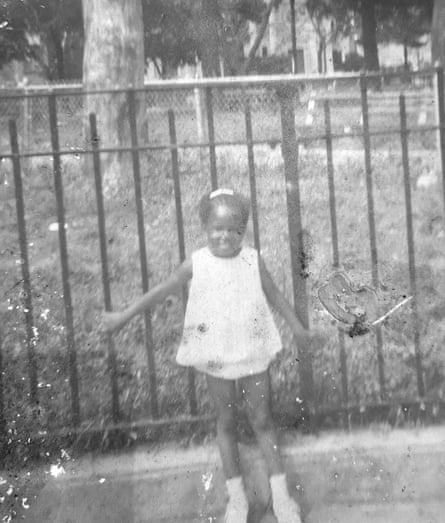
Brownlee, her grandmother and aunt all lived in a brownstone building in Brooklyn in the 1970s. They rented their apartment from a drug dealer and pimp who lived downstairs, where there would be parties almost every night – she remembers seeing piles of cocaine on the table. She was sexually abused. When Brownlee was 10, their landlord lost the building in a bet and they moved to the nearby Brevoort projects.
Brownlee became pregnant for the first time at 14 by an older teenager. Terrified, she tried to ignore the pregnancy at first; then, hoping to miscarry, rolled herself down a flight of stairs in her building. By the time Brownlee’s grandmother discovered her pregnancy, and her mother stepped in to take her to a clinic, she was 27 weeks: too far along for an abortion. Brownlee left school in the ninth grade to care for her baby. She says her mother wanted to give up the child for adoption – and even took the baby away from her for months. But Brownlee kept her daughter.
Her mother died of cancer when she was 17. She would meet the man who tried to kill her not long afterwards, after being introduced through her aunt’s boyfriend.
Brownlee first experienced his capacity for violence when, a few months into their relationship, she discovered she was pregnant. When she told him she wanted an abortion, he beat her and stopped her from getting one by tearing up her referral letter for the procedure. Her grandmother saw the violence but encouraged her to remain with him, telling Brownlee he could give her a better life.
He proposed at Christmas in 1989, and she moved out of her grandmother’s and into his parents’ basement in Bedford-Stuyvesant while they waited to move into a house that he was having built. Brownlee says he treated her daughter well, but describes a stifling atmosphere with a man with a hair-trigger temper. Weeks after their engagement, in January 1990, he pushed her down the stairs during an argument. She felt sharp pains in her abdomen and called an ambulance. A police car came too but when she told the responding officer about the attack, her fiance “flashed his badge” and spoke to the police privately. The police and ambulance left and her fiance took her to hospital. There, her contractions began: a month before her due date, she gave birth to her second daughter.
The couple and their new baby moved into the house in Long Island in 1991. She had hoped this would be a fresh start. But the beatings became more frequent – and more severe. She grew isolated; the new house was an hour and a half from everyone she knew.
During their relationship, Brownlee called the police to report the violence three times, but says officers left after her fiance showed his badge – even when she had visible injuries. She felt abandoned by those who were meant to protect her, but felt she had nowhere safe to run to. Once, she did try to leave and went back to her grandmother’s, but he found her there and forced her to come back. When she left for good in late 1992, it was after he beat her over the head with a piece of a chair. By this time, she had begun a secret relationship with a man living nearby, which showed her what a loving relationship could be like. She had recently also discovered she was four months pregnant with her then fiance’s child. Looking back, Brownlee says that “all the signs” were there that her fiance would one day try to kill her.
Brownlee woke up in hospital after the attack in a haze. She was surrounded by women who were praying for her. She would later learn that one of these women was a cousin of her ex – someone who would support her during her early recovery. Brownlee had been in a coma for nine days and over the next few days, after she was moved out of intensive care and on to a ward, she began to fill in the gaps.
Her ex had been arrested – Brownlee had managed to say who had shot her, and his address, before losing consciousness – and her daughters were living with her ex’s mother, who had moved out of state. The doctors had not expected Brownlee to make it: while she was in hospital, Keri Herzog, the assistant district attorney, who would later become Brownlee’s friend, told her that she had taken a dying declaration from her before she fell into a coma. Brownlee had no memory of it.
In her hospital bed, a doctor gave her several pieces of devastating news: her unborn baby had not survived; she would not be able to have any more children; and she would not walk again. She was told it was a miracle that she was alive, but she felt crushed by the weight of everything. Her daughters “were the only reason I could think of to go on living,” she wrote in her memoir.
Brownlee stayed in hospital for about three weeks, starting physical therapy there before continuing it at home. At first, attempting her physiotherapist’s exercises seemed futile. But she kept going and made astonishingly rapid progress: by the end of the summer, she was walking unassisted. It was at about this time that she found her faith and was baptised.
Her ex’s mother allowed her to stay in the Bedford-Stuyvesant house after she was discharged from hospital. But when Brownlee refused to write to the judge in her case saying she had shot herself, she says her mother-in-law evicted her. Brownlee and her children moved into a homeless shelter in the Bronx, waiting for assisted housing. “Homeless, hungry, two kids, lost one in the process. Just continuing pain, but you try to normalise it,” she says of this time.
Her ex’s trial was set to begin in April 1994. Brownlee was reluctant to testify – she wanted to move on and was convinced he would get an easy time as he worked in law enforcement. But Herzog wouldn’t let it drop. “I will hunt you down like a dog and drag you on to the witness stand myself if I have to!” Herzog told her. Brownlee agreed to testify.
Years later, when CBS made a documentary about her, Brownlee learned that a letter in her name, that may have been written by her mother-in-law, had been presented to the judge by the defence. The letter – a copy of which has been seen by the Guardian – says that Brownlee would not press charges, and that, if subpoenaed to court, she would testify on the defendant’s behalf.
But Brownlee’s ex entered a guilty plea. Herzog asked for 25 years to life. Six bullets remained in Brownlee’s body: her doctor had told her it would be too risky to remove them. (She still has them, though she has a tattoo over the scars.) His lawyer argued that it was a crime of passion, that his client was a prison officer with no previous record. His request for five to 15 years was granted. “I was totally gutted,” Brownlee says. Once again, she felt the justice system had failed her.
The years went by. Brownlee and her daughters moved to East Flatbush, Brooklyn, and she tried to establish a routine for them. But she struggled, especially in relationships – including one with a man in prison, and a drug dealer. “At that point, I was so damaged … How could you even identify a healthy relationship if you’ve never seen it?” For years, she was existing, not living. “I normalised feeling numb. Crying at night when nobody knows you cry.”
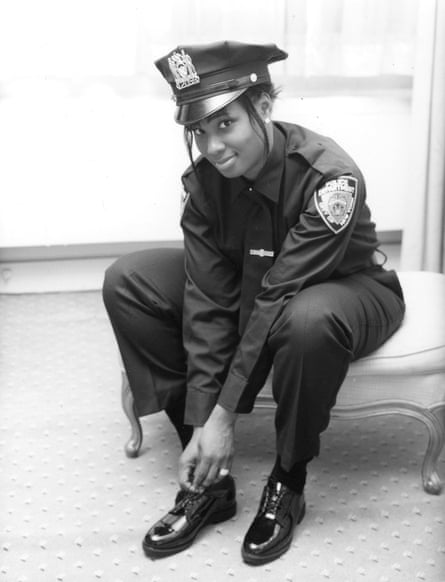
When she was 27, searching for a sense of purpose and independence, she enrolled in the New York police department (NYPD) traffic academy and took night classes to get her high school diploma, with her partner at the time helping with childcare. When she was offered the chance to take the police exam, she sat it and passed. She became a police officer in 2001.

Why did she want to become a cop after all she had been through? To be a “good cop”, she says. “If a person like me doesn’t come in to try to bridge the gap between the community and the police, who will?” Specifically, she wanted to see “more empathy” towards civilians, the end of racial profiling, and “mutual respect” between officers and civilians.
Brownlee excelled in undercover roles, going on to work in narcotics and then vice. Many of the sex workers she met “came from the same story” as she did. “Most, if not all, came from some sort of abuse, some sort of neglect.”
She began therapy in 2009, beginning a period of years of intensive work. “The first time I went to therapy, I totally collapsed. I just wanted to go home in this woman’s pocketbook. That was probably the very first time in my entire life that I had felt safe,” she says. Over time, she began to feel something shift in her: “I started to believe that, you know what? I think I can fully recover, if I keep going, if I keep my eyes on the light, and follow the light.”
She was far from the only victim of domestic violence at the hands of a police officer: research from the 1990s found US police officers were two to four times more likely to abuse their families than was the case in the general population. Still, she never told any of her colleagues that she was nearly killed by a law enforcement officer. She was worried they would think she was “mentally or emotionally” unfit for the job. She also stayed away from specialising in policing domestic violence, because she felt support for victims was lacking and the sentences for perpetrators were too weak.
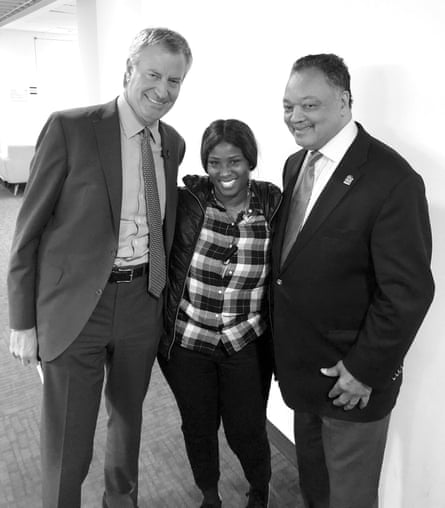
Her memoir, which she began writing in about 2017 and published this year, is sharply critical of the NYPD at points, in particular a culture where officers don’t report each other in cases of misconduct. “I saw the dynamics of how the police really are a family – they really believe in this ‘blue wall of silence’.” She believes officers need mandatory therapy. “Police officers are exposed to a lot when they go out in the field, and it’s heavy. Then they have to come home, be husbands, wives, parents or caregivers … They need an outlet.”
After working in vice, Brownlee transferred to community affairs – what she saw as the ultimate “good cop” role. She founded a mentoring scheme called Young Ladies of Our Future for at-risk teenage girls, supporting them to build confidence and offering guidance on relationships, including the warning signs of abuse. She says it would have helped her as a teenager. “Because even though you have to go back to that situation [at home], you still walk away with some tools.” She later served on mayor Bill de Blasio’s security detail, becoming one of the first Black women to do so.
Brownlee ended her police career as a first-grade detective after 20 years’ service, retiring in 2021. Soon after, she was interviewed by the New York Times. After publication, she received an anonymous call from someone who identified himself as a former police officer. He wondered if he had been one of those officers who had left when her ex flashed his badge, despite seeing her injuries. “He said: ‘I worked at that precinct at the time, and I’ve had incidents where I’ve done that. If that was me, I’m sorry.’” Then he hung up.
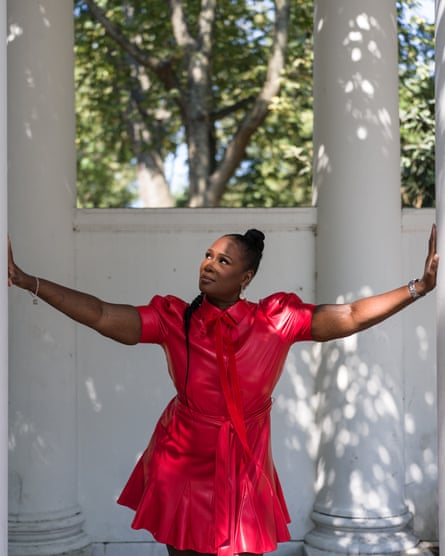
What would she have said to him, if he had stayed on the line? “Why didn’t you help me if you saw me with a black eye? How would you feel had that been your daughter, or anybody you loved?” He could, she says, have been the “key” to the attempted murder not happening.
Brownlee’s ex was released after 10 years. She has worked hard to forgive him. “I was so angry and bitter. I didn’t want to be a product of that. I really believe in the power of forgiveness, because it’s not for them: it’s for you, it’s for the people around you.” They have been in the same room together once since his release – after his mother died, she was present to support her daughters. They did not speak.
Now, at 55, her career is focused on advocacy, coaching and mentoring. After decades of silence about her attack, she now talks regularly about domestic violence, including to law enforcement. She wants to see legislation that would, among other measures, ban those convicted of domestic violence in New York from accessing firearms. “If we can keep guns out of abusers’ hands, that could cut half of domestic homicides,” she says. “I’m also trying to create a registry for domestic violence,” she says. This would allow people to check if someone – their new partner, for instance, or the partner of a relative or friend – had a related conviction. She also wants mandatory rehabilitation and training for domestic abusers because abusers too often leave prison unreformed. “If you just treat the symptoms, the symptoms come back,” she says.
Starting at the end of the year, she’ll also be heading into federal prisons – speaking to men who have committed, among other offences, domestic abuse and other violent crimes and offering mentoring and coaching.
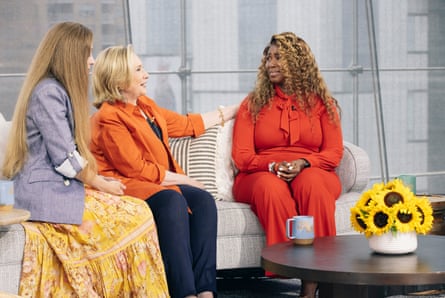
“Domestic violence doesn’t just start from a place of ‘I’m this abuser,’” she says. “It comes from different things they have experienced, the way they’ve been raised at home … So if I’m speaking to an audience of people who have been abused or been neglected, I can relate to them.” It’s a place to start while legislation catches up, she says. “If I can’t get Congress and the government to do it, then I have to take the initial step … then maybe they’ll come behind me.”
These days, when Brownlee isn’t on the road for work, she splits her time between her homes in New York City and the south. She exercises, walking 3.5 miles a day, and still returns to therapy when needed. Her religious faith is a guiding force: “This is a life that I will never get over – I’ve learned to live with it.”
Publishing her memoir this year brought her closer to some family members, who she says had not fully understood the extent of what she had been through until they read it. Some people in her life have apologised for “not even seeing the signs that something was wrong”. She doesn’t hold anything against them, though. She says her daughters, who are now 35 and 40, haven’t read her book. “Whenever they’re ready, they’ll read it … I don’t want to bring triggers to my children,” she says. Brownlee also remains close with her ex’s cousin who saved her life.
Her gaze is set firmly on the future, but that morning of January 1993 will never leave her: “There’s not a day I don’t think about it. But I’ve learned to accept this is my life, and how I respond is what matters. I was dealt a losing hand. But then, I was able to win.”
Katrina Brownlee’s memoir And Then Came the Blues: My Story of Survival and My Rise in the NYPD is out now (Akashic Books, £26.99).