2 months ago
97
2 months ago
97
In my clinic, a woman in her early 40s recently described something she called “brain lapse”. She is an academic and sharp as a blade, a voracious reader and someone who has held many tasks front of mind for many years. She told me that now, however, she finds herself struggling to follow a television drama. She loses the thread of conversations with her partner and states that she picks up her phone to check one thing (a single thing, she swears) and emerges 40 minutes later having watched a stranger assemble a complicated recipe from scratch and cried at a video of a dog reuniting with its family after a weather disaster. “I feel like my brain has been replaced with a knock-off,” she said. “It’s like I’m running on low-power mode all the time.”
She’s not alone. Across my practice, clients of all ages from teenagers to people in their mid- 50s are reporting the same symptoms: reduced memory, shortened attention spans, reduced ability to concentrate. Nearly all of them trace the decline to the same source – the smartphone that lives in their pocket, their palm, their bedside table, their bathroom counter, sometimes even the toilet. The almost permanent fixture in the space between them and every moment of potential boredom.
The science here is quite unforgiving. The attention economy is not a metaphor, rather, it is a business model. Top engineers and cognitive scientists employed by social media companies have spent the past decade perfecting the art of capture via infinite scroll, variable rewards and push notifications timed for maximum emotional impact – every element of the experience is baked in to keep you on the platform for as long as possible. Your attention is the product. Your time is the currency.
What shocks my clients most is how many hours in a week they use their phones, which they could never have estimated with accuracy. We frequently discover metrics like six to eight hours a day. Some exceed 10 or more. That’s the equivalent of a full work week spent staring into a rectangle.
The sad thing is that nearly all of these people would elect to spend their time elsewhere. Ask anyone whether they would prefer to scroll TikTok for three hours or have a meaningful dinner with their friends, and they’d choose the dinner. Ask them whether they want to be present with their family undistracted, able to follow a conversation, and they’d say yes. But wanting and doing often diverge when we factor in tech.
Many of my clients describe the same hollow ritual of sitting at the dinner table across from their partner or their children, phones placed next to plates or in one hand while they feed themselves with the other, the glow of a screen taking their attention. They really don’t want to be on their phones, they say with genuine distress, but they feel unable to stop. The habit has burrowed and has become a compulsion that operates faster than the part of the brain that would make a different choice. The way out isn’t willpower because this is a finite resource, and the apps are designed to exhaust it. The way out is friction.
Friction is the deliberate creation of layers between you and the apps. It’s creating an obstacle, an extra 20 seconds that give your rational brain time to catch up with your impulsive thumb. My clients who have succeeded in reclaiming their cognitive capacity have not done so by being stronger than the apps, they’ve done so by making the apps harder to access and the phone less inviting to look at for longer periods of time.
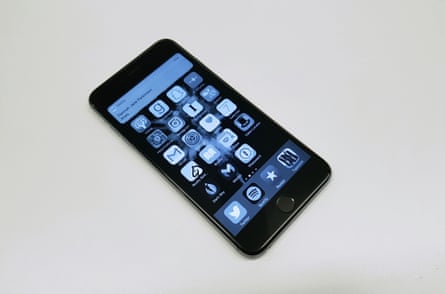
Using greyscale mode – switching your phone from colour to black and white – might sound almost childish in its simplicity, but the effect is extraordinary. Colour and inviting imagery triggers dopamine; the brightness of Instagram, the red of a notification. Remove colour, and you remove a significant portion of the apps’ addictive architecture. The phone becomes a tool again. Many clients report that greyscale makes the phone feel slightly boring and that pause of disinterest allows for more time to be taken back.
I encourage clients to combine greyscale with other layers such as time-out apps, which lock you out of social media after a set period, and removing apps from your home screen so you have to search for them. Keeping the phone in another room during meals where possible, and turning off all notifications except those from actual humans you actually know, can also be helpful. Each layer provides that friction.
Not all phone or social media use is negative, and I want to be clear about this.
My clients use their phones for work, for connection, for accessing news and information, for planning exciting life events or completing mundane personal tasks. The goal is the ability to use your phone as a tool, rather than being used by it as a resource.
I ask my clients often when they access the news on their phone to describe the experience. I then ask them to imagine it felt more like a newspaper. I then invite them to recreate that same feeling on their phones.
The former academic has been experimenting with greyscale for three weeks now. She hasn’t become a luddite, but she read two books last week. She sat on her couch and turned pages and followed sentences from beginning to end without checking her phone. “This is what I’ve been missing,” she said. We can all get something like that experience back. The first step is making the scroll a little bit harder.
*All clients are fictional amalgams