3 months ago
141
3 months ago
141
Having enjoyed setting up bird boxes with his father as a child, the wildlife artist Robert Fuller wanted to go one step further. While he happily spent hours making the boxes and dotting them around the Yorkshire Wolds, he found it tantalising that he was unable to see exactly what the nesting owls, kestrels and kingfishers were up to.
It transpires Fuller was not alone in his curiosity. His YouTube channel, which livestreams footage from his artificial habitats and documents his love of British nature, is about to hit a million global subscribers. His channel now generates on average 2.8m monthly views.
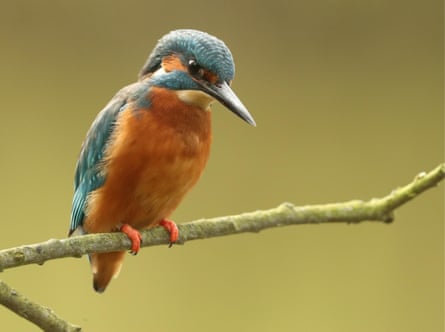
“I started building nest boxes for me to photograph and film from, which were in fallen-down trees,” he said. “I’d get my chainsaw out and make them into a natural nest box. The frustration was I couldn’t see what was happening inside, so I started placing cameras.”
He then decided to stream the footage live on YouTube. “I didn’t have any expectations at all,” Fuller said. The viewers did not initially flock to the footage, but lockdown fuelled interest.
At one point during the Covid pandemic, a Dutch bar began livestreaming one of his barn owl nests instead of sport. Viewers from China, South Korea, India, the US and across Europe have since become hooked.
Births, fledgling flights and even first dates are big hits. “Sometimes, the first time birds meet is live on camera,” Fuller said. “Then we see the courtship. It’s all awkward and they’re a bit like teenagers.
“The barn owls are especially hilarious. The male invariably does something wrong. He calls for weeks and then he rushes towards her and knocks her over.”
Among the most watched videos is a clip of a young barn owl’s reaction to thunder, with 27.7m views, and a film about a kestrel pair’s relentless battle to protect their nest from intruders, which has had 16.6m views.
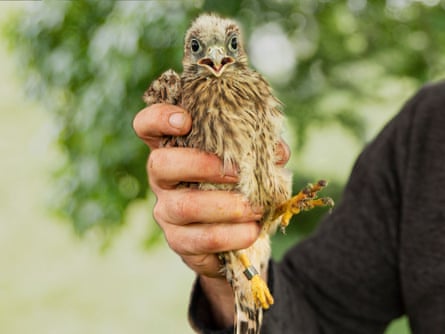
One viewer described the livestreams as “like watching nature’s soap opera”. As many as 70% of livestream watchers are repeat viewers. “There’s no other way you see this secretive life,” Fuller said.
His efforts have already led to Fuller featuring on the BBC’s Springwatch. But by building an audience on YouTube, he has achieved something traditional broadcasters are now trying to replicate.
Unsurprisingly, Fuller is an enthusiastic advocate for the platform. However, he dampens any notion that he has become a media mogul as a result of his efforts. In reality, he says, his art business subsidises the significant costs of his filming and the expensive equipment that is needed.
The relatively small ad revenue that his YouTube channel generates goes towards staffing costs.
While Fuller is clear that YouTube has allowed him to present British wildlife to a global audience, he also has concerns about its approach to AI-generated material.
“YouTube has been an incredible platform for people like myself, but with the AI tools that are now being supported, in my mind they’re unpicking what YouTube is actually about – which is to work with and support content creators like myself,” he said.
“People say on my videos that they’ve got to be AI, because the footage is so good. But it’s the lengths I go to to get this footage. I work over 100 hours a week throughout the year to do this.”
He said he was “absolutely baffled” that YouTube was allowing AI content.
Under YouTube’s current user rules, AI-generated content is meant to be labelled. A spokesperson for YouTube said: “YouTube has said that not all content made with AI is poor quality and that it has a good track record for weeding out low-quality, clickbait and spammy content.”
Fuller said: “[The channel] has changed me in a way. I live in the middle of nowhere and I just love filming my wildlife and studying it. I only get involved in the outside world a micro amount.
“But I actually started thinking more about other people in a way, because of the letters and emails from all over the world saying how much it meant to them in lockdown and since. The difference it makes to people that are struggling is incredible.”