2 months ago
75
2 months ago
75
The energy secretary, Ed Miliband, has returned from the Cop30 climate conference in Brazil, where he championed the UK’s world-leading promise to ban all new oil and gas licences and backed the call for a blueprint to “transition away from fossil fuels”.
Back at home, the government says it is sticking to its manifesto pledge by becoming the first major economy to have a 1.5C- and climate science-aligned no new licences position, but it plans to allow some new drilling in oil and gas fields that have existing licenses.
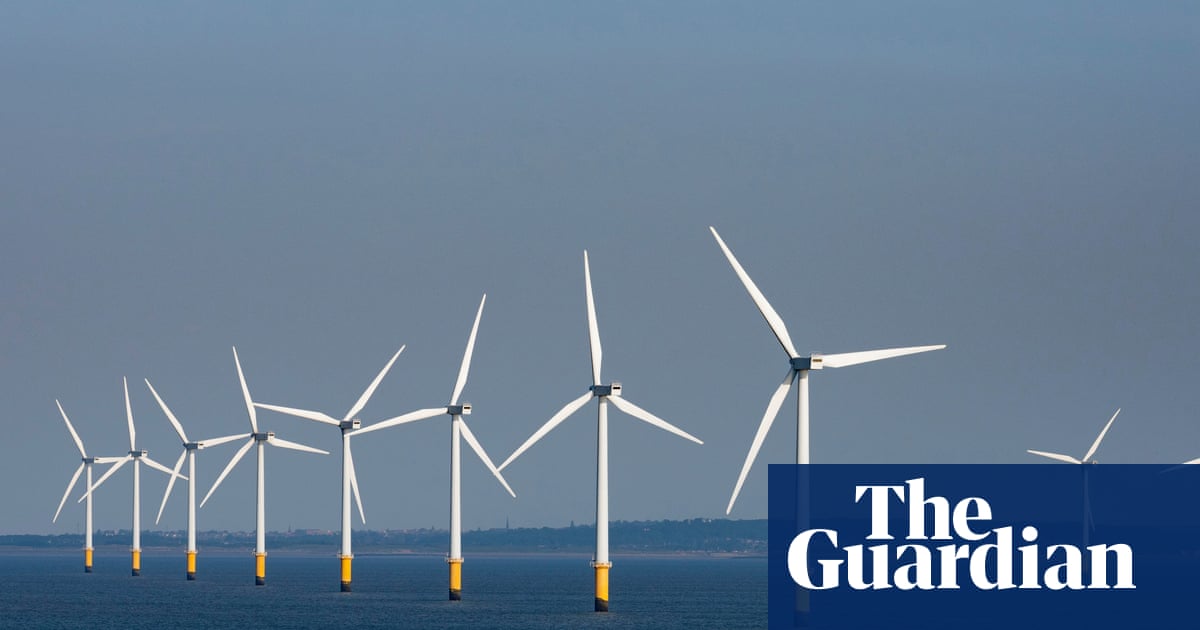
The North Sea strategy, released on Wednesday alongside the autumn budget, will introduce “transitional energy certificates” that will allow new drilling on or near existing fields. These are called “tiebacks” and will enable a small amount of new fossil fuel extraction. The government argues that this will help ensure they remain economically viable and are managed for the entirety of their lifespan.
Environmental campaigners say this will result in a relatively low amount of fossil fuel extraction. Tessa Khan, the executive director of the environmental nonprofit Uplift, said: “This government is right to end the fiction of endless drilling. The North Sea is an ageing basin, with most of the gas already burned, and new licensing will do nothing to stem the decline in jobs.
“We now need this government to be bolder – to make sure the jobs and wealth generated from the shift to clean energy reach UK workers and communities, and to ensure we maintain a livable climate. That means a proper plan for workers and an end to all new fields, including the huge Rosebank oilfield.”
Analysis from Uplift, based on NSTA (North Sea Transition Authority) and Rystad data, shows that new discoveries within a 30-mile (50km) radius of existing production sites contain just 25m barrels of oil and another 20m barrels’ worth of oil equivalent in gas. For context, the Rosebank oilfield – a decision on which is due imminently – would involve the extraction of nearly 500m barrels of oil and gas-equivalent over the course of its lifetime.
In the budget, the chancellor, Rachel Reeves, announced that fuel duty had been frozen until next September after a campaign from the Sun newspaper and rightwing MPs. The tax was designed to increase by 1p plus the rate of inflation annually, to incentivise drivers to use greener forms of transport. However, since 2010, every chancellor has kept rates frozen which, according to the Social Market Foundation (SMF), has meant the real value of fuel duty has tumbled and the equivalent of 81p in 2010 terms is now worth 53p today. The 15-year freeze has cost the exchequer more than £130bn, it is estimated.
Research from the SMF has found the freeze saves the richest households, who tend to drive larger cars, considerably more than it does the poorest, who are far less likely to own a car. It also fails to incentivise switching to electric vehicles or public transport. This needs to happen if the UK is to meet net zero goals; domestic transport is the most emitting sector, accounting for 28% of total domestic emissions in the UK.
The government will also introduce a tax on EVs and plug-in hybrids. The rate will be 3p per mile and increase annually with inflation. The average EV driver doing 8,500 miles a year will face an extra £255 in the first year, according to estimates from the Office for Budget Responsibility.
Colin Walker, the head of transport at the Energy and Climate Intelligence Unit, said: “Having already increased the vehicle excise duty on EVs, and given in to industry lobbying by weakening its EV sales targets, the government risks sending mixed signals and undermining consumer confidence by trying to encourage drivers into EVs with one policy and possibly putting them off with another. The net result could be to keep people stuck in dirtier and more expensive petrol cars for longer.”
Reeves will be moving green levies from bills to general taxation. This will remove about £2.3bn a year from bills from April for three years, which will save the average household about £150 a year. Greenpeace UK’s head of politics, Ami McCarthy, said: “Shifting most green levies into general taxation is great news for bill payers and will fund long-term bill-saving schemes far more fairly.”
It will be paid for by scrapping the ECO (energy company obligation) scheme, which paid for energy efficiency upgrades for the poorest households, although it has been criticised for being poorly executed and Reeves said it had cost some households more than they had saved.
after newsletter promotion
Labour has faced pressure on energy bills after Miliband promised during last year’s general election campaign to lower bills by £300 a household by the end of this parliament. The large costs to upgrade the electricity grid, to ensure new renewables can be connected, as well as the rising costs of building renewables, has meant this has been impossible to do without removing levies from bills. These pay for things such as insulation for poorer households and the warm homes discount for those who find it hard to pay bills.
Andy Hackett, a senior policy adviser at the Centre for Net Zero, said: “Cutting levies on electricity is welcome and overdue, but it can’t come at the cost of cutting the very investments in homes that help make bills fall for good – especially for those in fuel poverty.
The knock-on impact on Labour’s warm homes plan could leave them spending less on home upgrades than the previous government, despite repeatedly blaming them for a record of underinvestment. You can’t build a modern, clean energy superpower on old housing stock. The government should not backtrack on its warm homes plan, especially for fuel-poor households.”
While oil and gas companies lobbied hard for the government to remove the windfall tax introduced by the Conservatives in 2022, Reeves resisted this. She said the energy profits levy will remain until 2030, and will raise £2.7bn in 2025-26. In a sign of the slow demise of the North Sea basin, this is 40% less than will be raised in 2024-25. McCarthy said: “Holding firm on the oil and gas windfall tax, despite fierce industry lobbying, will also continue to support the transition to clean energy.”
Mike Childs, the head of policy at Friends of the Earth, commenting on the absence of polluter-pays taxes, said: “The government has missed a golden opportunity to make the biggest polluters pay for the damage they cause – a move that would curb pollution and help fund real solutions. They should have introduced progressive measures like a frequent-flyer levy and used the money raised to boost much depleted bus services.”