3 hours ago
5
3 hours ago
5
In preparation for interviewing Pussy Riot’s Maria “Masha” Alyokhina at the Charleston festival, I was reading her new memoir, Political Girl. I thought I remembered the group’s origin story pretty well – in 2012, they performed their anthem, Punk Prayer (Virgin Mary Banish Putin), and two band members were imprisoned for two years in a penal colony, then released slightly early in order to sanitise the country’s reputation before the Sochi Olympics in 2014. Upon release, they immediately went on to protest at those Olympics, the courage of which is jaw-dropping.
That was missing a few key details: Alyokhina had never even been detained for an act of protest when she was arrested, strip-searched and jailed for this. We weren’t looking at a thin-skinned but otherwise democratic government, overreacting in the way that young democracies sometimes do. The detention of Pussy Riot signalled a significant shift towards the aggressive authoritarianism that is now self-evident, and, in those early days, was expressed and mobilised through misogynistic, patriarchal values-setting built on Christian nationalist foundations. At their trial, one lawyer argued that “feminism is a mortal sin”. Alyokhina was pilloried for being a bad mother (her son was four when she was imprisoned). If Pussy Riot weren’t on trial for being women per se, certainly their cultural act of defiance was immeasurably worsened by the fact that they weren’t men.
If that had been taken seriously by the international order in 2012 – both that we were witnessing misogynist oppression, and that such a thing was both signal and building block of wider oppressive intentions – then I’m not saying the invasion of Crimea could have been prevented, but it definitely would have been less of a surprise. Would the war of aggression against Ukraine therefore have unfolded differently? Again, it’s hard to convincingly build a sunlit alternative universe, in which approximately 2 million Ukrainians and Russians hadn’t been killed or injured, but it’s also hard to argue that these morally foggy years between 2014 and 2022, when EU sanctions against Russia were extended in six-month increments, didn’t bed in a certain ambivalence about Russia’s place in the world order. Friend or foe? Foe-ish? Foe-lite?
Far-right movement-building always includes, and very often starts with, the repression of women. The obvious jumping-off point is reproductive rights, since that’s easily the most effective: a woman who can’t control when and whether to have children isn’t in control of anything. Liberals often profess rhetorical confusion that the same politicians who would fight to the death to ban abortion don’t seem to care when those same babies, having been born, end up hungry, we’ve got to stop pretending not to understand this, when the reason is so plain. The children couldn’t be less relevant to the anti-abortion movement, except insofar as they create the apparatus for controlling a woman’s private behaviour and all future life choices.
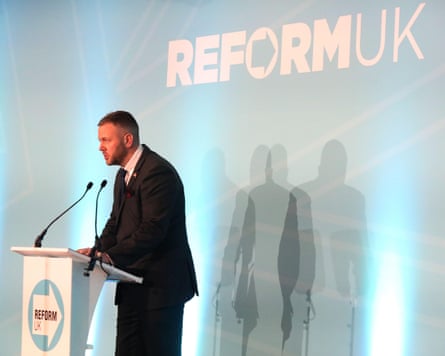
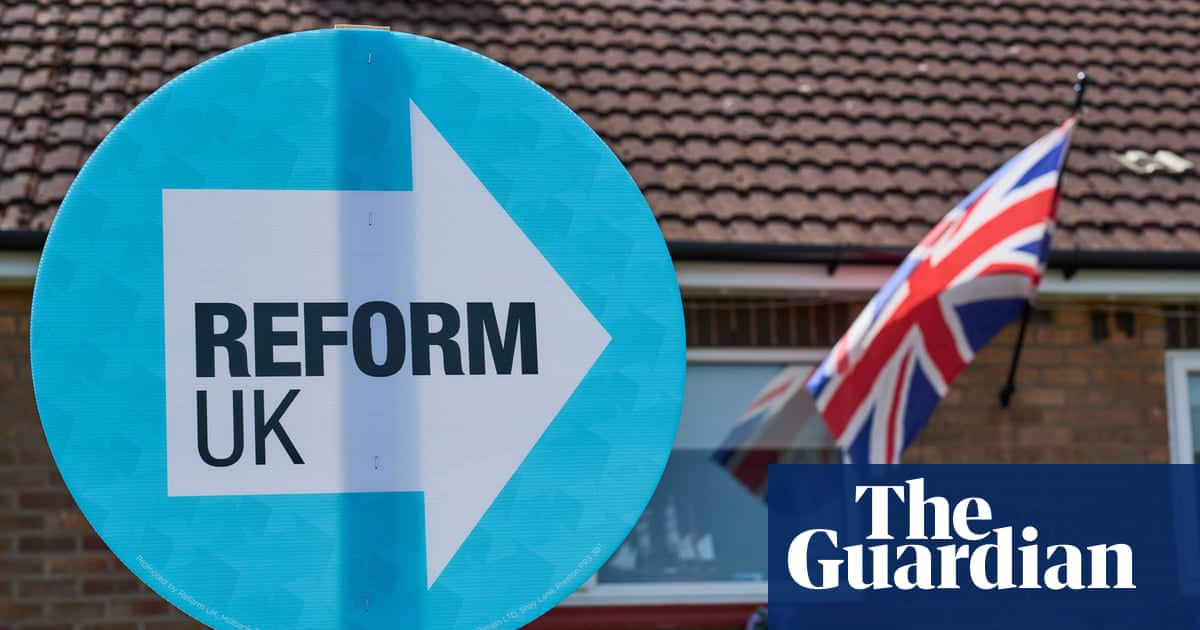
This is why overturning Roe v Wade was the first priority of a Trump-stacked supreme court. This is why Reform’s Makerfield candidate, Robert Kenyon – surprise, surprise – allegedly has been both anti-abortion and toxically misogynistic on social media and this, crucially, is why Reform’s high command has said explicitly that it has no plans to censure or investigate him. The attitudes alone are not enough – they have to be paraded; they signal that equality and universalism are no longer a thing, that pluralist politics have been jettisoned in favour of domination and control.
Again, liberal arguments go in on exactly the wrong pressure point, trying to make it make sense – why, when women constitute so very much of the electorate, would any politician set out to alienate us? We know, from any democracy on Earth that has thrown up a far-right victor, that women don’t vote en masse in the interests of their gender; that some are as susceptible to the politics of domination as some men are. Yet we try to rationalise it on our own terms, and treat misogyny simultaneously like a side dish to the meat of a policy platform, and like a mistake so self-evident that people can be argued out of it.
Repressing women is never an accident or a blip. It’s world-building; we need to realise that before we sleepwalk into that world.
Zoe Williams is a Guardian columnist