3 months ago
126
3 months ago
126
What makes a good player great, and a great player the best? This question has been occupying me since 2014, when the Guardian first asked me to contribute to its inaugural Next Generation feature. My job was to look for a France-based talent born in 1997 who could go on to have a stellar career.
After a great deal of research, I narrowed it down from my shortlist of five by asking questions not about the players’ football ability, but about other attributes: resilience, adaptability, decision-making, creativity, work ethic, response to feedback and willingness to learn. Qualities we cannot see, and are harder to measure.
Based on those answers, one player stood out above all the others: a kid called Ousmane Dembélé, then a youth player yet to make a first-team appearance at Rennes. Eleven years after appearing in these pages as one to watch, Dembélé has been voted the best male player in the world by the Guardian’s 219-strong voting panel.
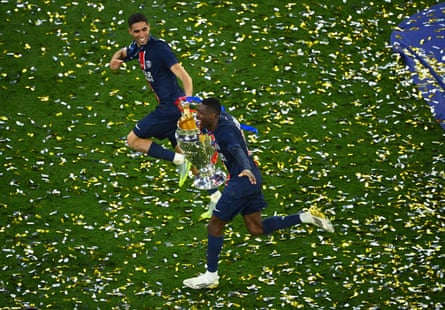
Those intangible qualities were in full effect on the night Dembélé made good on his years of promise. The defining image of Paris Saint-Germain’s 5-0 win over Inter in the 2025 Champions League final was not the trophy lift, or any one of the goal celebrations, but Dembélé, poised on the edge of the opposition penalty area, with hunched demeanour and furrowed brow, his face a picture of focus, ready to press. Just how did he get to this point?
One lesson to learn from the Dembélé story: the path to greatness is not always linear. He started off like a train, winning France’s young player of the year award in his first season as a professional. The following season, he helped Borussia Dortmund win the German Cup.
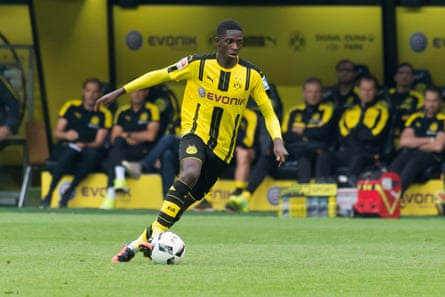
Around that time, in the course of research for my book, Edge, I spoke to Thomas Tuchel, his coach at Dortmund. Tuchel told me that Dembélé’s talent came with an obligation and responsibility to improve. He bracketed his players into one of three “ABC” categories, depending on their dominant motivation, and would change his man-management style accordingly.
The A category stood for “aggressive-motivated”, and referred to players motivated by individual glory and awards (in Tuchel’s eyes, this was not necessarily a negative: think Neymar at Paris).
B stood for “binding-motivated”, those players who love being part of the group and bringing people together (often captains, such as César Azpilicueta at Chelsea).
C stood for “curious-motivated”. These were the players capable of greatness, who needed to be trained in a slightly different way. Their talent could take them far; and on a good day, they were capable of anything. Tuchel loved coaching these players. Dembélé, he felt, was a C.
But the journey was not always smooth. In 2017, he moved to Barcelona, who were flush with money from selling Neymar for €105m (£97m). It was a sliding doors moment. That same summer, Barcelona changed coach: in came Ernesto Valverde; out went Luis Enrique. In six injury-laden years at Barcelona, Dembélé started only a third of the league games. He scored a total of 24 league goals. His most memorable moment might have been missing a last-minute one-on-one in the 2019 Champions League semi-final against Liverpool, when Barcelona were already 3-0 up (remember what happened next? They lost the second leg 4-0). When he did leave, amid mutterings of wasted talent and blackmail, it felt like a relief for all parties.
There is some symmetry to Dembélé’s exceptional 2025. Of the 30 goals he has scored this calendar year at the time of writing, the most decisive and emblematic was probably against Liverpool in the second leg of their Champions League last-16 tie. With PSG 1-0 down from the first leg, Dembélé drifted into his own half, losing his markers who didn’t want to follow him that far. He picked up the ball and spread it wide to the right-winger Bradley Barcola, then sprinted into the box and made it to the cross to score. (He also scored a penalty in PSG’s successful shootout after they won 1-0 at Anfield that night). Dembélé did something similar against Arsenal in the semi-final, dropping deep early in the game, switching the play to the left-sided Khvicha Kvaratskhelia and receiving the return ball, unmarked, on the edge of the area, before scoring. Even when teams knew it was coming, they couldn’t stop him.
At the start of last season, Luis Enrique’s plan was for the whole team to replace the goals of Kylian Mbappé, who had joined Real Madrid. After all, Dembélé had not scored more than 10 league goals in a season since his debut campaign at Rennes. Luis Enrique wanted the team to be the star. And so, with no star player to serve, Dembélé was liberated. This curious-motivated talent who once scored penalties with either foot, and even took corners with either foot, quietly became the main man. He starts the press; his vision, movement, pace, control and positioning set the tone; and his finishing, once considered wasteful, is ruthless.
I still don’t know exactly what makes a good player great but I am closer to an answer. Part of the equation remains what we cannot see: the chemistry within a team, the relationship with a specific coach, playing in a system that brings out the best in every player. But also those other qualities that Dembélé had at 17, and still has now. This well-deserved prize is as much for those attributes as it is for his goals and the trophies he helped Paris Saint-Germain win.