3 months ago
162
3 months ago
162
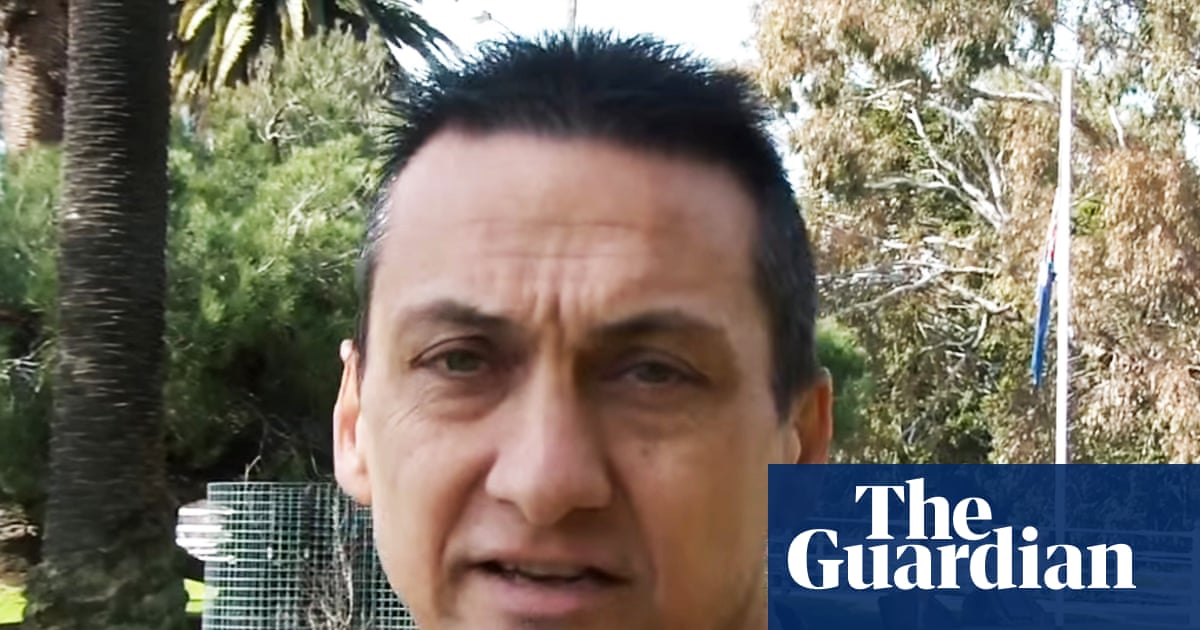
“A giant exposed nerve ending” is how Entertainment Weekly described the actor Peter Greene in 1995. Greene, who has died suddenly aged 60, brought his unnerving intensity to a handful of high-profile films in the 1990s, including Quentin Tarantino’s brash comic thriller Pulp Fiction (1994).
Greene appears in the small but memorable role of a depraved security guard named Zed, who uses the eeny-meeny-miny-moe method to determine which of the two trussed-up captives in a pawn-shop basement – a gangster (Ving Rhames) or a boxer (Bruce Willis) – he should rape first.
His eventual demise, after being interrupted during the assault, shot in the groin and left to be tortured by the gangster’s associates, makes possible a much-quoted line delivered by Willis: “Zed’s dead, baby. Zed’s dead.”
Greene claimed to have initially declined the role for fear of embarrassing his parents. “Once they said: ‘No, go ahead,’ I said: ‘Fine.’”
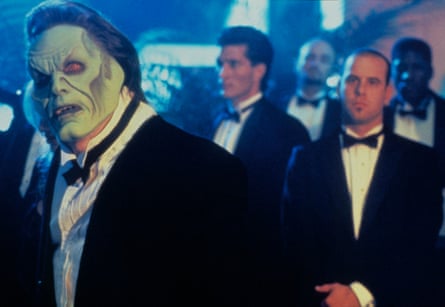
In the same year, he was a broader but no less menacing villain in the wickedly inventive comedy The Mask. Jim Carrey plays the ineffectual clerk who becomes a hyper-confident, indestructible, lime-faced whirling dervish whenever he dons an enchanted wooden mask. As a ruthless criminal, Greene gets to wear the mask himself during the climax. Unlike Carrey, it renders him not cartoonishly funny but grotesque, with burning red eyes and a forked tongue with which he laps at Cameron Diaz in her movie debut. He is finally flushed away in an ornamental pond that becomes a giant toilet. It’s that sort of film.
The Mask took more than $351m, making it the fourth-highest grossing release of 1994. Between that and Pulp Fiction, which grossed $213m worldwide, most cinemagoers that year would have been familiar with Greene’s face if not his name.
He went on to make fleeting appearances in two other well-regarded thrillers, The Usual Suspects (1995) and Training Day (2001). Christopher McQuarrie, who wrote the former, called him “a million-dollar day player” for his ability to spin gold out of the smallest role.
None of those movies demonstrated the extent of Greene’s talent and commitment. That distinction belongs to Clean, Shaven (1993), an uncompromising expressionistic drama in which he plays a tormented man suffering from schizophrenia and searching for his estranged daughter.
The first-time director Lodge Kerrigan shot it for just $60,000 over two years, halting production whenever he ran out of money. Though it was Greene’s movie debut, it took so long to make that it was beaten to cinemas by Laws of Gravity (1992), set among the petty thieves of Greenpoint, Brooklyn, in which Greene acted alongside the future Sopranos star Edie Falco.
Kerrigan recalled him arriving at the audition for Clean, Shaven: “He came in without a head-shot, without a resumé. He had such a high level of energy and a real presence.”

Along with the film’s desolate cinematography, and the fractured sound design evoking auditory hallucinations, the actor’s jittery, hounded performance was instrumental in providing a small but valuable insight into the schizophrenic experience.
Scenes of Greene appearing to gouge his scalp or remove his own fingernail with a pen-knife caused audience members at the Sundance film festival to faint or flee. Though little-seen, the picture was highly respected. The film-maker John Waters programmed it as part of a 2006 season for Here TV called Movies That Will Corrupt You. Another fan, Steven Soderbergh (Erin Brockovich, Traffic), observed of Greene’s performance: “Even when he is in repose, there’s an enormous amount going on.”
Enormous was also the word used by Kerrigan to describe Greene’s range. “It would be a shame if he gets typecast,” he said. But the actor’s CV was conspicuously short on country vicars and good Samaritans.
Greene played a gangster in Judgment Night (1993), a terrorist in Under Siege 2 (1995), a mercenary-turned-crimelord in Coyote Run, AKA Sworn Enemies, and a blackmailer who is terrorising Halle Berry and in cahoots with Clive Owen in The Rich Man’s Wife (both 1996), a dealer who introduces a screenwriter (Ben Stiller) to crack cocaine in Permanent Midnight (1998), and a diamond thief who betrays the rest of his crew in the Martin Lawrence action comedy Blue Streak (1999).
He was born in New Jersey as Peter Green, and later added an extra “e” to his surname to distinguish himself from a namesake in the Screen Actors Guild. He was educated at Montclair high school but dropped out before graduating. After working briefly as a busboy, clearing restaurant tables, he began delivering marijuana around New York on behalf of a sex worker. So began a hazardous period of his life spent dealing drugs. At one point, his home was fire-bombed by fellow dealers to whom he owed money.
During spells of homelessness, he had sometimes slept in theatres and had somehow fallen in with the makers of what he called “Off-Off-Off, way-Off-Broadway” productions. A chance meeting with the acting coach Penny Allen changed the direction of his life. Allen, who described him as “the kind of actor that will walk the edge”, encouraged him to try out for auditions for independent films.
Success exacerbated his drug use. “Many times when he’s shown up on film sets, he’s been completely loaded on drugs and/or alcohol,” reported Mark Ebner, a journalist and Greene’s former personal assistant, in an interview published in Premiere magazine in 1996 with the actor’s consent. (He hoped that “some sick junkie gets well because of this story”.)
The article referred to Greene’s “track-marked twig of an arm”, detailed his attempts to score heroin in downtown Los Angeles, and noted that he was found with a crack pipe on the set of Judgment Night.
He was never short of admirers. Nick Gomez, who directed Laws of Gravity, compared him to Robert De Niro in his “intuitive, instinctive” approach. “Peter’s emotional life is so resonant, and so close to the surface, that he doesn’t know how to work any other way. That’s his strength as an actor, which at the same time is his weakness as an individual.”
Amy Holden Jones, who made The Rich Man’s Wife, called him “a mercurial presence. The camera loves him. He does unexpected and wonderful things. And he’s scary as hell.”
He continued to act throughout his life, though the films became markedly less interesting. One exception was Tesla (2020), an unconventional biopic directed by the avant-gardist Michael Almereyda, starring Ethan Hawke as Nikola Tesla and Kyle MacLachlan as Thomas Edison, and featuring deliberate anachronisms (laptops, Google searches).
Films in which Greene had cameos tended to be the only ones of his that he could bring himself to watch. “You see the mistakes,” he said. “I went to The Mask premiere but I was sitting in the lobby.”
At 20, Greene married a friend who needed a green card. Though they were estranged soon after, the marriage was never dissolved.
He is survived by a son, Ryder, as well as by a brother, John, and a sister, Mary-Anne.