2 months ago
119
2 months ago
119
“There’s a genuine battle going on between Reform UK and Labour for Sikh voters,” says Dabinderjit Singh, of the Sikh Federation.
Until the case of Henry Nowak, the 18-year-old stabbed to death by Vickrum Digwa, a British Sikh, hit headlines across the country, traditional support for Labour among British Sikhs was slumping, while support for Reform was rising from a low base. But now the fledgling alliance between some British Sikhs and the populist right is facing its toughest test.
The Reform party is facing questions from its own Sikh membership about Zia Yusuf’s threat to stop British Sikhs from carrying ceremonial kirpan blades, while community leaders blame comments from the Reform leader, Nigel Farage – who called for “pure, cold rage” after Nowak’s killer was jailed for life – for contributing to anti-Sikh hate crime.
The moment raises questions over whether the populist right can successfully retain sympathetic ethnic minority voters or whether such alliances are destined to end in tears.
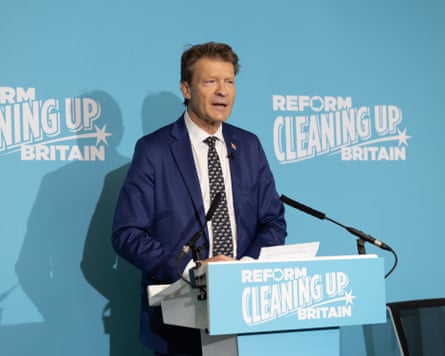
Reform’s deputy leader, Richard Tice, met Sikh leaders after some “furious” Sikh Reform activists warned him the party risked losing their vote for good, the Guardian has learned.
Another Reform activist from a Sikh background – Navtaij Sangha – has said a nuanced debate on the rules around the kirpan would be welcomed.
Sikh community organisations say the blade Digwa used was not a kirpan – the small blade Sikhs are permitted to carry by UK law – but a Persian blade that Digwa wore as part of his membership of Nihang, a Sikh warrior subculture. Nonetheless, the case has triggered a debate that goes to the heart of Sikh identity.
On 29 May, Reform’s home affairs spokesperson, Zia Yusuf said: “I don’t care what religion you are … Reform will repeal the exemption for Sikhs to carry the kirpan”, in a post on X. Days later, Farage said British people should respond with “pure, cold rage” to the murder case.
Dabinderjit Singh, who is the Sikh Federation’s chief executive for political engagement, said Yusuf’s comments had “no basis in logic” and that Farage’s “unforgivable” words had intensified a backlash against the law-abiding majority of British Sikhs, among whom a survey is being circulated collating experiences of hate crime in recent weeks.
It is understood that last week Labour government ministers met MPs to discuss anti-Sikh hate. Sikh organisations want an inquiry into police contacts with Digwa, whose behaviour had been reported to police by British Sikhs before he went on to kill.
“There have been dozens of physical attacks on Sikhs in the UK and there are Canadian cases, American cases,” Singh added. “This is 9/11 for us all over again,” Singh added, referring to the abuse Sikhs faced after the World Trade Center terror attacks, from racists who mistook them for Muslims.
“Basically, there was a fire and Farage just threw petrol on it,” Singh added.
It’s believed Reform has about 100 Sikh activists. The party fielded about 30 ethnic minority candidates in Hounslow in west London alone in May’s local elections, with British Sikhs the best represented group.
But a source said some Sikh Reform activists were “blindsided” by Yusuf and Farage’s comments, and are urging party leaders to clarify their position on the kirpan.
Support for Reform among Sikhs, whose community has grown since the last census when it was recorded at 525,000, had been increasing. In 2024, 3% of Sikhs voted for Reform, but by 2025, 7% backed Reform, with support strongest among men and younger people, according to the British Sikh Report.
Support for Labour fell from 40% to 18% over the same period, those who did not intend to vote increased from 12% to 13%, and “prefer not to say” increased from 11% to 19%, suggesting a significant number of British Sikhs’ votes are up for grabs. Support for the Conservative party fell from 20% to 18%.
In May, Tice attended a gurdwara wearing a traditional orange head covering. But north London Reform activist Sangha, a management consultant from a British Sikh military family, said support for Reform among Sikhs had grown “organically”, rather than as a deliberate strategy.
“The reason you’re seeing support for Reform growing within certain demographics – the Hindu community, the Sikh community and even the Muslim community – is they feel their identity as established Brits is under threat from a newer wave coming in,” Sangha said. “This isn’t discussed because ethnic minority groups are seen as single blocs.”
Brexit has also been a factor. Jasvir Singh, the commentator and barrister who founded the charity City Sikhs, said: “In certain pockets of the Punjabi Sikh community, there were high numbers of leave voters, like Hounslow, where self-employed people were feeling ‘we’ve suffered as a result of migration from Europe’. That kind of mentality has led to this increase in support for Reform.”
For years before Nowak’s murder, high-profile figures on the British right, including Tommy Robinson – who counted Sikhs who opposed grooming gangs among the earliest members of the English Defence League – and Farage, had praised Sikh integration.
But Jasvir Singh suggested recent events were a turning point. “I think there’s been a real changeover the last few weeks,” he said. “We still don’t know for certain what Reform will do, but they have indicated they’ll ban the kirpan, and if that’s the case, you will see an exodus of votes from Reform.
“The Sikh community feel slightly adrift when it comes to political support. But the majority of support is still for Labour, and so they are likely to benefit from a drop in support for Reform and a hardening of views on the right of the political spectrum against the kirpan. There are 11 Sikh MPs in the Commons and all of them are Labour.”
Dabinderjit Singh says Sikh voters are critical in seats where Reform is second to Labour MPs – such as Smethwick, Wolverhampton South East and Coventry East – and seats where Labour is challenged by independents, such as Slough, Walsall and Bloxwich, Ilford North and Ilford South.
One Sikh community leader, who did not wish to be named, said: “It has suited Reform to have a visible minority who have small ‘c’ conservative values around.
“You could see it as a divide and rule strategy, where Sikhs are held up against Muslims. But people have said to me: ‘I’m not voting Reform now’, given they’re coming out with these statements.”
For Sangha, a debate on kirpan rules shouldn’t be shut down. “One of Zia [Yusuf’s] real strengths is his ability to make quite complex things quite simple, but on [the kirpan] it was perhaps a simplification too far – so I can see why people are upset,” he said. “However, there are younger guys who push the rules and wear the kirpan on the outside of their clothing in public, for example.
“If the law should be clarified and made simpler, no one’s against having those conversations. The idea of inclusion and accommodating differences – it isn’t healthy for it to be owned by the left.
“The Sikh ethos is that we are all equal – that sense of equality without identity politics – is what has drawn so many to Reform. There is space for us to discuss this in Reform – and we should do.”
Dabinderjit Singh says hard lessons have been learned, however. “When these things happen they can become generational,” he added. “If you upset communities, they remember.”
Reform UK was approached for comment.