2 months ago
57
2 months ago
57
'Everything indicates' Russian intelligence commissioned rail sabotage incidents in Poland, government spokesperson says
In a further confirmation of the inquiry lines in Poland, the Polish security services minister’s spokesperson Jacek Dobrzyński has just confirmed that “everything indicates” that Russian intelligence services were behind the rail sabotage incidents in Poland over the weekend.
“The fact is that everything indicates that this ... we can already confidently call it a terrorist attack, was initiated by special services from the East,” he later added.
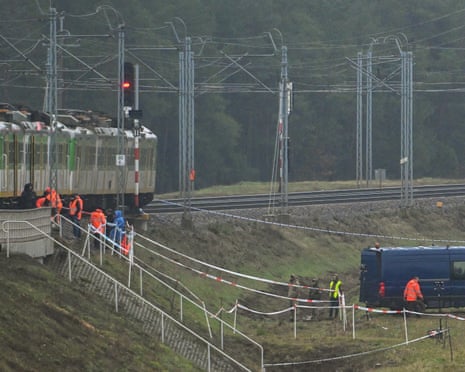
But he insisted that the investigation into the two incidents needed to be kept confidential at this stage to ensure it can be effective.
“I cannot say what stage the officers are [at] or [what they are] currently working on and what threads they are connecting or what threads they are analysing. The Russian services would very much want to have this information: where our officers are or in which direction they are heading,” he said.
Key events Show key events only Please turn on JavaScript to use this feature
Czechs join protests against incoming Babiš government as they mark anniversary of Velvet Revolution
Similarly, Czechs also took to the streets to use the anniversary of the 1989 events to protest against controversial populist billionaire Andrej Babiš, who is expected to lead the next government after last month’s parliamentary elections.
Large crowds flooded Prague’s historic Old Town Square at a rally called “Czechia is not for sale”, carrying banners criticising Babiš and chanting “Throw away Babiš”, an AFP journalist observed.
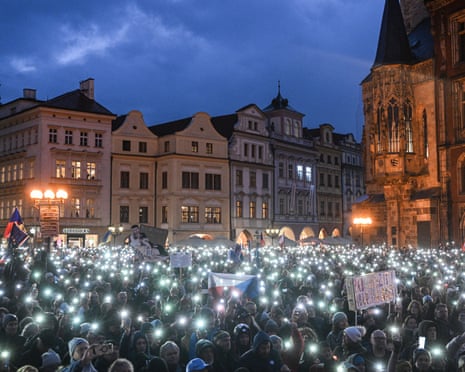
The billionaire’s appointment as the next prime minister continues to be delayed amid his unresolved conflicts of interest, which the country’s president, Petr Pavel, insists need to be addressed before he can take the top job.
Joining the official commemorations earlier in the day, Babiš was reportedly booed by some in the corwd.
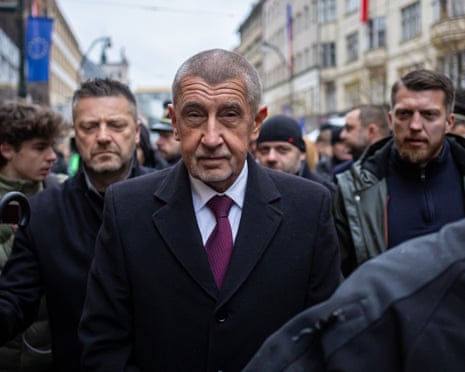
Later in the evening, some 100,000 people took part in an official commemorative concert at the Wenceslas Square in central Prague.
Tens of thousands of Slovaks protest against Fico as they mark Velvet Revolution anniversary
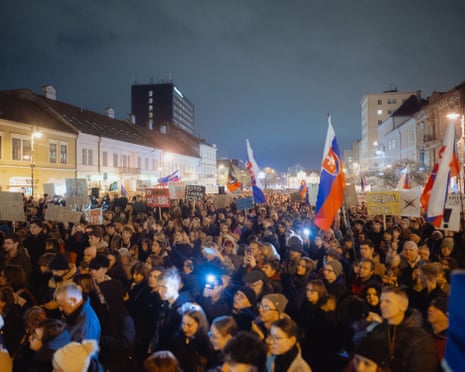
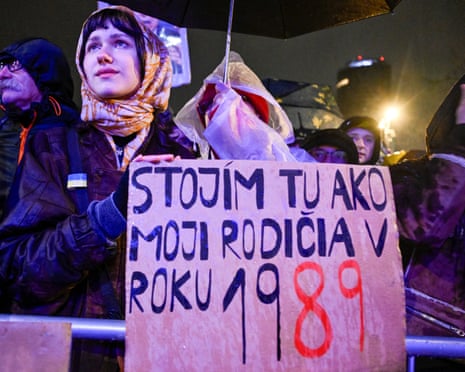
Last night, tens of thousands of Slovaks protested against the country’s populist and pro-Russian prime minister Robert Fico, marking the 36th anniversary of the Velvet Revolution which had ended the communist rule in the country in 1989, but which his government has recently removed from the list of national holidays.
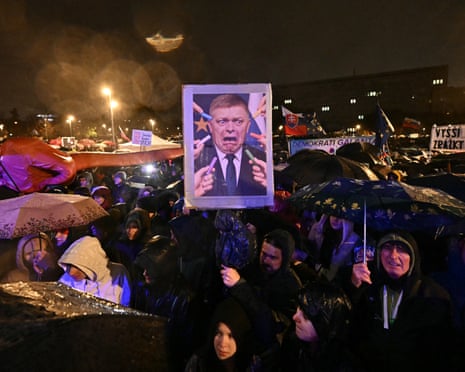
Despite torrential rain, protesters gathered across the country, including the capital, Bratislava, and the eastern city of Košice.
Fico remains a deeply divisive figure in Slovakia, which regular protests against his government and policies. Critics say he risks undermining the country’s pro-western course since 1989, jeopardising its relations with the EU and Nato, as he insisted on keeping close relations with Russia – visiting Vladimir Putin in Moscow three times since the full-scale invasion of Ukraine in 2022 – and opposed further EU sanctions on Russia or aid for Ukraine.
Most recently, Fico angered many by telling students in the city of Poprad that they should go to fight for Ukraine if they don’t agree with his pro-Russian views, AP noted.
The next parliamentary election in the country should be held by 2027.
Morning opening: 'All traces lead to Russia,' Poland says

Jakub Krupa
Poland’s deputy prime minister and defence minister, Władysław Kosiniak-Kamysz, said that looking at the rail sabotage incidents over the weekend in the broader context of hybrid threats facing European countries “all traces lead east, to Russia.”
Speaking on Radio Zet this morning, he also confirmed media reports that investigators were looking at a device was found near the blast site which they believe may have been intended to capture “the explosion or observe the site” of the blast.
Kosiniak-Kamysz said that Poland and Europe faced “a state between war and peace, where we have attacks, acts of sabotage, disinformation on a gigantic scale on the internet, the destruction, or attempts at destruction, of critical infrastructure across the whole of Europe.”
On Monday night, public prosecutors in Poland said an investigation had opened “regarding acts of sabotage of a terrorist nature […] committed on behalf of a foreign intelligence service against the Republic of Poland.”
This morning the Polish government will convene its national security committee to discuss the next steps in its response to the rail incidents.
I will keep an eye on what comes out of it.
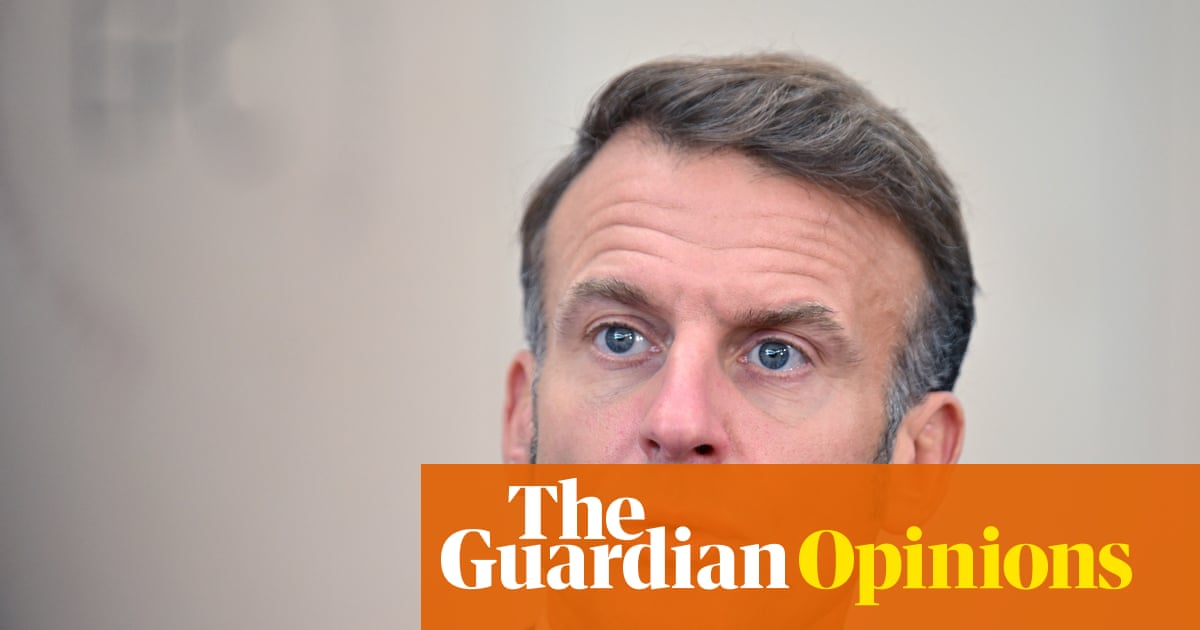
Elsewhere, the French president, Emmanuel Macron, meets the German prime minister, Friedrich Merz for talks in Paris, where they will be later joined by the UK prime minister, Keir Starmer.
Meanwhile, Ukraine’s president Volodymyr Zelenskyy is in Spain for talks with the country’s prime minister, Pedro Sánchez, before going to Turkey on Wednesday in a bid to reinvigorate peace talks to end the Russian invasion of Ukraine.
Separately, senior representatives of the EU candidate countries meet in Brussels at the EU Enlargement Forum, and Danes go to the polls in local elections, as the centre-left could lose control of Copenhagen for the first time in the city’s electoral history.
There is lots for us to cover. I will bring you all the latest updates here.
It’s Tuesday, 18 November 2025, it’s Jakub Krupa here, and this is Europe Live.
Good morning.