2 months ago
82
2 months ago
82
Whenever I see a headline about “the queen” cutting a ribbon for the Scouts or some hospital, I momentarily think Elizabeth II has risen from the dead. It takes me, on average, 45 seconds to realise they are talking about “Queen Camilla”. Have I fallen and bumped my head? Am I living in the past as a psychological response to our dystopian present? I’m clearly not the only one having trouble, as the BBC is rolling out an hour-long documentary on the late queen and the (apparently) glory days of the last century.
Marking what would have been Elizabeth II’s 100th birthday, the film explores British history through the prism of our longest-reigning monarch. The press release promises the documentary will span “a century of change for Britain”, one that saw the country move from the empire to the rise of celebrity culture, from the Blitz to the 2012 London Olympics. The documentary consists of archive clips of the queen and Britain over the years, with black-and-white footage of the young royal interspersed with commentary from top-tier talking heads, including Barack Obama, Helen Mirren, David Attenborough, Tony Blair, and also Gyles Brandreth.
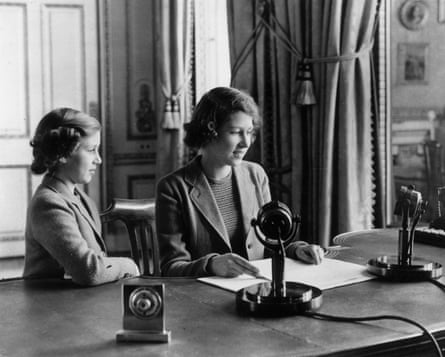
Every now and again a burgundy holding card that should have been cut in post-production interjects with something pointless, such as: “At the heart of our story, one extraordinary life.” (It’s never spelled out whose life the country’s collective psyche revolves around. My guess is Meghan, AKA the Duchess of Sussex, or Paddington.)
Much of the hour is spent recapping historical events with which anyone who watched The Crown will already be familiar. “But there’s a problem. The new king is in love with a twice divorcee American called Wallis Simpson,” Brandreth warns about Edward VIII, as if he is talking to someone cryogenically frozen in the early 1930s.
We are told repeatedly about Elizabeth II’s sense of “duty”. She was very good at shaking hands after George VI died, says Kirsty Young, who appears to be trapped in a room watching clips on an analogue television, reminiscent of A Clockwork Orange. Former Lioness Jill Scott declares that the queen was Britain’s “manager” during the pandemic, which will be news to Chris Whitty.
There is much less conversation about the darker side of the crown. When the empire is briefly mentioned, historian David Olusoga diplomatically summarises that the journey many nations took to independence was “fraught” and there was “some violence”. Still, no time to get into that! The queen is visiting Ghana! Here’s a photo of her dancing! Elizabeth II believed in the equality of races, we are told, which seems a perfectly normal thing to say about someone.
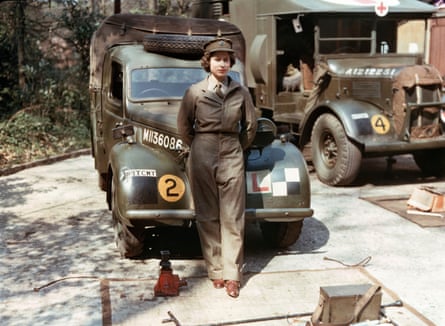
There are flashes of another, better show. The brief section on the mining disaster in Aberfan and the queen’s misstep of sending a statement before visiting are touching, as is her making the same mistake decades later over Diana’s death. But whenever a difficult point is touched on, it is brushed off with such speed you can almost hear the Palace’s press secretary calling whoever is running the BBC this week. The part on the historic visit to Ireland in 2011, notably, has time for multiple clips of the queen wearing a green two-piece, but none of Bloody Sunday.
The former prince Andrew’s downfall from his association with Jeffrey Epstein gets a mere two minutes. Producers mention his payout to Virginia Giuffre but not that his mother allegedly helped pay it.
There were two documentaries about the queen that the BBC could have made. One, a nuanced exploration of her reign and British history that respects its audience. Two, a hagiography aimed at Daily Mail readers. Commissioners chose the second option. Luckily, only critics like me have a duty to watch it.