2 months ago
153
2 months ago
153
Wouldn’t life be easier without a conscience? Imagine the freedom. No guilt. No anxiety. No responsibilities deeply felt, no investment in what society thinks of you, no constraints on your behaviour … My God, what a life. And above all, think of the money you could make. Frankly, I’m pretty envious of all the bastards out there scamming for a living. If I could, I’d become the next Elizabeth Holmes or Bernie Madoff in a (stony) heartbeat.
Now I have a new grifter to envy: Amanda Riley. Scamanda (it’s a gift, really) is a documentary about her, made by ABC News Studios and first shown on Hulu last year. During her years-long pretence of having terminal cancer, Riley cheated her friends, church community and others out of thousands and thousands of dollars (the true amount will never be known because so much was given in untraceable cash) to cover her fictitious medical bills.
Now the BBC has grabbed it to help fill the schedules while all the football is going on. And fill them it does. Each of the four parts (named Stage 1, 2, 3 and 4, like cancer is, which is jarring at best and wildly distasteful at worst) is 40 minutes long. It needed two hours at the absolute max, but the scam documentary genre is among the most guilty of the modern sin of bloating. Makers seem to fall prey to the very human temptation to show you every tiny detail of the protagonist’s actions, to show you how truly awful this person is. Then they slavishly follow the investigation that is eventually launched to build the tension – while often killing it because once you describe the paperwork, you ain’t coming back from it – before the eventual denouement, ideally involving a trial to enable a rehashing of the damning evidence, followed by a conviction and long incarceration.
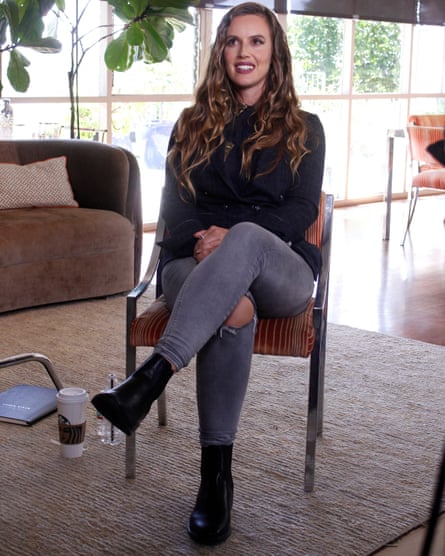
Scamanda, which is based on a podcast hosted by Charlie Webster (interviewed here but, admirably, not at length so priority is given to the victims and investigators instead), largely follows this pattern, with all its flaws. It also imports a hefty load of silent reenactments. Don’t worry if you can’t imagine a hospital reception or Riley walking up or down a hospital corridor or what typing a blog looks like – it’s all here, many times over.
The essential story is compelling though, as all these stories are. Riley was a wife (to Corey – they are now divorced), stepmother to his daughter and a beloved member of her local megachurch when she announced in 2012 that she had terminal cancer and began documenting her treatments on a blog. Her youth, her charisma, her faith – which only got stronger, she said, as she battled her disease – meant people rushed to lavish time and attention on her, and donate money towards her towering medical expenses as she spent seven years running what we and they now know to be a scam, and experiencing “miracles” that kept her alive. One was a pregnancy that “reversed” the cancer – for a while – and gave her a biological child alongside her stepdaughter Jessa.
But before 2012, Riley and her husband had been friends with Lisa Berry. Berry had cut contact when she had grown suspicious of Riley’s claims to have terminal cancer. Her behaviour and appearance suggested nothing of the kind. When Berry became aware of Riley’s claims on her website (now soliciting donations), she tipped off investigative TV producer Nancy Moscatiello, who did some factchecking of the blog and quickly contacted the police. Their investigation led to the IRS fraud squad getting involved (those web donations potentially constituted wire fraud) – they look far more fearsome here than any traditional law enforcement agency – and together they eventually had enough to arrest Riley and bring charges against her. At trial they hoped for an 18-month sentence, but the judge threw the book at Riley and she got five years.
As ever, I am not quite sure of the point of the documentary. To tell us that there are bad people out there? OK, but we know that. Are we not at a point now where giving them publicity is actually giving us a warped idea of how common they are and destroying trust rather than raising awareness? There is no real explanation given for why Riley did it. There’s no insight here. Just a good story. Is it enough? I’m not sure.
-
Scamanda aired on BBC Two and is on iPlayer now