1 month ago
79
1 month ago
79
Tyler Robinson, the 23-year-old charged with murdering far-right pundit Charlie Kirk, cried and told his then-roommate Lance Twiggs “he wishes he hadn’t done it” one day after the fatal shooting, according to testimony played Thursday in court.
On the fourth day of a hearing to determine whether the case has probable cause to proceed to trial, the state presented the video of a prosecutor interviewing Twiggs, after back-and-forth on Wednesday over whether broadcasting the remarks to the public could expose potential jurors to prejudicial information.
At times, the screen cut to black due to redactions allowed by US district judge Tony Graf.
Twiggs, who has also gone by the name “Luna”, was romantically involved with Robinson. Twiggs encountered Robinson on 11 September 2025 pacing around their apartment and behaving as if he were trying to distract himself.
Authorities have previously said that Robinson left Twiggs a note claiming culpability in the death of Kirk, who was shot in the neck as he spoke before a large crowd at Utah Valley University on 10 September 2025.
In the video, Twiggs discussed asking Robinson whether what he had written in the note was true, and said Robinson confirmed it was.
Prosecutors also displayed screenshots from Twiggs’s phone of text messages exchanged with Robinson.
“Shouldn’t be long until I can come home, but I gotta grab my rifle still. To be honest I had hoped to keep this secret till I died of old age. I am sorry to involve you,” Robinson wrote, according to one photo.
“You werent the one who did it right????” Twiggs replied.
“I am, I’m sorry,” Robinson wrote.
On Tuesday, Jennifer Faumuina, a sergeant with the Utah department of public safety, testified about law enforcement recovering a Mauser 98 rifle from a wooded campus area. Forensic testing found the DNA of Robinson and Twiggs on a towel that was wrapped around the firearm.
Authorities have not accused Twiggs of involvement in Kirk’s assassination.
Twiggs spoke to authorities on 12 September, two days after Kirk was killed, and again on 20 April, the court heard. Twiggs was granted immunity from prosecution in return for making the statements.
Erika Kirk, the widow of the far-right activist Charlie Kirk, had previously asked Graf to allow the open courtroom display of every exhibit relating to her husband’s killing, saying she fears the proliferation of conspiracy theories.
In the three-page filing, Erika Kirk complained that some items of evidence were admitted into court but not made available for viewing, which her lawyer Jeffrey Neiman said breached a Utah law affording crime victims and their lawful representatives certain rights.
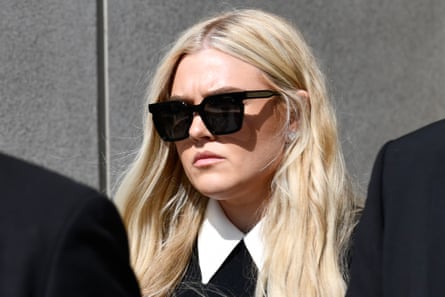
“Erika Kirk, the widow of Charlie Kirk, and his grieving parents traveled to this courtroom for one reason: to be present at these proceedings and to bear witness to the evidence concerning their husband and son,” the document said.
“At certain points throughout the preliminary hearing, the Kirk family sat in the room while evidence was admitted but not presented for their viewing. They were present in body, yet denied the very thing their presence was meant to secure: their ability to meaningfully observe the preliminary hearing.”
Their right to be present “is hollow”, the document concluded, if the Kirks were in the room but denied sight of items shown to the court.
“In the absence of transparency, speculation and conspiracy theories related to the tragic assassination of Mr Kirk will continue to proliferate in the public domain.”
Graf said that he needed to protect the rights of both the victims and Robinson and that not all evidence would be displayed in court.
The filing did not specify the evidence Kirk believes was withheld from her. But in court on Wednesday, Neiman spoke about the Kirk family’s request, and argued a denial could “create doubt and distrust in the judicial system”.
The defense attorney Richard Novak had said he feared prosecutors would attempt to portray Twiggs’s statements as a confession by Robinson, who has not entered a plea, and hurt the defendant’s right to a fair trial.
Graf ultimately allowed the partially redacted interview and messages.
This week, the court has also seen evidence including video footage allegedly depicting Robinson entering the campus and climbing on to a roof, and heard from law enforcement officers and university staff describing what they saw and heard.
The hearing continued on Thursday afternoon.