2 months ago
188
2 months ago
188
This was a tricky taste test, not least because 70% of these creams tasted pretty much exactly the same, which is a clear reflection of how homogeneous our conventional food system has become (much of our cream is made from milk sourced from thousands of farms across the country and mixed together). Even the packaging is more or less identical, with a printed plastic tub and a peelable plastic lid.
British double cream is about 48% fat, which is higher than whipping cream (35%) and just below clotted (55% plus). This matters in practical terms because that’s why it whips more firmly, holds its shape longer and is less likely to split when added to a hot sauce. Conventional cream does the job well (it’s white, neutral in flavour and whips well), but really good cream is thick, gloopy and wildly fatty, with an unbelievably complex taste and remarkably nourishing effect; it’s also eminently whippable. Scooping a blob of cream like that straight from the tub can replenish energy and satiate in an almost alchemical way.
Like wine, cream has terroir, with variation coming from the climate, soil, landscape, handling and cattle species, though this tends to be lost when it’s pooled from herds across the country. You can still taste it in products from more local food systems, especially from independent brands with greater traceability: jersey cows, say, produce a fattier, richer cream, as do pasture-fed cattle from the beta-carotene in the grass.
In general, the Soil Association-certified, free-range and/or independent creams stand out for their noticeably higher quality; one even reminds me of the cream from my childhood.
The best supermarket double cream
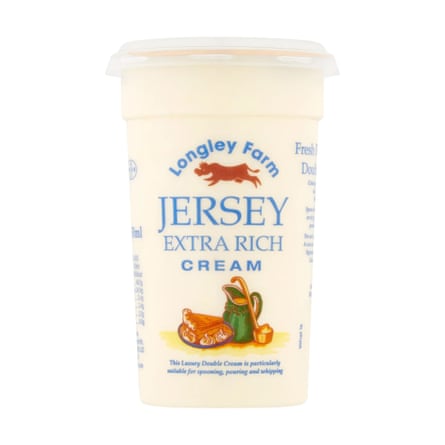
★★★★☆
This looks like real cream: it’s thick and gloopy, with a clotted cream-like layer at the top and with a beautiful, golden, buttery-yellow colour. Rich in flavour with more depth and presence than any of the other creams in the test – it tastes like the cream I remember from childhood. Independent Yorkshire family dairy using milk from local jersey herds.
Best bargain:
Sainsbury’s So Organic British double cream
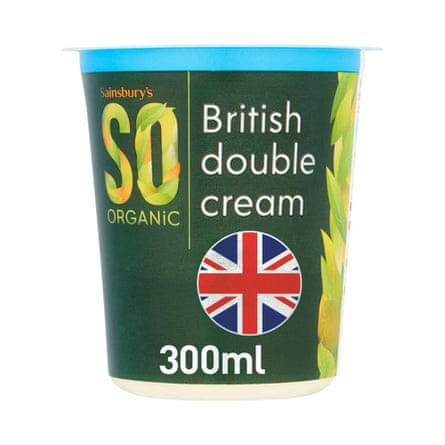
★★★☆☆
Organic double cream from British farms. Slightly yellow – a visible sign of grass-fed cattle – and slightly sweeter than the white commodity creams. High animal welfare standards at the same price as standard supermarket cream.
And the rest …
Tom Parker Creamery free-range double cream
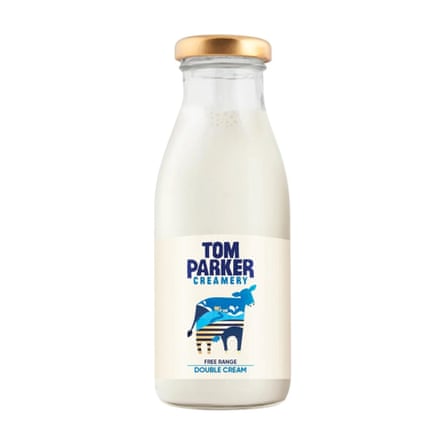
★★★☆☆
Medium-thick, award-winning cream with a lovely, fresh, neutral dairy flavour. Unlike most of the others here, which are in plastic pots with a peel-back seal, this comes in a recyclable glass bottle with a screw cap. Free-range, pasture-fed cows from named family farms within 40 miles of their dairy in Wincanton, Somerset.
Yeo Valley Organic double cream
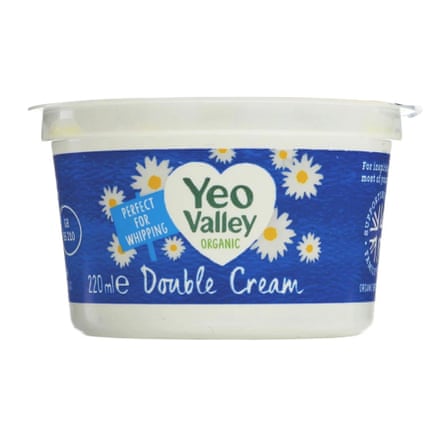
★★★☆☆
Soil Association-certified organic double cream from Somerset made with free-range milk. Strong sustainability policies, including measured farm-to-fridge carbon footprint, more than 10,000 solar panels on production sites and 100% renewable electricity.
Dairy Manor British double cream
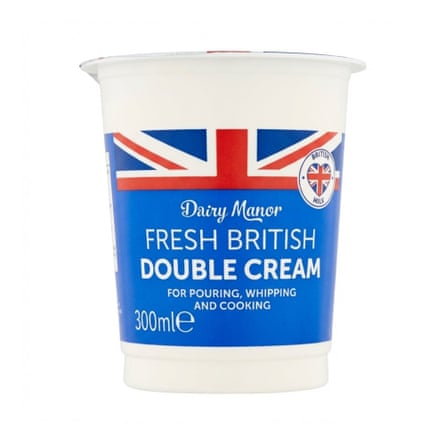
★★☆☆☆
Medium-thick, off-white, conventional cream with a classic dairy flavour. Plastic pot with foil peel seal. Lidl sources milk and cream from more than 600 farms across Great Britain via its Grassroots Dairy Partnership.
Asda double cream
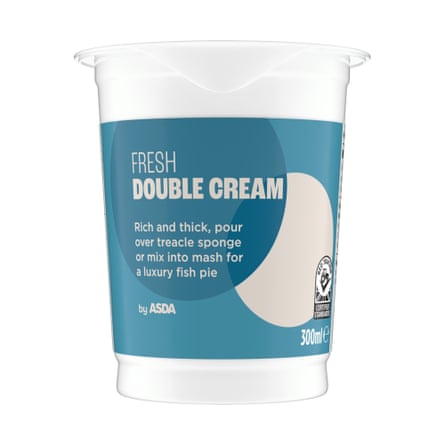
★★☆☆☆
Standard taste and flavour consistent with the other Arla-sourced commodity creams in this test.
Creamfields double cream
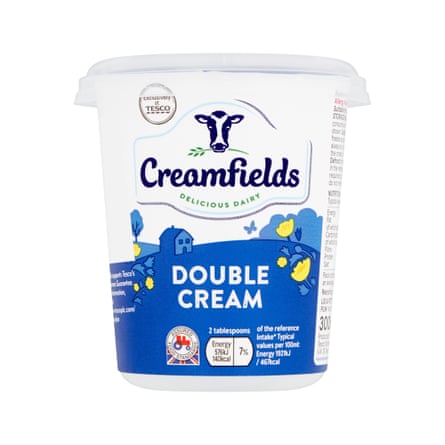
★★☆☆☆
Standard double cream with a medium-thick viscosity and neutral flavour. Tesco sources milk through its Sustainable Dairy Group from about 400 farms, supplied by Arla and Müller.
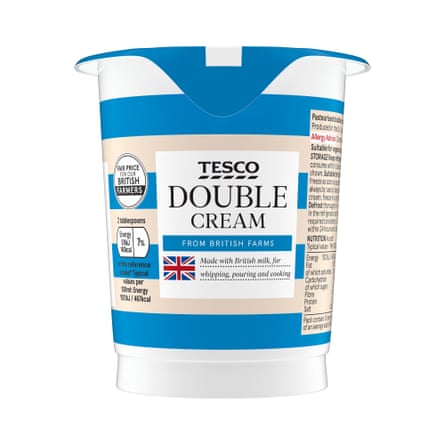
Tesco British double cream
★★☆☆☆
A slight sour edge distinguishes this from the other commodity creams, but it’s otherwise a classic dairy taste.
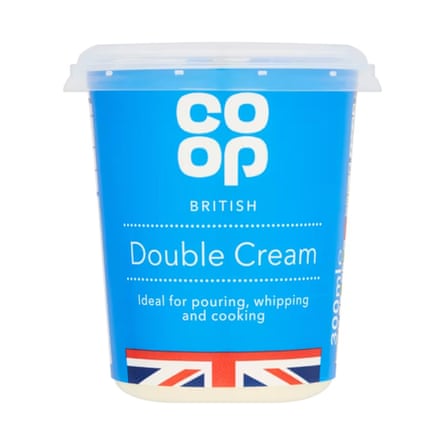
Co-op British double cream
★★☆☆☆
Classic white, standard cream sourced from Co-op’s own network of about 145 British dairy farms. Made with Co-op welfare standards.
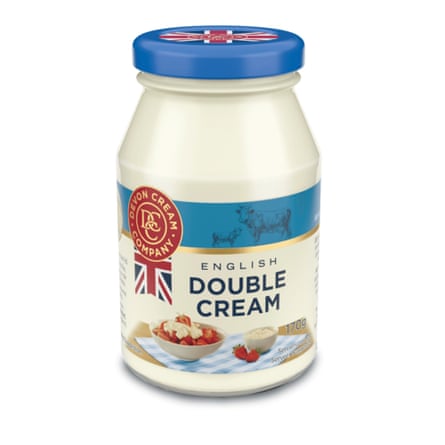
Devon Cream Company double cream
★★☆☆☆
A small glass jar of very thick double cream from Coombe Castle dairy. This was on the edge of being butter rather than cream, with a fatty, unctuous texture. Great on scones, but not for baking.