2 months ago
61
2 months ago
61
Pillows, like mattresses, are personal things. What represents one person’s idea of heaven can signal a horrible night’s sleep for someone else. This makes reviewing them challenging, but also strangely rewarding – with no objective benchmarking software to fall back on, the reviewer must use their brain power alone to establish who might get on well with a pillow – and who won’t.
That’s exactly what I’ve aimed to do, testing different pillows of different heights, firmnesses and materials, so that you don’t have to. The good news is you don’t need to break the bank to get your hands on one of the best options because one of our top picks will set you back just £14 for a pair.
At a glance
-
Best pillow overall and best memory foam:
Otty Deluxe Pure pillow
-
Best budget pillow:
Fogarty soft cotton back-sleeper pillows
-
Best feather pillow:
Scooms Hungarian goose down pillow
-
Best value feather pillow:
M&S duck feather and down medium pillows
-
Best value memory foam pillow:
Panda memory foam bamboo pillow
Why you should trust me
Having written and edited sleep content for several years, I’ve tested my fair share of pillows, mattress toppers and mattresses. Indeed, my home has been known to resemble a scene from The Princess and the Pea on occasions when I’ve allowed a backlog of review samples to build up.
I’ve always valued my sleep, and that’s truer than ever since having twins two years ago. I also sleep in various positions – on my back, side and front – which makes me better qualified than most to judge which pillows suit which style of sleeper.
How I tested
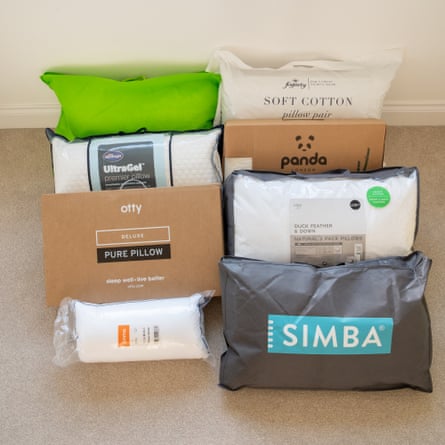
The best way to test a pillow is, of course, to sleep on it, but first I needed to get my hands on review samples. I sourced and tested 10 of the latest and greatest pillows. When manufacturers offered a choice, I aimed to prioritise covering a range of different prices and materials.
With any feather or down pillows, I ensured that the fillings were responsibly sourced. For the avoidance of doubt, that means that, at the minimum, the geese haven’t been live plucked and that the feathers are a byproduct of the food industry.
Once the pillows had arrived at my house, I attempted to sleep on each one for no fewer than three nights each. I say attempted because there were a few occasions where I’d reach for another pillow out of sheer frustration during the middle of the night. It’s important to state that those pillows weren’t necessarily bad as much as they were a bad fit for me.
When I received a two-pack, I gave the other pillow to a family member and invited them to share their opinions after a few nights sleeping on it. For all the pillows, I also invited my mini testing panel (which consisted of my wife and our immediate family) to offer their opinions.
The best pillows in 2025
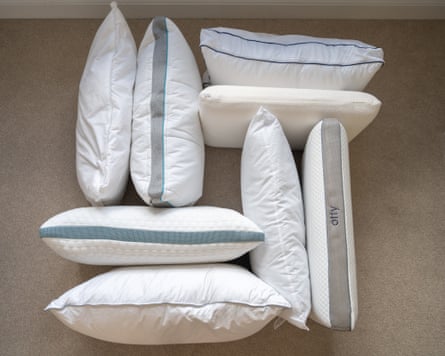
Best pillow overall and best memory foam:
Otty Deluxe Pure pillow
Otty
Deluxe Pure pillow
£69.99
What we love
Its size and memory foam design copes well with side and back sleepers
What we don’t love
The design is a little boxy, and it won’t convert memory foam sceptics
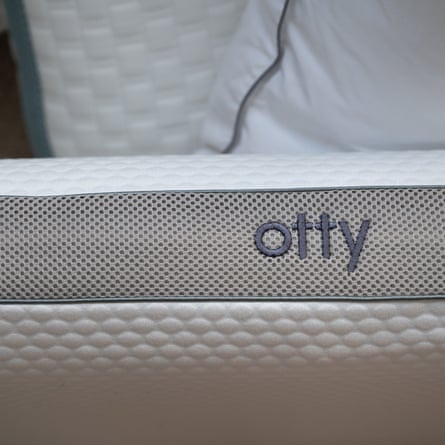
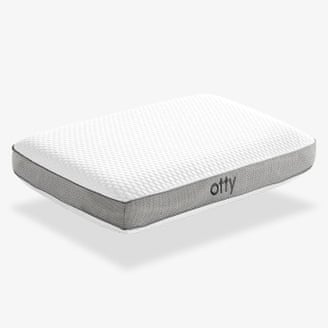
Otty’s Deluxe Pure is a brilliant memory foam pillow. Its boxy design might not look especially appealing, but allow it to conform to your head and neck, and it offers a superb balance of comfort and support, making it a great choice for a range of sleeping positions.
Why we love it
Firmer than some foam pillows but more cushioned than others, the Deluxe Pure manages to strike a happy middle ground, making it a great choice for those who move around between different sleeping positions. It’s supportive and bouncy, but not excessively tall, which means it works best for those who sleep mainly on their back and side, as I do.
It excels in offering a consistent, flat sleeping surface. Indeed, as I moved around at night, I didn’t encounter varying levels of support, and it never needed plumping up. Despite memory foam’s reputation for retaining heat, I never found it to be a problem with the Otty. This could be thanks to its “cooling” bamboo cover, which can be removed and machine washed.
Having said all that, memory foam is definitely an acquired taste, especially if you’re used to feather pillows. The Deluxe Pure is backed by a 14-night trial, so you can return it for a full refund if you decide it’s not the one for you.
It’s a shame that … memory foam won’t be for everyone. If you’ve had bad experiences with foam in the past, this probably won’t be any different.
Materials: memory foam with bamboo and charcoal
Dimensions: 64 x 40cm x 13cm (WDH)
Washing instructions: cover only (40C)
Trial period: 14 nights
Otty
Deluxe Pure pillow
£69.99
What we love
Its size and memory foam design copes well with side and back sleepers
What we don’t love
The design is a little boxy, and it won’t convert memory foam sceptics
Best budget pillow:
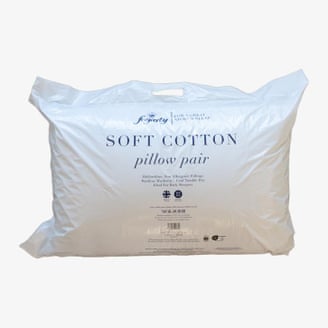
Fogarty soft cotton back-sleeper pillows
Fogarty
Soft cotton back-sleeper pillows
£14
What we love
This level of comfort from such a cheap pillow is astonishing
What we don’t love
Front and side sleepers may find them a touch too shallow
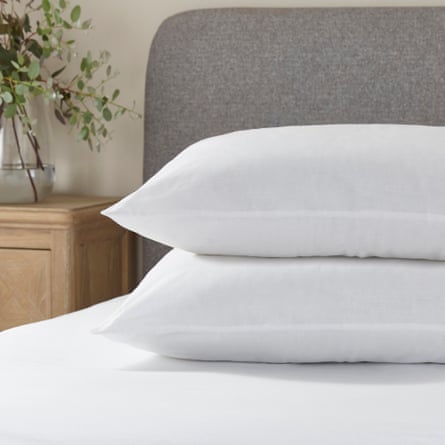
They don’t look like anything special, but I was seriously impressed by these Fogarty pillows, especially when you consider how cheap they are. If you have a limited budget or need to replace multiple worn-out pillows, there’s no better choice.
Why we love it
Dunelm claims these pillows (which come in a two-pack) offer a medium level of support that’s perfectly suited to back sleepers, and I’d be inclined to agree. As with the Otty pillow above, I found them comfortable to use in all sleeping positions and never found myself reaching for another pillow during the night.
However, I’d suggest the level of support and height is better suited to those who sleep predominantly on their back and only occasionally on their side. If you spend most of the night on your side, you’ll likely prefer something taller and firmer, such as the Silentnight below.
The 100% recycled polyester filling in the Fogarty pillows doesn’t initially feel different from any other cheap pillows. However, during testing, it felt wonderfully soft and cosy, and I didn’t overheat or get too sweaty, which I feared may be a problem. The cover is made entirely from cotton, and the pillows can be machine washed and tumble dried on a low heat.
It’s a shame that … I can’t think of anything to criticise at this price point. When you consider they each cost less than an expensive pint of beer, you shouldn’t ever have to rest your head on anything worse than this.
Materials: filling, 100% polyester; cover, 100% cotton
Dimensions: 70 x 48 x 12cm (WDH)
Washing instructions: machine wash (40C), tumble dry low
Trial period: none
Fogarty
Soft cotton back-sleeper pillows
£14
What we love
This level of comfort from such a cheap pillow is astonishing
What we don’t love
Front and side sleepers may find them a touch too shallow
Best feather pillow:
Scooms Hungarian goose down pillow
Scooms
Hungarian goose down pillow
£105
What we love
High-end hotel quality feel, suitable for all sleep positions
What we don’t love
Requires daily shaking and plumping to maintain a luxurious feel
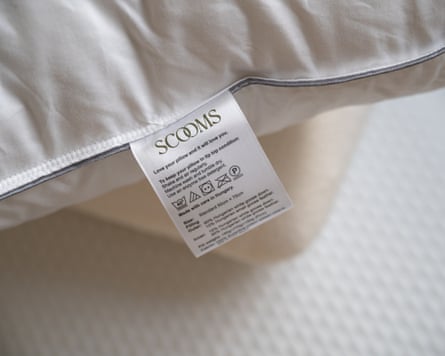
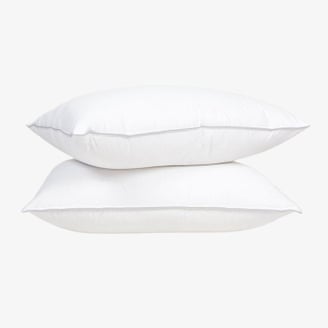
With a price just a smidge over £100, these Scooms’ goose down pillows are the definition of luxury. Combining a supportive inner core with softer outer chambers, the medium/firm version I tested was supportive and sumptuous in equal measure.
Why we love it
Scooms claims this pillow offers a medium/firm level of support, and the difference is apparent when you place your hand on the pillow – it’s taller and there’s a greater level of resistance when you apply downward pressure than on most pillows. On paper, this makes it best suited for back and side sleepers, but since feathers tend to give more than synthetic fillings, I was comfortable using it in all sleeping positions, including on my front. Its plump design can make it a bit of a squeeze to fit it in a standard pillow case, but once you’ve managed, you get that enveloped feeling you only tend to find with expensive hotel pillows.
Scooms recommends shaking and plumping the pillow daily to maintain its height, and there’s a good reason for that – when I forgot to do so, the pillow became notably flatter and less sumptuous. When I did remember, I always found it adequately supportive by the morning because of its firmer feather core.
It’s a shame that … the high price will put the Scooms out of reach of all but the most flush of prospective customers.
Materials: filling, Hungarian goose down and goose feather; cover, 100% sateen cotton
Dimensions: 65 x 38 x 18cm (WDH)
Washing instructions: machine wash (40C), tumble dry low
Trial period: none
Scooms
Hungarian goose down pillow
£105
What we love
High-end hotel quality feel, suitable for all sleep positions
What we don’t love
Requires daily shaking and plumping to maintain a luxurious feel
Best value feather pillow:
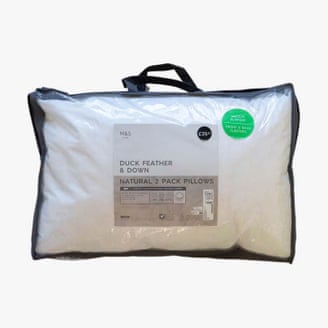
M&S duck feather and down medium pillows
M&S
duck feather and down medium pillows
£39.50
What we love
Super value if only feather-pillow softness will do
What we don’t love
Requires occasional plumping, and you may feel the feather shafts
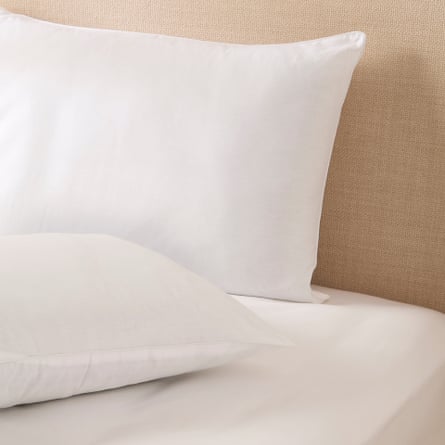
These responsibly sourced duck feather and down pillows from Marks & Spencer defy their relatively low price tag. Aimed at front and back sleepers, they’re also a great choice if you sleep with two pillows and want something to use as a luxurious top layer.
Why we love it
As with the Fogarty pillows, these duck feather and down pillows represent excellent value for money at £39.50 for a pair. I tested the medium-support version, although they’re available in firm variants too.
M&S claims the medium firmness is best for back and front sleepers, and I found it comfortable when sleeping in both positions. If you’re a frequent side sleeper, I’d opt for the firm option, especially since feather pillows tend to flatten more than their synthetic counterparts.
Made from 85% duck feathers and 15% duck down, the pillows have a 100% cotton, down-proof cover, and they can be machine washed at 40C, making them a highly practical choice. Just bear in mind that, like all feather pillows, you’ll need to regularly plump them up. You may also be able to feel the shafts of the duck feathers, but this didn’t ever make the pillows uncomfortable when sleeping.
It’s a shame that … all affordable feather pillows aren’t this good. As with the synthetic pillows above, there’s little fault to find at this price.
Materials: filling, 85% duck feather, 15% duck down; cover, 100% cotton
Dimensions: 74 x 46 x 13cm (WDH)
Washing instructions: machine wash (40C), tumble dry medium
Trial period: none
M&S
duck feather and down medium pillows
£39.50
What we love
Super value if only feather-pillow softness will do
What we don’t love
Requires occasional plumping, and you may feel the feather shafts
Best value memory foam pillow:
Panda memory foam bamboo pillow
Panda
Memory foam bamboo pillow
£38.21
What we love
Incredibly soft, without overheating like some memory foam is prone to
What we don’t love
It’s one of the smallest pillows we tested, so not for everyone
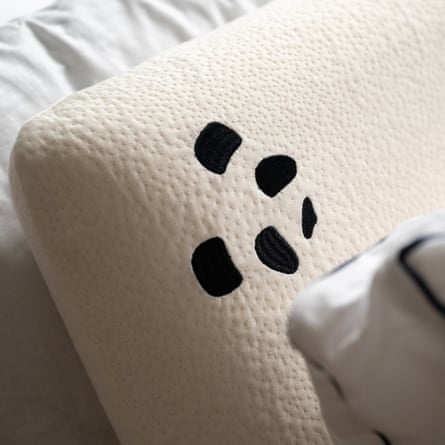
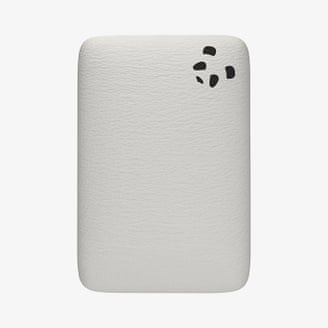
Panda’s memory foam bamboo pillow is one of the best-value pillows I tested, and it comes with a 30-night trial to boot. If you want to try a memory foam pillow for the first time, this is a great option.
Why we love it
Despite claiming to offer a medium-firm level of support, I’d put the Panda memory foam pillow at the softer end of the memory foam scale. Indeed, my mini testing panel all agreed that it’s less firm than the other foam models on this roundup.
The upside to this is that it’s incredibly soft and comforting, making it a good choice for front and back sleepers. I found it adequate when sleeping on my side too, but regular side sleepers will probably prefer the extra support you get with the Otty.
As with the Otty, I never felt excessively warm with the Panda, which may be due to its “thermoregulating” bamboo cover. It’s worth pointing out, however, that it’s one of the smallest pillows I tested. Panda claims it’s 60 x 40 x 12cm, but I found that it’s smaller in every direction than the Otty, which has the exact same claimed dimensions.
It’s a shame that … as with other foam models such as the Otty, there was an off-gassing smell when we first unpacked the Panda pillow.
Materials: filling, memory foam; cover, 70% bamboo, 30% polyester
Dimensions: 60 x 38 x 13cm (WDH)
Washing instructions: machine wash cover only (40C)
Trial period: 30 nights
Panda
Memory foam bamboo pillow
£38.21
What we love
Incredibly soft, without overheating like some memory foam is prone to
What we don’t love
It’s one of the smallest pillows we tested, so not for everyone
The best of the rest
Emma Premium Cloud pillow
Emma
Premium Cloud pillow
£60
What we love
Clever adjustable design means you can adapt it to your tastes
What we don’t love
Some build quality questions, despite the high price of entry
Best for: a feather-like synthetic pillow
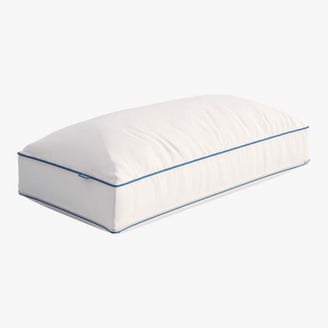
It’s difficult to match the feeling of feathers with synthetic fillings, but Emma has come pretty close with its soft and supportive Premium Cloud pillow. With an RRP of £80, it’s the most affordable adjustable pillow I tested, with the Simba product below the only other pillow to offer this feature.
The adjustability is achieved via two removable microfibre layers, which give you the option to change the pillow’s loft in increments. It’s a nice touch, but before removing any of the layers, I was aware of them sliding on top of each other, which made for a slightly unusual sensation at times.
Out of the box, I found it comfortable for side and back sleeping, but regular front sleepers will probably want to remove a layer or two. I didn’t ever find the pillow excessively warm, despite its entirely synthetic materials.
It didn’t make the final cut because … I’m not convinced by the quality of the construction, especially at its relatively high price. One of the removable layers had lost a considerable amount of its microfibre filling when I inspected it, and there were lots of loose threads on the synthetic casing.
Materials: filling, polyester, Outlast; cover, 100% polyester; dimensions: 59 x 37x 21cm (WDH); washing instructions: machine wash (40C), tumble dry low; trial period: 30 days
Emma
Premium Cloud pillow
£60
What we love
Clever adjustable design means you can adapt it to your tastes
What we don’t love
Some build quality questions, despite the high price of entry
Silentnight Ultragel Premier pillow
Silentnight
Ultragel Premier pillow
from £25.50
What we love
Tall, firm design makes it a great choice for side sleepers
What we don’t love
Might be too tall for some, and no trial period makes it a gamble
Best for: side sleepers
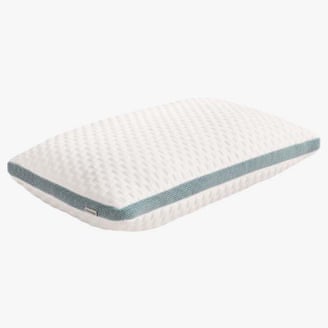
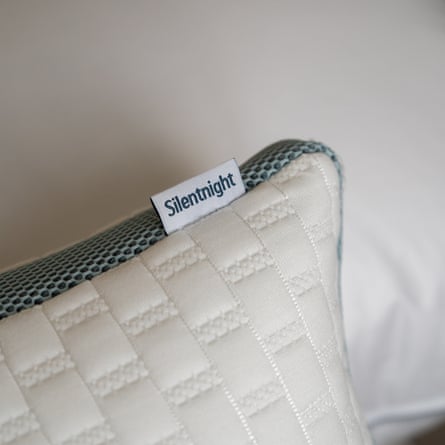
Silentnight’s Ultragel Premier pillow is one of the tallest and firmest pillows in this roundup, which makes it a good choice for devoted side sleepers. It’s reasonably priced for a foam pillow, but it doesn’t offer the same cocooned feeling you get with the Otty and Panda. There’s also no trial period like you get with those pillows.
As with most memory foam pillows, there’s quite a strong smell when you first remove the pillow from its packaging, but this largely dissipated within a few days. Silentnight claims the foam in the Ultragel Premier is five times more breathable than standard memory foam and I can confirm I didn’t ever find myself getting too hot and clammy.
It didn’t make the final cut because … although it’s a reasonable choice for side sleepers and those who use two pillows when sleeping on their back, I think it’s a little too tall and firm to recommend more widely than that.
Materials: filling, 100% polyester hollowfibre with ultragel foam core; cover, 100% polyester; dimensions: 66 x 36 x 17cm (WDH); washing instructions: wipe clean only; trial period: none
Silentnight
Ultragel Premier pillow
from £25.50
What we love
Tall, firm design makes it a great choice for side sleepers
What we don’t love
Might be too tall for some, and no trial period makes it a gamble
Simba Hybrid pillow
What we love
Removable Nanocubes make it adjustable to personal tastes
What we don’t love
A touch lumpy, and too pricey to recommend without a trial period
Best for: an adjustable pillow
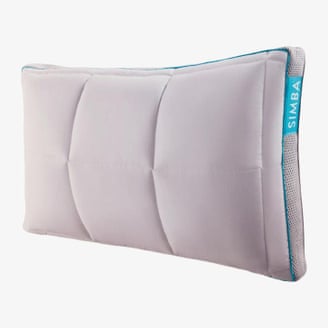
Simba’s Hybrid is a sophisticated pillow with a price tag to match. Indeed, you’ll have to part with a considerable £109 if you want to buy it when it’s not discounted (and even when discounted, it’ll cost the best part of £100).
Its standout feature is that it’s adjustable, so you can alter the pillow’s firmness and loft by removing the foam “Nanocubes” that make up the core. This allows for subtle adjustments and makes it a good fit for people of all different shapes and sizes, as well as different sleeping positions.
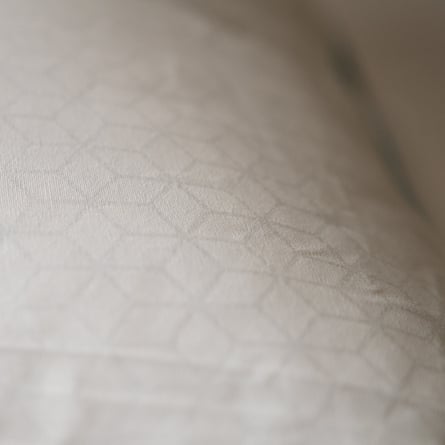
However, even after removing a large quantity of the foam cubes, I didn’t get on especially well with it – I found it supportive, but just a little too lumpy and lacking in cushioning for my tastes. Its cotton and “Stratos” cover (Stratos is only on one side, which is a little confusing) did a decent job of keeping me from overheating, at least.
Unlike rival brand Emma, the Simba pillow doesn’t come with a trial, which I found a little disappointing.
It didn’t make the final cut because … it’s just too pricey to recommend ahead of some of the other options on this list, especially with no trial.
Materials: filling, polyurethane foam; cover, cotton and polyester; dimensions: 65 x 36 x 18cm (WDH); washing instructions: cover only: machine wash (40C), tumble dry low; trial period: none
Simba
Hybrid pillow
£109
What we love
Removable Nanocubes make it adjustable to personal tastes
What we don’t love
A touch lumpy, and too pricey to recommend without a trial period
What you need to know
How much should I spend?
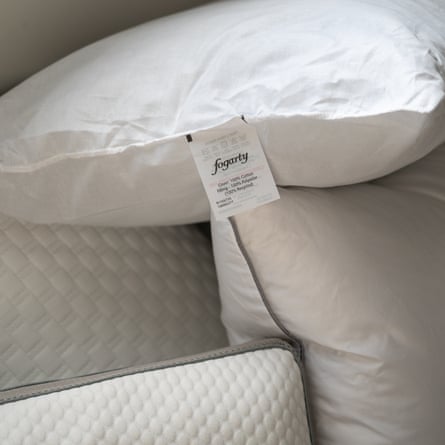
There are highly affordable options in this list that offer decent levels of comfort and support, but they won’t feel as luxurious as some of the more expensive models.
Having said that, spending a lot of money on a pillow is by no means a guarantee that you’ll get on well with it. As I’ve touched on already, pillow preference is individual, so spending £100 may equate to more expensive materials, but you still need to do your research and pick something that serves your tastes.
Spending more money can sometimes mean you get a money-back guarantee, so it’s worth checking your rights before you bite the bullet. Look out for pillows with a trial period if in doubt.
Should I choose a soft or a firm pillow?
How much support you require from your pillow is determined by several factors, including your physical size and weight, as well as how you lie on your bed – whether you sleep mainly on your side, back or front.
As with mattresses, larger, heavier individuals will typically benefit from a firmer pillow, while smaller people will probably be happy with something a little softer. As far as sleeping positions are concerned, side sleeping requires a taller, firmer pillow in order to keep the spine in alignment, while front sleeping is much better matched with a flatter, softer pillow. Back sleeping falls somewhere in the middle, requiring decent support but not as much as side sleeping.
If you sleep in a combination of different positions, it’s a good idea to choose a pillow that most closely matches the position you spend most of the night in, or something that strikes a happy middle ground.
It’s also worth considering that the firmness of your mattress can also affect things. If you’ve got a softer mattress, your body will sink into it more, which will make a tall pillow feel even taller. Conversely, if you have a very firm mattress, you might feel that a soft pillow doesn’t have enough loft after your head has had time to sink into it.
Which material is best for a pillow?
The best pillow material for you largely comes down to personal preference, although different materials undoubtedly have different advantages and disadvantages.
Feather and down pillows offer a soft, breathable experience that you’ll be unlikely to find from any synthetic material, but their biggest weakness is that they need regular plumping in order to continue offering consistent levels of support.
As for allergies, it’s complicated. Experts once cautioned against feathers because they were believed to attract dust mites, but studies have shown that, in fact, synthetic pillows can attract dust mite allergens more quickly than their natural counterparts.
Synthetic fillings such as microfibre and hollowfibre offer excellent levels of support without needing the regular plumping that feather and down pillows require, although they too can flatten over time. Some synthetic fillings are less breathable than feathers but, as confirmed by my tests, there are plenty of great synthetic pillows that won’t leave you hot and sweaty.
Memory foam, another synthetic material, is the last standout category when it comes to pillow fillings. Like other synthetic materials, it can provide superb levels of support, but it conforms to your body in a way that feels like nothing else. However, foam can feel unusually firm at first, and some users also complain that they get too hot and clammy with foam pillows.
For more ways to sleep better from the Filter:
The best mattresses, tested
I tested the most-hyped sleep aids – here’s what worked
The best mattress toppers for a more comfortable night’s sleep
Edward Munn is a writer and editor with a lifelong passion for finding a bargain. Professionally, this has led him to testing all manner of products from beard trimmers to e-bikes, headphones, mattresses and smartwatches. His home has been known to resemble something out of a well-known fairytale by Hans Christian Andersen when he’s been writing reviews of mattresses and pillows, which is as stressful as it sounds