2 months ago
45
2 months ago
45
As the battle lines harden amid Germany’s intensifying pressure on the European Commission to scrap the 2035 ban on production of new petrol and diesel cars, two Swedish car companies, Volvo and Polestar, are leading the campaign to persuade Brussels to stick to the date.
They argue such a move is a desperate attempt to paper over the cracks in the German car industry, adding that it will not just prolong take up of electric vehicles but inadvertently hand the advantage to China.
“Pausing 2035 is just a bad, bad idea. I have no other words for that,” says German-born Michael Lohscheller, the chief executive of Polestar, Europe’s only all-electric car manufacturer.
“If Europe doesn’t take the lead in this transformation, be rest assured, other countries will do it for us.”
The German chancellor, Friedrich Merz, has called on the European Commission president, Ursula von der Leyen, to soften the 2035 cutoff date. He has asked her to permit the manufacture of new hybrid and highly efficient combustion engine cars beyond 2035 as consumers are still hesitant to buy EVs.
“We’re sending the right signal to the commission with this letter,” Merz said, adding that the German government wanted to protect the climate in “a technology-neutral way”.
Sitting in Polestar’s glass panelled offices in Gothenburg in Sweden, Lohscheller, cannot believe what is unfolding.
His attempts to take part in the EU’s year-old “strategic dialogue” on the future of the car industry were snubbed. “I wrote twice, I’m not even sure we got an answer to the second letter,” he says.
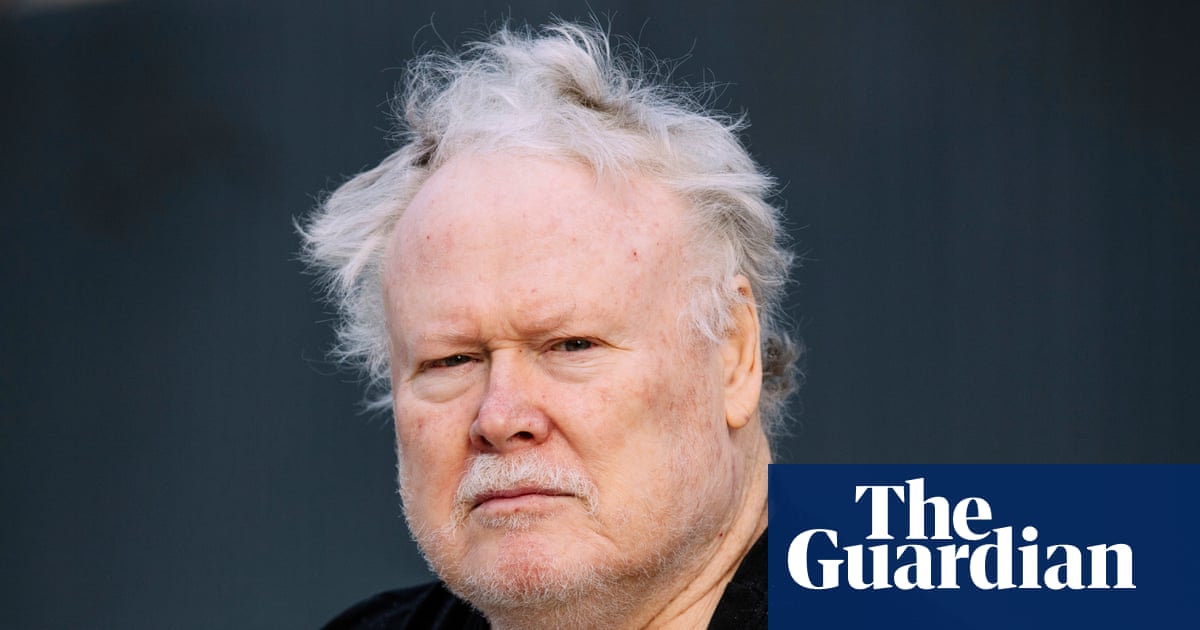
Across the road in Gothenburg, high above the giant Volvo assembly plant, Håkan Samuelsson, the 74-year-old chief executive of Volvo Cars, has seen it all.
“I don’t see the logic in slowing down,” he says.
Samuelsson likens the resistance mounted by the multibillion car industry to the opposition to catalytic convertors, and to seatbelts 50 years ago.
“If they were not mandatory, we would probably have 30% of our cars without seatbelts and if you consider the additional cost we probably wouldn’t have any cars with catalytic converters either unless they were mandatory,” he says.
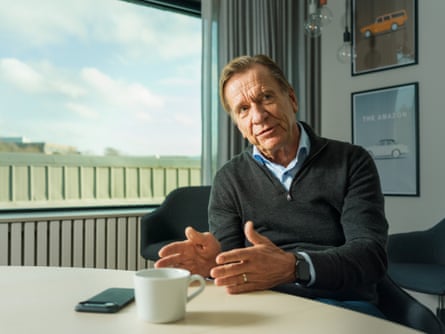
Volkswagen and BMW, Samuelsson says, “can do with they like”, but if they take the foot off the electrification pedal, they will just widen the gap for China.
“The Chinese will set up factories in Hungary and Slovakia, Romania … in low labour cost markets. I don’t think it’s possible to keep them out of the EU with tariffs. You just need to meet them face on and compete with them,” he says.
Samuelsson says there is no need for von der Leyen to make a decision now and should delay it until closer to the cutoff date. “We have time. We have 10 years.”
Michael Bloss, the Green’s rapporteur at the European parliament, says Merz’s demands “would completely gut” hard-fought EU legislation and “effectively give the combustion engine a free pass”.
The Greens and the Swedes are adamant that prolonging hybrid cars will send a message to consumers that they do not need to buy electric and will be self-fulfilling for the car industry’s arguments.
Lohscheller is equally direct. “The Chinese will not pause. They will take over. If Brussels pauses this [target] and says: ‘Stop we will give you another five years,’ they are really putting hundreds and thousands of jobs at risk.”
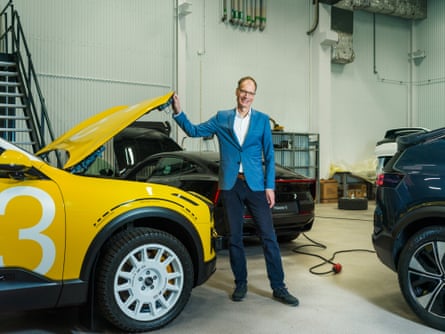
The fast-talking, marathon-running executive says the very notion of scrubbing out the 2035 date, agreed only three years ago, is preposterous.
Lohscheller was part of the original talks that led to the EU decision in 2022 to phase out the sale of all new internal-combustion engines in 2035, hailed by the then EU vice-president Frans Timmermans as a major step towards carbon neutrality in 2050.
“When I was CEO of Opel, I took part in all these meetings and went to Brussels twice a year. We discussed it for hours and hours,” the Polestar boss says.
after newsletter promotion
“I am a marathon runner. I’ve run 126 marathons in my life. Do I train and say it’s difficult, so I’ll do a half marathon instead? No.”
With decades of experience behind him as the former chief financial officer of VW, and the former chief executive of Opel and the Vietnamese car company Vinfast, Lohscheller says Germany, which is in the throes of economic challenges, needs to learn to adapt. And fast.
“It is a mindset, an attitude. I was just in China and Korea last week and came back to Germany, my home country.
“It is so obvious in Germany that everyone wants to defend the past, they don’t want to change anything, just defend what they have. I can talk with authority because I am German. In China and the US is it like ‘what is the next idea? What is the next project? What is the next company we try out? That is a big difference. It is a completely different mindset.”
Polestar, which began as a racing car company in 1996, was bought by Volvo in 2015 and then spun off in 2017 and relaunched as a separate EV-only production company. It is now majority owned by the Chinese Volvo shareholder Geely.
Asked whether the Chinese ownership may make Brussels nervous of Volvo’s view, Samuelsson says that Volvo is still a Swedish company. “We were with Ford for 11 years and now 14 or 15 with Geely and been developing very positively. We are listed in the Swedish stock exchange and all rules we follow are European. We are Swedish. We are no more Chinese than we were American. We are as Swedish as Abba and Ikea. “
He says the EU must continue to speed ahead on electrification. It is the future. Polestar have a car that has driven 560 miles (900km) without being charged.
Samuelsson says Volvo, which has five all-electric cars, and is about to launch the EX60, an electric version of its bestseller, XC60, already offers ranges of 310-370 miles.
This ticks one of the three big consumer concerns buying EVs, says Samuelsson. The second is charging time. This has to be down to 15-20 minutes, “the same time as the biological pause a driver needs” at the motorway stop, to get a coffee, go to the bathroom and stretch their legs. This he said will be “no problem” in the future.
“The third thing which holds consumers back is the price,” he continues.
“[If] we the car industry fulfil these three I think it [EV take up] will speed up. So I really don’t see a reason today to start questioning if 2035 is too fast. We have time. We need to speed this up not slow down.”
Samuelsson also wonders about the value of constant talk about net zero that is not backed up by development on the ground.
“Listening to these Cop discussions in Brazil, you start wondering if all this discussion leads to an improvement of the climate or not?
“I’m more and more leaning to the view that it is technical development and innovations that are needed to do the job. Talking will not do the job.
“Electrification will do the job. It is good for the climate. It is really important. It is also good for customers. It’s one of the very few environmentally friendly innovations that customers also will love.”