2 months ago
118
2 months ago
118
Key events
Sore legs - am I doing it "wrong"?
MealsMason asks: I recently started doing Couch to 5K after doing a year with a personal trainer to start improving my overall fitness. I’m pleased that my cardio seems to be holding up well but my legs really hurt during the running sections. I’ve bought some new cushioned running trainers which have helped a bit but my shins still seem to scream at me. Is this just because I am new to running or am I doing something wrong?
Sarah: First of all I’d say it is always a good idea to get any injury checked with a professional or physiotherapist to see exactly what is going on as it could be shin splints or another running-related issue. For problems created by sport, physios are generally better as they deal with this stuff daily. The fact that your cardio is coping well but your legs are struggling is actually very common when people start running. Your heart and lungs can adapt faster than the muscles, tendons and bones in your lower legs.
New trainers may help if your old shoes were worn out, but cushioning alone doesn’t usually solve shin pain.
After getting some physio advice it can also help to slow the progression down slightly, make sure you’re taking the walk recoveries seriously, and give your legs time to adapt. I’d also look at some strength work for the glutes, calves, and around the hips and knees, as weakness higher up the chain can sometimes increase the load on the shins. Calf raises, split squats, step-ups, and single-leg balance work can all be useful.
Is it all about chasing personal bests?
comradest asks: Do you think of a personal best as a feeling or an actual time? You might have had an awful race but you gave it your all, you tried your best. Is chasing personal bests only going to lead to disappointment?
I always think that you give what you have on the day and sometimes I can have a great run and feel amazing while other days I find every step incredibly challenging. Focusing too much on PBs can mean you forget that actually you’re always coming at a race with a different starting point – so, for example, maybe less sleep or a tough week behind you. I like the idea of a PB being less about a time and more about a feeling. I think that if you find this a better way of looking at it then that’s great.
Having said that, I don’t think chasing PBs always leads to disappointment but I think whether you want to focus on it depends on what motivates you. For some people focusing on a time is what gets them running but for others it can ruin it and make it less fun.
How do I get motivated again after a spell of not running?
Sunshinelondon84: I go through spells of running and not – but haven’t been running much since having my son (five years ago!) What motivates you to get out of the house again (and keep it up) after a long spell of not running?
Sarah: After having my children it took longer than I expected to get some routine back in my training. Having young children can be exhausting so finding the motivation for running is not always easy. But motivation isn’t always what you need when you’re coming back to sport. In fact, I think discipline is more important at the start, because motivation often comes after you’ve pushed through that difficult first phase where you have to drag yourself out the door. Showing up consistently is what builds motivation.
In terms of keeping yourself accountable I would say get a coach – there are lots of online coaches now who offer guidance and make sure that you stick to a programme. This is slightly different to a personal trainer and involves someone checking in with you weekly, so it’s also a lot less expensive. If you don’t like the idea of a coach then find motivation through friends: maybe set a date to run with someone once a week. You’re less likely to scrap that plan if you’ve committed and also you’ll find motivation through them, especially if they are very committed.
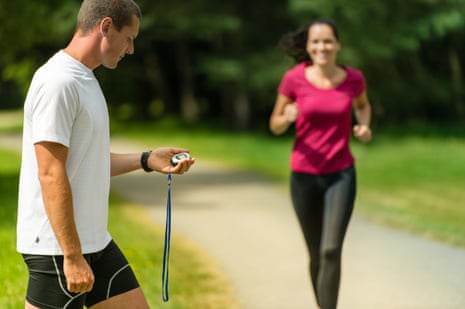
Photograph: CandyBoxImages/Getty Images/iStockphoto
Increasing strength without lifting dumbells
SophiaC asks I find the gym and lifting weights pretty boring and exercise classes too hectic (I’m dyspraxic and get mixed up with left and right). What (if any) strength training exercises would you recommend to help a middle-aged park runner avoid injuries?
Sarah: For a middle-aged recreational runner, I’d opt for exercises that protect against common injuries. So focus on calves, glutes, hips, core and balance. Calf raises are going to be a high priority to protect the achilles tendon, ankles and plantar fascia. Step ups and deadlifts will be good for the glutes and posterior chain.
Single leg exercises will also help protect against injuries as they often come from one leg being stronger than the other. Balance might be harder if you are dyspraxic so make sure you take it slow and don’t put too much pressure on yourself. You could try one leg stands, as well as single leg deadlifts using a support if you need it. Lateral band walks can help with pelvic stability.
Finally, never ignore your core – so many people do. This is the foundation of the body and a strong core protects against a range of injuries. Side planks are good, as well as planks, deadbugs and hollow holds (when you’ve built up a bit of strength) as this focuses on the deep core. Work on your balance too, and make sure that you incorporate exercises that challenge this into your routine.

Best shorts for a trail runner?
Redstar1000 asks: What are the best running shorts for a middle-aged man, size M/L who loves trail-running?
Kieran: I really like the HOKA Aero.
Pricey sport beverages are not the only option
Mogie asks: What’s your go to recipe for a home made energy/electrolyte drink? Those tabs and powders are way too expensive.
Kieran: I sometimes just eat honey or maple syrup and add some regular salt. You can dilute it with water if you want to drink as you run.
What's your most unforgettable run?
NotsoSpeedyBecs asks: Hello you two, if there was one run (not race) you could do again, what would it be?
Sarah: I had an ex-boyfriend who lived in Germany and we used to do long runs in Mülheim an der Ruhr. It was just the most beautiful open expanse of green and trails.
Kieran: A few years back I did a solo lap of Lake Garda, 100 miles in three days carrying all my own kit and ending each day with delicious Italian pasta. It was a stunning (and cheap) way to see Garda.

Tips for time improvement
JonCClements: If I want to break 20 minutes for a 5k – current personal best 20:00. What’s the single best training I can do to achieve this?
Sarah: Love this question because I am currently trying to break 19 minutes for my 5k time again. So my advice would be to see running as a holistic thing and don’t forget to strength train, because that will give you the power to push in those hard moments of a 5k.
I’d also make sure that you are doing some speed work: a good drill for a 5k is 1k repeats at faster than race pace for around five or six efforts, with a rest in between each set. Lastly, keep your running volume high so mix it up with some longer distances and slower pace running to build your aerobic engine.
But really, if I could give one piece of advice it’s keep showing up. Consistency is the only way to get the times you want because your body adapts the more training you give it. Week in, week out it’s not about being the best but chipping away at your goals until three months later you get to where you want to be. Make the runs where you are pushing yourself challenging, you don’t want them to be too easy. Also, get plenty of rest in between hard sessions. Nutrition is also important, as will be sleep and hydration.
Kieran: I turned 48 this year and ran my fastest ever 5km about six months ago. Sometimes it’s tempting to think that to run faster we need to do lots of fast running but I got there by building consistent volume in my training. For me that was moving from 30 mile weeks, steadily up to 50 mile weeks (though your numbers may be different).
I put a big focus on the easy miles, lower heart rate runs below 130BPM heart rate. A lot of what I call “gumping”, just running easy for fun. I mixed in one targeted speedier session each week, an interval run or a fast parkrun but I made sure I came to those sessions fresh, so I’d hit my targets. And also one longer run up to 90 minutes or so.
What’s best, jogging or fast walking?
Redstar1000 asks: Is light jogging really better from a cardio and fitness point of view than fast walking?
Sarah: Interesting question – I’d caveat this by saying it depends how fast you are walking but generally jogging is going to elevate your heart rate a lot more and increase your vo2 (the maximum amount of oxygen your body can use during intense exercise). If you struggle with running though I’d say walking is a fantastic alternative and a great option if you’re older and want to keep active. If you want to get more out of it then walk up hills or push the pace.
Going to the gym? Treadmill-friendly shoes recommended
Chopwoodlookgood asks: Would you recommend a specific shoe or type of shoe for treadmill running? 5 to 10km distance three times a week.
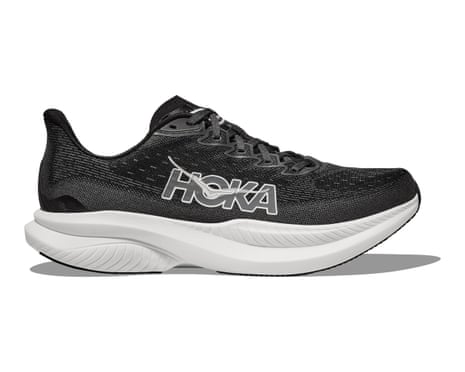
Kieran: You don’t necessarily need a different shoe for the road and the treadmill. But there has been a growing trend for shoes with big stacks of soft and bouncy midsole foam. They soften the impact of road running and help propel you round your next parkrun, but they don’t always feel as stable and reliable as you might want, on already-bouncy treadmill belts. In response, some brands have released treadmill specific shoes, like the Adidas Treadflow. They pack a firmer, more traditional midsole but my suggestion would be to look at regular shoes that use less energetic foams, like EVA or EVA blends. The good news is they can be cheaper. Shoes like a HOKA Mach 6 or Puma Velocity Nitro 4 could be good options.