3 months ago
199
3 months ago
199
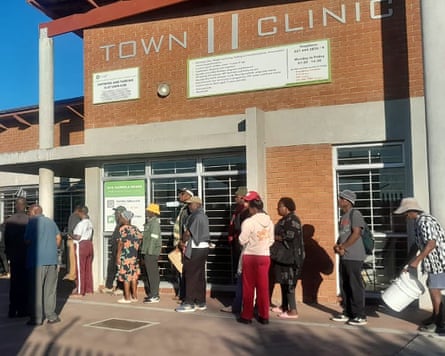
The three gunmen showed up just 10 minutes after the security guards had arrived for the early morning shift. Tshiamo Nere* admits he was “frozen” with shock and could only stare as the men aimed their weapons at him and two colleagues at Khayelitsha’s Town Two clinic in Cape Town, as screaming nurses and patients fled.
They had a message, the men told the unarmed guards. “They demanded a protection fee from the security company that employs us to guard the clinic,” Nere says. “The patients, frightened, scattered; and nurses ran for their lives.”
The men promised to return and cause “havoc” if their demands were not met. It was the first time the health clinic had been targeted, but Nere says the security company that employs him has still not paid the fee and he fears the men will be back soon.
Town Two is not the first public health clinic in South Africa’s townships to experience such an incident. A rash of extortions and robberies targeting medical staff and people using health centres in impoverished areas has been reported over the past few years.
People in Khayelitsha say muggings outside the township’s clinics and hospitals are becoming more commonplace as thieves demand “something for safe passage”, says Nere. He no longer walks to work in uniform, instead wearing civilian clothes in the hope of being less noticeable.
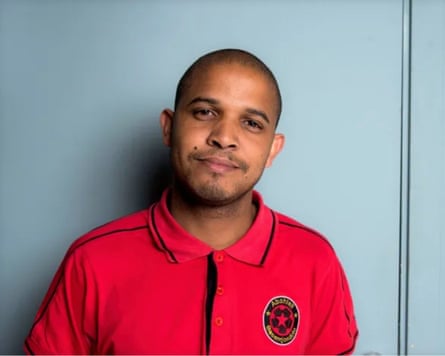
“The Cape Town incident was in the spotlight last month when it happened, but it is not an isolated incident,” says Thapelo Mohapi, secretary general of Abahlali baseMjondol, a grassroots union movement for people living in slums across South Africa. “It happens in Johannesburg; it happens in Port Elizabeth city.”
This time last year, two healthcare workers were shot and killed in Lusikisiki, in Eastern Cape. In November, two nurses were shot at while guarding a clinic in the same province. But most violence, extortions and muggings go unreported, says Mohapi.
South Africa’s police do not keep specific data on violent crime targeting healthcare centres or personnel, but anecdotal reports from members of the Democratic Nursing Organisation of South Africa (Denosa) and other healthcare organisations show that the problem has been growing in the past few years.
The most recent analysis, from the South African Medical Association (SAMA), published in 2023, called the problem “an epidemic of workplace violence in the healthcare sector” – and it is the poorest who suffer most.
Unathi Sula, 32, a patient from Khayelitsha, says: “I came to Town Two clinic early to be the first in line for medication, but the clinic was shuttered for three days.” Sula is pregnant with her fourth child and needs anti-retroviral medications to keep her HIV in check.
Sula cannot afford the taxi fare to visit more secure hospitals in other parts of Cape Town. Also, her medical files, like those of many patients at Town Two clinic, are on paper and so cannot be accessed from other hospitals.
Mohapi says attacks like that at Town Two clinic could create medical deserts in the poorest parts of town if doctors and nurses stop working in high-risk areas.
“The reason mafias haven’t been suppressed and eradicated is because this crime doesn’t affect the middle and upper classes, who use private, highly secured hospitals,” he says, adding that he believes criminal gangs have infiltrated the police.
Denosa first sounded the alarm over security problems at health centres and “corrupt arrangements” around the issue in 2023, after three nurses were shot dead and a spate of violent muggings took place at clinics in the Eastern Cape region. Denosa’s spokesperson, Simphiwe Gada, said at the time that nurses were too afraid to go to work.
Col Andrè Traut, commander of the South African police service in Western Cape province, says the force takes the Town Two clinic incident and other disruption to health services very seriously.
“The investigation has identified an extortion group operating in the area and is at an advanced stage,” Traut says. “While specific figures cannot be disclosed due to ongoing investigations, targeted operations, high-visibility deployments and intelligence-driven actions are yielding positive results.”
“Extortion is now a priority focus in the Western Cape, as it undermines community safety and disrupts essential healthcare,” he says. The police have appealed to people to come forward to report attacks.
However, Mohapi questioned the call for communities to report gangs to police, saying whistleblowing is deadly in South Africa and people have been killed or forced into hiding for speaking up.
“We are under siege,” says Dr Owami Dube* in Johannesburg, who adds that impoverished people on chronic medications are becoming collateral damage of organised crime.
Two of Dube’s colleagues have been killed: Dr George Koboka was shot dead in his surgery in Soweto, Johannesburg’s largest township, in March 2022; and in February 2024, his friend Dr Michael Isabelle was killed during an apparent robbery at his Soweto practice.
After his friend’s death, Dube shut his practice in Soweto and relocated to an affluent district of Johannesburg. A further 23,400 health professionals have left the country to work abroad.
“It is a shame because in South Africa, poor black-majority townships like Khayelitsha are at the centre of the HIV and TB infection crisis – and they are also areas with the fewest specialists willing to work in so-called poor areas,” Dube says.
* Names have been changed to protect identities