3 months ago
112
3 months ago
112
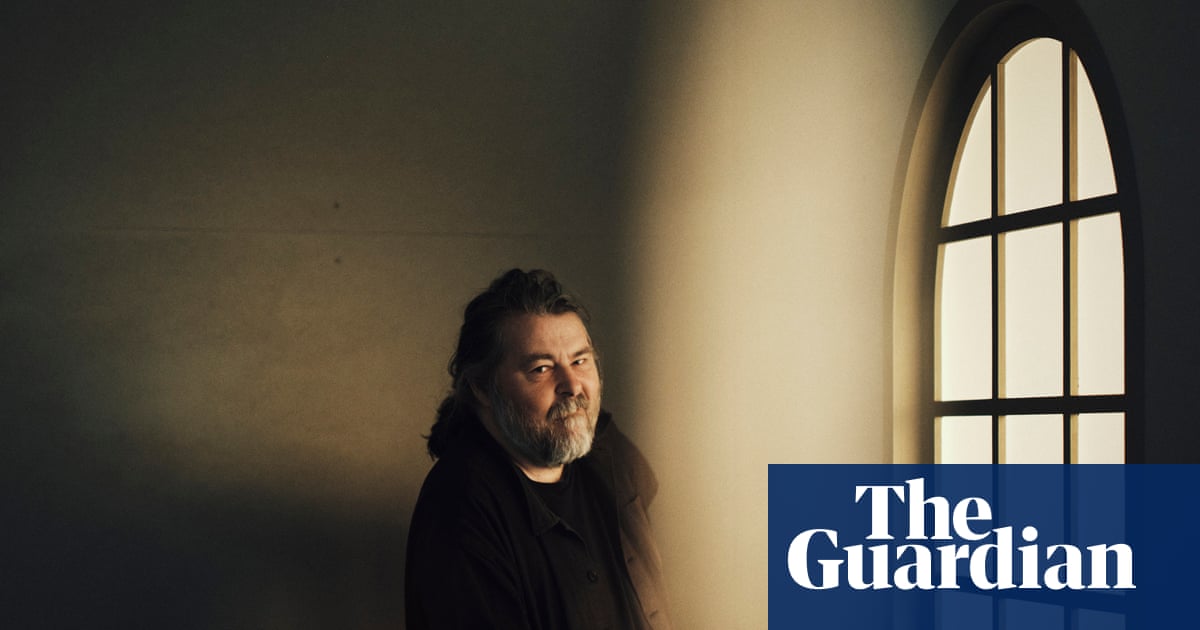
The Tempest seems like the perfect Shakespeare drama for an experimentalist. It is all about artifice, after all, and interrogates the construction of art as illusion through Prospero’s rough magic. So its pairing with experimental writer-actor-director Tim Crouch seems like a natural one. Or rather non-naturalist because this painfully high-concept production comprehensively underlines its artifice.
It emphatically punctures the fourth wall until the drama becomes leaden with messages about theatre, and the act of watching is draining. Maybe this is the point? Actors often sit in a circle, barely moving, as if in rehearsal. At times they trip up in their lines, which are occasionally finished off by another or spoken in unison.
Miniature models that symbolise characters who fetch in from the shipwreck are laid out in a row as their stories are narrated, to suggest that the act of storytelling, and make-believe, is a form of control and manipulation.
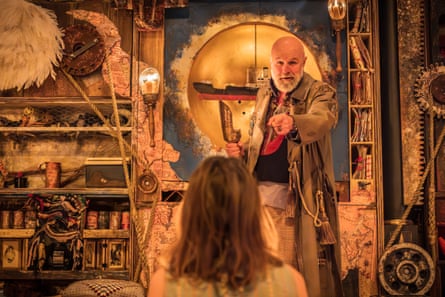
Crouch plays Prospero and is a cross between a curmudgeonly farmer and festivalgoer with a hint of Worzel Gummidge. Miranda (Sophie Steer) is playful and stroppy by turns. Caliban (Faizal Abdullah) wears a Gascoigne football jersey and flip-flops, with nothing of the “monster” about him. Ariel (Naomi Wirthner) is decidedly unspritely, with a sombre, wise-owl watchfulness, in an embroidered dress denoting the indigenous culture of this island. It is clear that both characters have rejected Prospero’s definition of them and Caliban occasionally speaks in Singaporean Malay – to resist his definitions and dominion as a whole?
The production also reduces Prospero’s lines, parcelling them out to other characters. It’s interesting as a concept but where does this post-colonial decentring fit in with Prospero as the all-controlling coloniser that the play, and this production, also asserts?
Actors emerge from among the audience, some standing up from their seats, some pushing their way to the stage, and then returning to watch the play afterwards. It is invigorating when this first happens – funny, transgressive and original. It is the same when singers pop up in gangways and balconies, and makes literal Crouch’s preoccupation with active audience engagement (although the actors here are “acting” as the audience).
Who is audience and who is actor, you wonder, and that is a thrilling idea but the trick is played again and again until it feels educational, like something is being taught to us in these fractures of theatrical convention. For a play that deals with artifice with such agility, the exposure of its artifice feels wooden here and over-emphatic.
When it works it sparks, dangerously, as when Prospero stops mid-sentence and asks an audience member to put their phone away. Is this for real or part of the play? And Rachana Jadhav’s set is a thing of beauty, with a museum-like quality of contested “exotic” artefacts belonging to other lands, and a model boat spun around when Prospero conjures his storm.
The production comes alive in the second half, the set and lighting creating magic even if the play attempts to abjure Prospero’s (and Shakespeare’s) studied alchemy. And there are so many interesting ideas at play. It is a shame that there is something medicinal about them: the idea that this is Good for us. The drama feels unsatisfactory when it is entirely sacrificed for the high concept, and possibly bamboozling for someone encountering it for the first time.
Antonia (Prospero’s usurping sister, played by Amanda Hadingue) is a high-achieving conservative type who leaves in a huff, mid-scene. “I know this story and I don’t recognise it at all … I shall be writing to the Telegraph,” she says, in one of the funniest moments. It foils the naysayers, and is damning too, especially for this Guardian reader, who feels her own sense of frustration.