3 months ago
123
3 months ago
123
If there can be a downside to receiving a lifetime achievement award, it can surely only be the hint of closure it evokes. I put this as tactfully as I can to Alan Hollinghurst, this year’s winner of the David Cohen prize, which has previously recognised the contribution to literature of, among others, VS Naipaul, Doris Lessing and Edna O’Brien. It does have “a certain hint of the obituary about it”, he concedes, laughing. “So I’m very much doing what I can to take it as an incentive rather than a reward.”
But there have been plenty of rewards recently. Hollinghurst was knighted in this year’s New Year honours list, a couple of months after the publication of his novel Our Evenings, the story of actor Dave Win’s journey from boarding school to the end of his life, which received rave reviews. In the Guardian, critic Alexandra Harris announced it his finest novel to date, noting that it “forms a deep pattern of connection with its predecessors, while being an entirely distinct and brimming whole”.
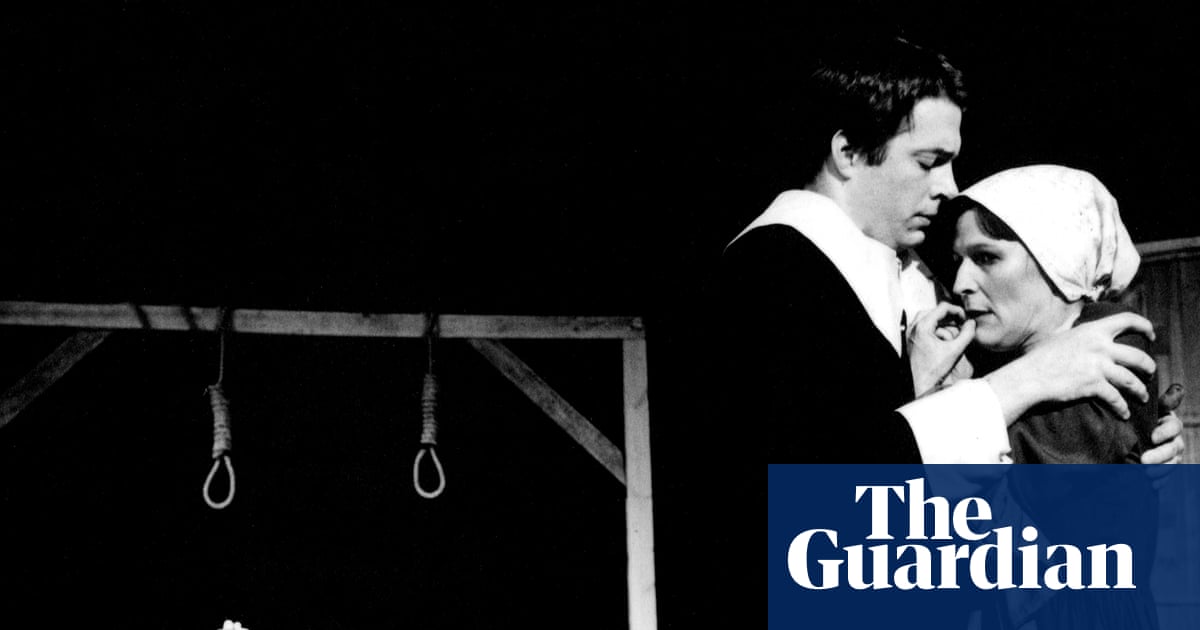
One of those predecessors is The Line of Beauty, which won the Booker prize in 2004 and was shortly afterwards adapted for television, providing an early leading role for actor Dan Stevens. This autumn, Hollinghurst’s tour d’horizon of the Thatcher era as seen through the eyes of Nick Guest, a young man taken up by a wealthy and politically powerful family, also became a stage play at London’s Almeida theatre in a version by Jack Holden, directed by Michael Grandage. It has been one of the season’s hottest tickets, I remark: “absolutely scorching”, replies Hollinghurst, who is witty and charmingly self-deprecating in conversation, and yet never less than attentive and serious.
How has he found the process of watching a novel of more than 500 pages with multiple characters and settings transform into a far less populous and tighter two hours on stage? “It’s been converted into a completely different medium with completely different terms and considerations,” he says. “And I found that rather fascinating. Of course, it’s different. Of course, there are all sorts of things which aren’t in the book, certainly a lot of characters that are not in the play, and a certain amount of amalgamation of characters. Jack Holden has done something very skilful. I think there are six really horrible characters in the book that he’s compressed into one really monstrously horrible character.”

Who does he miss? “Well, I was very sorry to lose Lady Partridge [the grandmother], who’s one of my favourite characters, and also the rather hot waiter from Madeira. But you can’t have everything.” He read successive drafts, he tells me, and gave his feedback, “but I was very wary of giving novelist’s notes: you know, do you think that’s quite consistent? And shouldn’t we say a little bit more about so and so? And why doesn’t he go on to say …? Which is me sort of clinging to my own material. Actually, the priorities of the stage are quite different, and things which I feel might need to be explained can be conveyed by a gifted actor, just in a look or a gesture.”
The novel looked back to a time nearly 20 years previously and the play appears nearly another 20 years after that, so there’s an increasing sense of The Line of Beauty as a key to an intense but very different social and political moment. This production, Hollinghurst notes, “involves young actors who were born long after Mrs Thatcher ceased to be a player, and who know nothing about the Aids crisis. So there is partly a kind of educational dimension to something which is set in this specific historical period.”
He’s extremely generous about the information deficits of younger generations: “It’s very easy for an old person to bemoan the things that young people don’t know, but of course young people know so many things that I don’t.” But in truth, his novels have been casting a light on the particularities and texture of English life, and of the experiences of gay people, since his electrifying debut, The Swimming-Pool Library, appeared in 1988. The novel started its life, he explains, when he was still on the staff of the Times Literary Supplement, and consequently short of spare time. To impose order on the process, he started it on 1 January 1984, writing in a large-format desk diary. “I just decided I would write a page a day, and at the end of the year I’d have a novel. In the middle of April, I was quite seriously behind: in fact it took me about two and a half years to get to December 31st.”
It was worth persisting: the novel won the Somerset Maugham award, and began a publishing career that now extends to seven novels, appearing roughly every half-dozen years and arguably providing this country’s most acute literary representation of gay life to date. Each of Hollinghurst’s books has been eagerly anticipated by his readers, not merely for his grasp of the dynamics of personal and social relationships set against panoramic backdrops, but for the sheer beauty of his prose; close-up observations of the minute-to-minute materiality of life interspersed with journeys through characters’ interior mental and emotional landscapes. They are often elegiac, but also very funny and, as Hollinghurst has often pointed out, are intended to entertain.
Both The Swimming-Pool Library and his second novel, The Folding Star (1994), turned on the revelation of a secret – “rather clunky plot structures”, he says now, which “increasingly came to feel not like life to me” – but in his last three novels, The Stranger’s Child, The Sparsholt Affair and Our Evenings, Hollinghurst has moved into the arena of whole-life novels. In each case, the narrative advances by years between discrete sections, leaving the reader to gather what has happened in the intervening periods. Was that a way to convey dramatic changes in society, and especially in gay life – to talk about what alters, and what stays the same?
“One can take a generally ameliorative view of change,” he says, thoughtfully, “which is something I think has obtained over the period in gay history, for instance, that I’ve written about: moving from severe legal oppression and social difficulties and so on into an unrecognisably changed period of legal and social freedom and acceptance. And then the sense which we have increasingly at the moment, with the rise of the right everywhere, of these freedoms in which I’ve happily lived my adult life becoming vulnerable.” In that context, he thinks, the latest incarnation of The Line of Beauty has “a sort of admonitory quality … And I think that was something I wanted to touch on in Our Evenings, too, that these cycles of racial violence and so forth, we keep thinking that’s in the past, and then they flare up with horrible new intensity.”
Dave Win, the protagonist of Our Evenings, is brought up in a small, semi-rural town by a single mother, Avril, a white woman. His father, whom she met during a brief period of working in Burma, is absent, and further details about him are obscured from both his son and the reader. Throughout his life, Dave is thrust into successive situations where his identity – as a scholarship boy at a public boarding school, sponsored by a philanthropic couple; as a young gay man; as an actor searching for roles from which his ethnicity does not exclude him – marginalises him.
In that respect, he’s the opposite of The Line of Beauty’s Nick Guest, one of several polished interlopers who have little problem in gaining an entree into elite society and thereafter wreaking havoc. (I ask Hollinghurst whether he felt that the makers of the film Saltburn had taken The Line of Beauty very much to heart and he bursts out laughing: “Well, I’m not sure. I don’t think I’m the only person who’s come up with that scenario.”) Guest’s ambiguity stems from our uncertainty of how intentional his destructiveness is; Win’s from his far less powerful adjacency to privilege.

“I do think of him as being more unambiguously a sympathetic character,” Hollinghurst says of his latest leading man, “and one that people have liked and sort of gone along with, with a kind of unselfconscious warmth that they don’t necessarily feel towards Nick Guest.” Much of that has to do with the strikingly tender portrayal of the bond between David, his mother and later, her partner, Esme. “Obviously the relationship with his mum was always going to be a central part of it. And just trying to depict the longest, largest relationship in his life, so much of it being made up of things which are never said, and yet its fundamental importance. I’m pleased that people seem to have been touched by that.”
Win, like Guest and like Hollinghurst himself, is an only child, and I tell the author that I’m constantly fascinated by how many of his characters don’t have siblings. Does he think it’s significant?
“I think perhaps it is, because as an only child you become quite accustomed to your own society, and you become rather imaginatively self-sufficient. But then your life repeatedly puts you in situations where you’re engaging with another family, another social system, whatever it might be, and you have to learn how to do it. I can remember in my life feeling that I’d passed a sort of threshold and I’d learned how to perform. And perhaps all people growing up do this, you know, but suddenly gaining a social confidence, knowing how to behave. It struck me very much, actually, looking at the play, and seeing how Nick in the first half is rather watchfully sort of fitting in with this family, and in the second half, his behaviour has changed, and he’s become a performer among them. He’s become a little star in the world. Of course, it all goes horribly wrong, but that just brought back to me those moments of feeling that I’d sort of mastered the situation, or I was no longer terrified of it.”
Winning the David Cohen prize and watching the theatrical release of a work written two decades ago have involved a certain amount of looking back. Of the prize, he recalls going to the awards ceremony as “a young TLS staffer, going along to see Harold Pinter getting it, and seeing Muriel Spark getting it. And since then, it’s been won by all sorts of people who actually have been huge figures in my own mental literary landscape: Seamus Heaney, Thom Gunn, Michael Holroyd, very different writers, but it just seemed to be the supreme kind of accolade. So it’s very astonishing to have got it.”
Less immediately tangible are his thoughts about the development of his approach to writing. He’s been wondering, he says, about the connection between the 29-year-old who started writing in pages of a desk diary – all his books until The Stranger’s Child were written in longhand, but then he got “a bit fidgety” and started to play around on screen – and the 71-year-old he is now.
Despite the cyclical nature of oppression, the landscape he’s written about has radically changed. In The Sparsholt Affair, a character struggles to get to grips with the new and often app-based world of sexual relationships, although Hollinghurst points out, humorously, that “he does master it and he has a hookup”. A pause. “He comes to feel it’s not really for him.”
“Part of this habitual looking back has involved me in going into times when these things were secret and dangerous, and there were codes of behaviour. I remember, when I was very young, older gay men slightly lamenting that gay lib had taken all the excitement out of it, that the illegality gave it this extraordinary erotic charge. I mean, generally, that’s not my view, I much prefer to be living in the time we’re in now, but I think it’s part of a much larger change, particularly over the last 20 years, in notions of privacy.”
On a practical level, he says, the dissolution of privacy is a good thing, meaning that “gay men and women are not living their lives in the shadows, in fear, they’re just living them as anybody else would”. But is it harder to write about people when they are more apparently open, when, as he says, “go on to whichever app you favour, and there turn out to be 80 people ready within a 100-yard radius and you’re immediately confronted with the most intimate aspects of total strangers’ lives”? Or is it fun?
“There is something sort of exciting about that idea of instant gratification. But I think it goes against my natural temperament as a writer, which is that sense of expectation, anticipation, frustration, actually being much more interesting. And as everybody knows, anticipated excitement or anticipation is often better than the fulfilment. So yes, I think temperamentally, I’m not so interested in writing about the new world of dissolved privacy.”
Hollinghurst has often been praised for his ability to conjure social scenes, from grand parties to far smaller-scale encounters. But he is also closely attuned to life’s longueurs, to periods in which little happens beyond waiting for things to get going. Creatively speaking, though, he is not himself suffering from a lack of activity or impetus.
“There’s part of me which would quite like to retire. And part of me which, having seen people who retire and are utterly miserable and directionless, knows very well that I don’t want to. I’ve spent my whole adult life with a book sort of simmering in the background and having this other place to go to and mess around in. I always enjoy the period of relief after a book comes out, when I don’t have to think about that for a while, but then I begin to miss it. So I hope soon to get cracking on something else.”