3 months ago
151
3 months ago
151
A landmark strategy to protect women and girls from violence and abuse “falls seriously short” of the funding required to realise the government’s ambitions, campaigners have said.
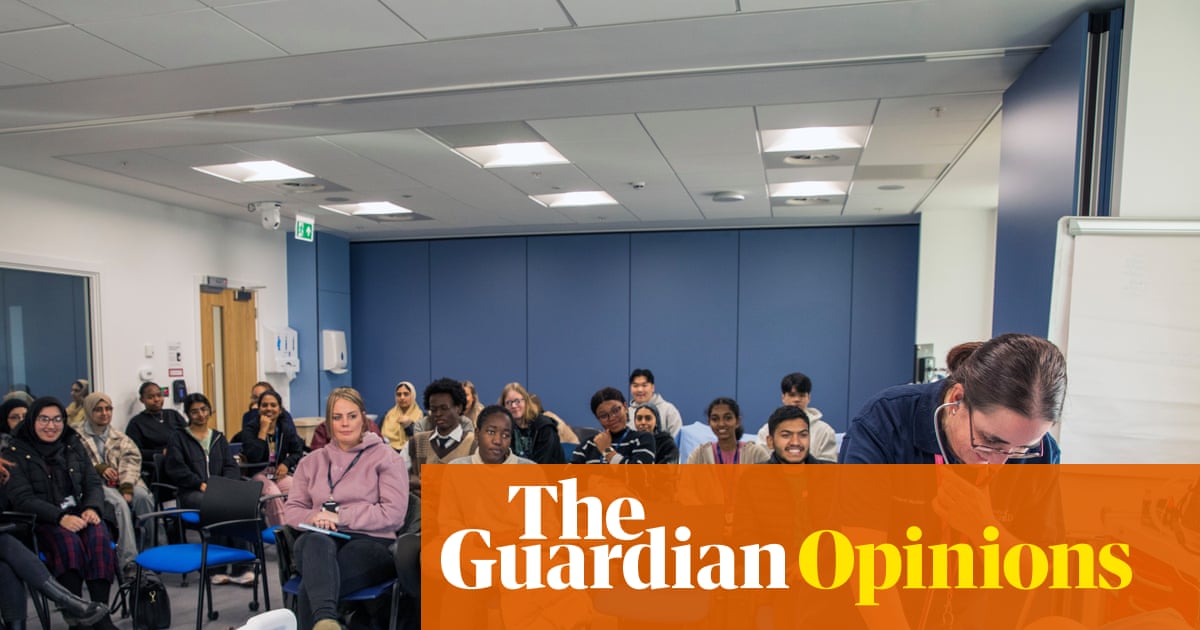
The government’s strategy to combat violence against women and girls (VAWG) was hailed as a “milestone” by women’s organisations. It will focus on prevention and tackling harmful behaviours in boys, by teaching pupils about healthy relationships and pornography and equipping teachers with the skills to intervene if they witness disturbing or worrying behaviour.
Presenting the strategy in the House of Commons on Thursday, Jess Phillips, the safeguarding minister, who has played a central role in developing the policies, said the strategy was backed by £1bn of funding and was “more than a document”.
“It is a call from a government that recognises this as a national emergency, a government that is willing to back up its words with action,” she said. “Ending violence against women and girls is the work of us all … It will take all of society to step up and end the epidemic of abuse and violence that shames our country.”
The document spells out cross-governmental plans to address VAWG by focusing on prevention and measures such as sending experts to secondary schools to educate children about consent and the dangers of sharing explicit images. Teachers will also be able to send young people at risk of causing harm on behavioural courses.
Phillips said that as well as prevention, new measures would “bear down” on perpetrators and support victims so they could “get justice when they seek it, and the closure that they deserve”.
Andrea Simon, the director of the End Violence Against Women coalition, said the strategy was welcome but that the £3m allocated to a teacher training pilot would “barely touch the surface of the additional infrastructure needed”.
She said many organisations that support abused women were facing a funding crisis, which the strategy was promising little to help. “This is an important milestone but we remain deeply concerned about financial challenges for frontline support services following years of chronic underfunding. The delays to this strategy’s publication have only made this worse,” she said.
Policies in the heavily trailed packages include:
-
Tackling misogyny with focused education in schools.
-
A new GP referral service and £50m funding for therapeutic support for child victims of sexual abuse.
-
New laws to ban AI “nudification” apps.
-
Plans to work with tech companies to ban the sharing of nude images on children’s phones.
-
Specialist rape and sexual offences units in every police force.
-
A national rollout of strict new restraining orders on domestic abusers.
-
£19m funding for councils to provide safe housing for domestic abuse survivors.
-
£550m investment to support victims and witnesses throughout the criminal justice system.
One aspect of the strategy which has drawn criticism from the Conservatives is its focus on tackling misogyny among boys. Simon said the focus on early intervention must not target or demonise individual boys. “We don’t want a situation that is overly punitive around very young boys,” she said.
“Young people need education and awareness-raising, but we have to recognise that the problem is systemic and those profiting the most from rising extreme misogyny are the tech platforms who must be held to account.”
The domestic abuse commissioner for England and Wales also raised concerns about the level of funding for services. “Today’s strategy rightly recognises the scale of this challenge and the need to address the misogynistic attitudes that underpin it, but the level of investment to achieve this falls seriously short,” Nicole Jacobs said. “There is still no long-term sustainable funding for specialist services to ensure victims can actually access support in their area, despite the fact many of these measures will likely drive up referrals.”
One source in the sector said that despite multiple briefings which revealed much of the policies in the strategy before its release, the strategy remained unclear. “I think there is quite a lot of disappointment,” they said. “It’s all very kind of top level and vague. All of the initiatives do nothing to alleviate the enormous strain on frontline services. The announcements are actually an investment into education and health, not into the sector.”
Karen Ingala Smith, co-founder of the Femicide Census, which records the killings of women by men in the UK, welcomed the strategy’s explicit use of the term. “Femicide is arguably the most serious form of men’s violence against women and girls,” she said.
The Conservatives faced criticism after their leader, Kemi Badenoch, was accused of weaponising violence against women and girls and of using “dangerous” and “deeply inaccurate” claims in her response to the government’s plan.
Badenoch said plans to tackle misogyny in schools were being introduced only because “some people in Labour” watched the Netflix drama Adolescence, adding that the focus should be on “people, who come from cultures that don’t respect women, coming into our country”.
She added: “The fact is, it’s not 11-year-old boys in school who are perpetrating violence against women and girls … They need to do the right thing, put police officers on the street, stop people who come from cultures that don’t respect women coming into our country, foreign criminals removed as soon as they commit crimes.”
Ghadah Alnasseri, the co-executive director at Imkaan, a charity that supports women from minority ethnic backgrounds, said the response could put women at risk. “Her rhetoric is very dangerous,” Alnasseri said, adding that the majority of victims of sexual and domestic abuse knew their abuser. “It’s deeply inaccurate, it’s misinformation and it’s spreading racism.”