3 months ago
133
3 months ago
133
The UK should consider re-entering talks for a defence pact with the EU, Keir Starmer has said, arguing that Europe needs to “step up and do more” to defend itself in uncertain times.
The prime minister signalled that he wanted to work more collaboratively with other European countries to increase defence spending and build up military capability, and doing so through the EU’s scheme is one option available.
Talks for the UK to join the EU’s €150bn (£130bn) security action for Europe (Safe) defence fund collapsed in November 2025 amid claims the bloc had set too high a price on entry, with France blamed for the breakdown.
However, there is understood to be greater appetite on all sides for a deal on the UK to join a future round of Safe, especially since Donald Trump’s threats to take over Greenland and criticism of Nato.
Asked on his trip to China whether there was a case for the UK going back into a second-round Safe defence pact if the price was right, Starmer said: “Europe, including the UK, needs to do more on security and defence … That’s an argument I’ve been making for many months now.
“We’ve got to step up and do more. It’s not only President Trump who thinks Europe needs to do more but other presidents as well. I think the same. That’s why we’ve made commitments to greater spending. I think we need to go beyond that.”
The Guardian revealed on Friday that the UK and EU were exploring the prospect of new talks on closer defence cooperation. Maroš Šefčovič, the EU’s trade commissioner, is due in London for talks next week when trade, energy and fisheries will be on the agenda.
While defence is not currently on the agenda for that meeting, there may be further opportunities for the EU and UK to discuss defence at a political summit convened by Marco Rubio, the US secretary of state, to discuss critical minerals in Washington on Wednesday, with the Foreign Office sending a minister.
Starmer wants to build on defence deals struck with European allies in recent months, and more bilateral deals is another option on the table. Norway has agreed a £10bn deal for anti-submarine warships that will be built in the UK, while Britain has agreed to sell 20 Typhoon fighter jets to Turkey for £8bn.
“I do think on spend, capability and cooperation we need to do more together. I’ve made the argument and that should require us to look at schemes like Safe and others to see whether there is a way in which we can work more closely together,” Starmer told reporters.
“Whether it’s Safe or other initiatives, it makes good sense for Europe in the widest sense of the word – which is the EU plus other European countries – to work more closely together. That’s what I’ve been advocating and I hope to make some progress on that.”
The Safe fund is made up of money the European Commission raises on credit markets, which is then lent to member states over 45 years. They can buy everything from ammunition to drones and missiles.
The aim of the fund is to enable the EU to build up a defence capability quickly, something given an extra urgency by the lack of support from Trump and his regular threats over Nato.
The UK is not eligible to apply for a Safe loan, but if it joined the programme under third-country rules then UK companies could tender for more procurement contracts to provide arms to the EU, boosting the British defence industry.
It is understood that the EU had demanded that the UK contribute about €2bn to the fund and that the British felt a contribution in the hundreds of millions was more appropriate.
Starmer is facing pressure from within his own party for closer ties with the EU. He has rejected the idea of rejoining the customs union, as the UK would have to rip up trade deals with other countries, but the prime minister is known to be keen on further alignment with the single market.
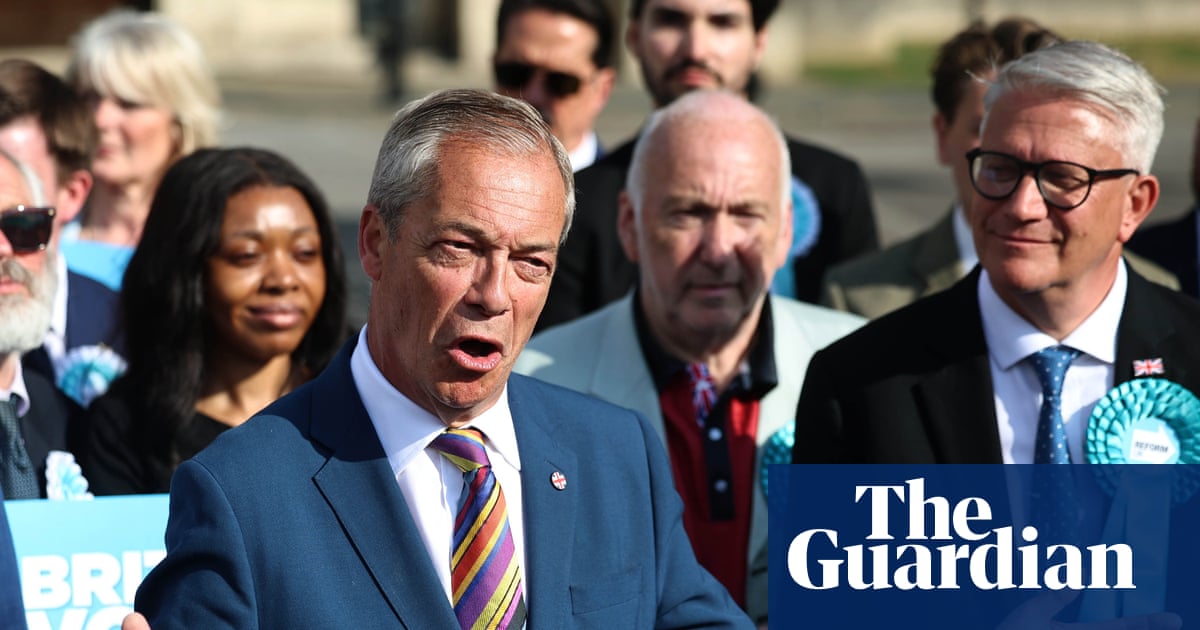
EU relations are increasingly becoming a dividing line between Labour and Nigel Farage’s Reform UK, though the government has ruled out the UK going back into the single market or customs union or bringing back free movement.
In China, Starmer criticised the Reform leader’s promises on Brexit. “I wouldn’t listen too much to what Nigel Farage has to say about this. It is absolutely clear the botched deal we got from the last government has damaged our economy,” he said.
“Which is why we have to reset that relationship and do want to get closer on defence and security, on energy, on emissions and trade … When we get to the summit this year we will not only follow up on the 10 strands that we set out at last year’s summit, we’ll also want to get closer with an iterative process.”