2 months ago
52
2 months ago
52
Walk through the conference centre where the recent UN climate talks were held and representations of Indigenous people and culture were everywhere, from the spear-carrying, fiery-headed Cop30 mascot Curupira to huge mural-sized photos of people navigating the Amazon in dugout canoes and the many protests demanding dialogue outside.
Yet a short boat ride down the river from Belém, into the forest itself, takes you to another forest-dwelling community also fighting for further recognition within the Cop process. The quilombola community of Menino Jesus has existed for six generations. Quilombolas are the descendants of former enslaved people who fled into the forest as a site of refuge. Over hundreds of years, they established a unique way of life separate from mainstream Brazilian society, living in harmony with nature as fugitives protected by the jungle.
Now they are engaged in a struggle for survival, against powerful interests who want to turn the land they are inhabiting into a vast dump for the rubbish generated by Belém and a dozen other municipalities. Just half a kilometre from the borders of their settlement, at the intersection of dozens of quilombola communities, a private company wants to create a landfill site that the communities say will devastate 200 hectares (495 acres) of land.
“This is the most terrible crime that we can have here,” said Edson Coelho, a community elder. “We work with agriculture, we preserve the environment.
“And if this landfill is there, we will no longer be able to live here or sell any type of product, because who’s going to buy a product that’s contaminated?”
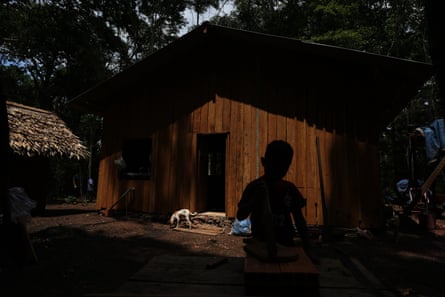
On a trek through the forest surrounding Menino Jesus, Coelho pointed out the resources quilombolas have learned to sustain themselves with – from leaves used to wrap meat in place of clingfilm to plants used to treat illnesses and the best fruits for food.
Research shows that Menino Jesus, its neighbouring Itacoã-Miri territory and other Afro-descendant community lands have exceptional biodiversity, with 29% to 55% lower deforestation rates compared with both protected and unprotected areas.
However, political recognition has moved much more slowly than scientific recognition. While their position on the margins of Brazilian society was necessary for their protection – the country only abolished chattel slavery in 1888 – it also left quilombolas struggling for recognition and to be heard.
Today, Brazil is home to more than 1.3 million quilombola people, about 0.65% of the national population, spread among almost 2,500 communities in the Amazon. But only 4.3% of them have rights over the land on which they live.
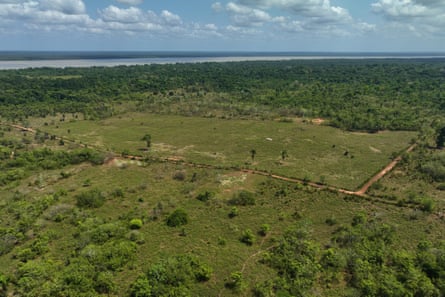
And land rights are crucial for their protection, with a previous effort to create a landfill site around Menino Jesus defeated after they were able to prove ownership of the area. The environmental department of the Pará state government told the Guardian it had turned down a licence for the new solid waste treatment plant because it did not comply with legal and technical requirements. But this was challenged in a local court, which ordered the licensing process to continue. A final decision on whether to go ahead has not yet been made.
In spite of that, people have already started to dump rubbish at the site of the proposed landfill. In order to access the site, you have to walk past a pile of refuse, festering in the tropical heat.
There, Fabio Nogueira, another member of the Menino Jesus community, described the huge environmental summit taking place just a few miles away as “contradictory”.
“What the world is talking about and deciding is not considering our voices,” he said. “We are the true guardians, the true defenders of the forest, and we have no opportunity to expose what is afflicting us.”
after newsletter promotion
During the summit, Brazil announced the creation of 10 new Indigenous territories, including quilombola land, which in theory will mean their culture and environment is protected under Brazilian law. It is unclear what impact this will have on the plans for the landfill.
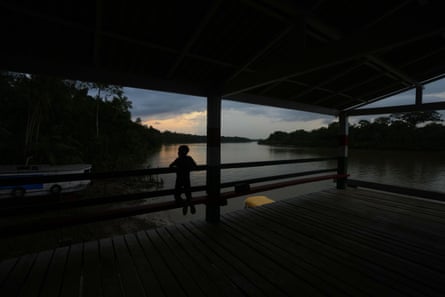
After lobbying from Brazilian negotiators and others, the core negotiation documents from the Cop30 summit for the first time referenced Afro-descendant communities alongside groups disproportionately affected by climate breakdown and who are key contributors to mitigation.
Some welcomed the mentions as an important step, but other campaigners, noting they fell short of establishing Afro-descendant peoples as a standalone constituency in the United Nations framework convention on climate change, dismissed them as “perfunctory”.
A few miles downriver stands the Itacoã-Miri community, a neat settlement of carefully constructed single-storey buildings. There, quilombolas practise agroforestry of açai, the Amazonian berry that is famous in the global north as a “superfood” but is a local staple.
As the afternoon rains fell, Erica Monteiro, a young community leader, said such recognition failed to account for the unique character of quilombola communities, adding that they wanted specific recognition.
“[They] need to listen to the populations that live in the forest, because the forest is not just fauna and flora,” she said. “It has people who resist in those territories, and that is what keeps the forest standing and the forest alive. We must keep it alive to maintain our own life, because without the forest, neither we nor the rest of the world will survive.
“The problem is that the government talks a lot and listens little.”