3 months ago
148
3 months ago
148
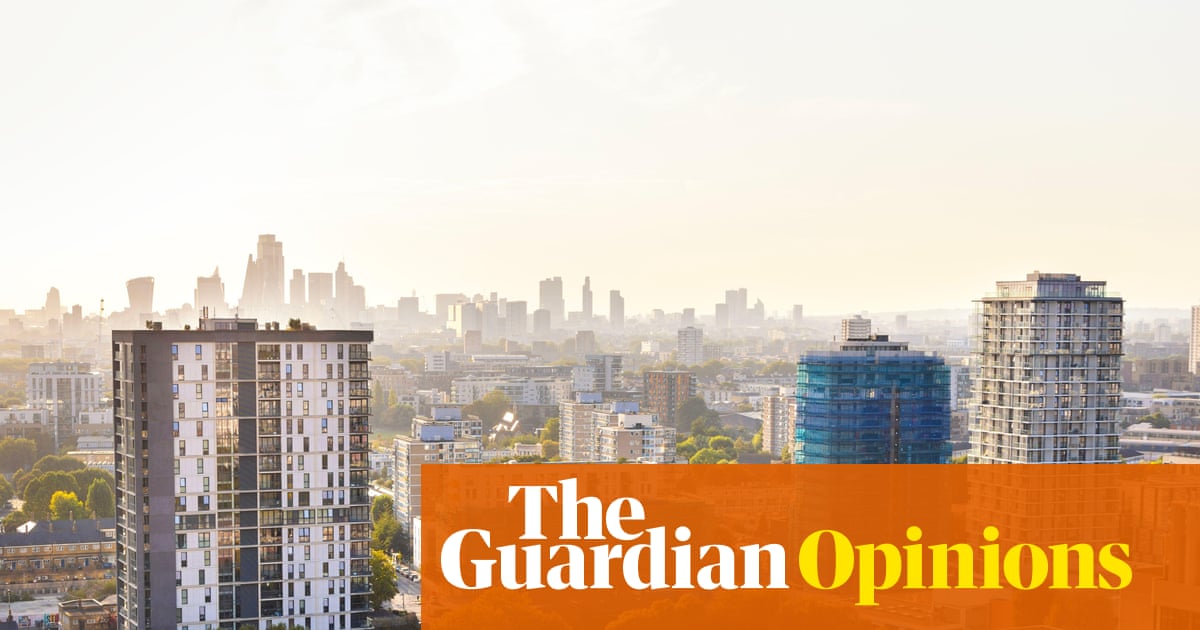
What happens when international capital arrives on your doorstep and threatens to devour your home? The residents of the housing estates surrounding Battersea power station in London, including the Patmore where I was raised, faced that prospect when, in 2012, a consortium of Malaysian investors bought the derelict power station, decommissioned since 1983, for £400m.
Two years earlier, David Cameron had launched the Conservative manifesto in the ruined power station. He promised to increase foreign investment into the UK, and so the international investors came and bought the thing and much more. Over the years, Battersea and the adjacent Nine Elms area was refashioned as a playground for oligarchs and other international elites. The US embassy arrived, a world-first glass sky pool was commissioned, and when Battersea power station shopping centre opened in 2022, it came with Rolex and Cartier stores, luxury private members’ clubs and apartments with multimillion-pound price tags.
The whole assembly looks like a Dubai waterfront, and for long-term locals a fear emerged of being forcibly displaced as occurred in Elephant and Castle and Stratford. In these areas of London, regeneration had become a byword for the social cleansing of working-class communities and their replacement by affluent residents.
Yet a quiet victory has occurred that shows how communities can bargain with developers. Last month, Battersea power station announced that it would be working in partnership with Wandsworth council to build 203 council homes as part of the development’s 17-hectare (42-acre) master plan.
This win is a genuinely radical vision of what local government can achieve. And it matters because it is a radical assertion that mixed-income communities should continue to exist, and be actively facilitated, in the centre of London. Mixed communities have increasingly come under attack as ire against the housing crisis is directed at social housing tenants occupying central London locations, particularly if the household is born overseas. As Henry Hill wrote in UnHerd: “Even without the immigration angle, it was only a matter of time before voters noticed that broad swathes of central London and other prime locations are currently used to house others at taxpayers’ expense.”
This is a particularly personal grievance for me. I grew up in this patch of Battersea when it was seen as a relic of industrial decline, a sad and neglected avatar of inner-city roughness. Yet now that it’s been put on the map, neoliberals and cynics of state support would have it that these communities and families should uproot their foundations to make way for those with deeper pockets.
It is worth considering how Wandsworth council fought back against this tide. In 2017, the then Conservative-run council approved a reduction in the provision of “affordable” homes to be built on the site from its own 33% target at the time of the 2010 planning application to only 9%.
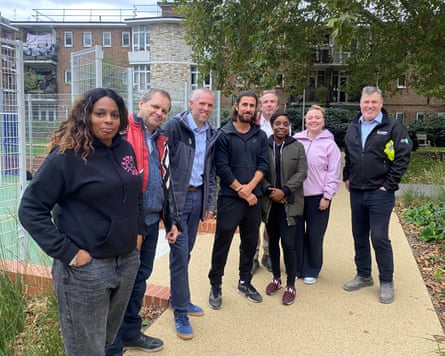
In 2022, Labour ended the 44-year Conservative-majority control of Wandsworth. With this came the appointment of the socialist councillor Aydin Dikerdem. “As a local representative, I thought the local government should be acting almost like a trade unionist on behalf of the residents,” Dikerdem tells me. Developers went from playing on easy mode with neoliberal conservatives to having to wrangle with municipal socialism. Shunning champagne and freebies, Wandsworth Labour councillors controversially boycotted the Battersea power station launch over the low levels of social housing.
The council housing agreement was won after robust negotiations, aided by the Greater London authority, which included the council ending all collaborations until the housing question was addressed. Eventually a deal was brokered, because even if the primary pursuit is profit, developers still want to be seen to be building and facilitating “a vibrant and friendly community”, as is said in one of the brochures. The neighbouring Embassy Gardens in Nine Elms, with its sky pool and “poor doors”, had already been viewed as an almost dystopian symbol of the UK’s grossest inequalities and prioritisation of global elites, and example of how not to do a local development.
Community simply cannot exist without the presence of existing long-term residents. I am reminded of that whenever I pass the roadside memorial for Patmore estate legend and footballing talent Theo Porteous, who was stabbed to death in 2023 in an unprovoked and senseless attack by a man not from the area. When he died, my entire estate poured out to pay tribute, light candles and lay flowers. There was a strong sense that the community had lost someone precious. It was an expression of familiarity and local love that is built up over years and generations, and cannot be replicated by brownfield developments.
The council’s efforts go further than the power station. This year, it has built 57 new council homes for rent on the Patmore, an estate not far from the power station. There are also new outdoor play spaces, including a multi-games area named in honour of Theo. It has been beautiful seeing new families and children move to the estate and have a better start in life, as had been the case for mine 27 years ago.
I hope that future residents of the power station development will be able to enjoy their new homes, playground and all the other amenities that will surely come. If you have lived in an area all your life, through its roughest periods, why should you not feel the benefits when development turns up at your door?
I wish this could be rolled out across London, but the unilateral slashing of affordable housing quotas from 35% to 20% in the capital proposed by the housing secretary, Steve Reed, could scupper any future wins for local councils. The policy has been proposed as a way to get shovels in the ground and stimulate the economy. However, this is short-termist. As Dikerdem tells me, “when the market slows down (as the housing market has) and building costs go up and developers are struggling, it’s precisely the moment when the state should step in”. That could allow local government to stimulate housing demand, provide workers and cover construction costs, so long as certain social obligations are met or increased.
If government could take a leaf out of Wandsworth’s book and stand up to developers, rather than rolling out the red carpet, then perhaps local communities would be all the richer for it.
-
Jason Okundaye is an assistant opinion editor at the Guardian and the author of Revolutionary Acts