1 month ago
89
1 month ago
89
Most people would agree that mainstream media has now comprehensively (if not entirely successfully) covered “incel” culture. The small screen has delivered the likes of Adolescence and Louis Theroux: Inside the Manosphere; the movies have offered multiple meditations on male radicalisation such as The Beast, Manodrome, Don’t Worry Darling, Joker and even Barbie’s Kens.
The irony of women being overlooked feels almost too obvious to flag, yet we are definitely suffering a dearth of onscreen “femcels”. This lack of representation is all the more glaring amid the rise of tradwife culture and the wellness to “alt-right” pipeline – largely made up of female influencers dubbed the womanosphere – and the fact that around 50% of white US women voted for Donald Trump in 2024.
Of course not all female Trump voters can be considered femcels. Nor does femcel culture indicate the same behaviour as incel culture, since women in the alt-right tend to take less aggressive platforms. It is often pink-pilled female influencers who promote more palatable versions of right-wing ideals (such as traditional lifestyles), serving as recruiting agents for further radicalisation. By continually erasing these key participants in favour of their louder male counterparts, cinema is stuck presenting a limited view of the alt-right and the many, easily-accessed pathways to extremism.
Cinema’s attempt to understand women’s dark online tendencies has often been limited to heavily aestheticised films in which Instagram obsessives go to extreme lengths to achieve the aspirational lifestyles that they covet, including Ingrid Goes West, Not Okay and Sick of Myself. But a few films have taken women’s online radicalisation beyond this shallow realm – Radu Jude’s Do Not Expect Too Much from the End of the World, Pascal Plante’s Red Rooms and the most recent addition to the niche category of femcel cinema, Kristoffer Borgli’s The Drama.
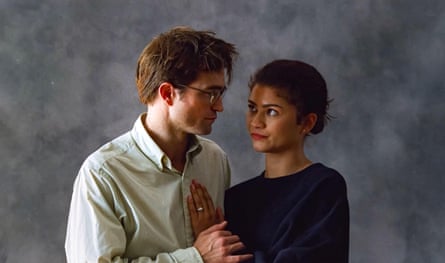
Much of the criticism surrounding Borgli’s latest film accuses him of racial- and gender-blind casting. Zendaya and Robert Pattinson play Charlie and Emma, who are a happily engaged couple until Emma reveals that she planned, practised for and almost went through with a school shooting when she was a teenager. Some commentators can not understand how a black teenage girl (young Emma is played by Jordyn Curet) could consider a form of violence that is overwhelmingly the preserve of white male perpetrators. Borgli stumbles over an understanding of far-right radicalisation – Emma was apparently inspired by “the aesthetics” of it all and the real-life case of the 16-year-old US school shooter “I don’t like Mondays” Brenda Spencer – never successfully exploring how her race could be a factor. Flashbacks aside, it’s the present day moments of The Drama – especially at Emma’s wedding, when she becomes the focus of her friend Rachel’s (Alana Haim) anger- that excel in demonstrating how little empathy we show towards women who have emerged from a dark path. Men who break away from extremist factions are treated with kid gloves as we try to understand their motivations, but women are simply scorned.
Much like Emma, Red Rooms’ Kelly-Anne (Juliette Gariépy) dives into the depths of the extremist medicine cabinet to pull out the black pill, an even more disturbed form of far-right awakening than swallowing the red pill, in which nihilism can lead to destructive tendencies. In Plante’s courtroom thriller, Kelly-Anne is a true-crime obsessed hacker who has been following the trial of Ludovic Chevalier (Maxwell McCabe-Lokos), who stands accused of murdering three teenage girls. Although her nihilism isn’t rooted in a desire to inflict extreme violence, she is nonetheless hitting the self-destruct button, especially when she attends court dressed as one of the murdered girls, making national news and thereby tanking her modelling career. None of which matters to Kelly-Anne, because her online life is what fuels and funds her existence; she no longer needs to adhere to the outside world’s morality.
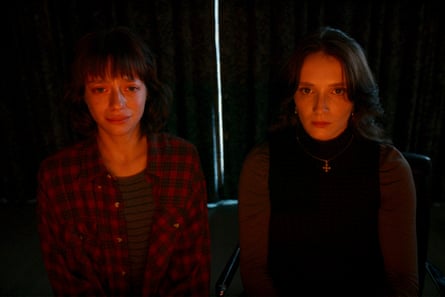
The factions of femcel culture are just as varied as their male counterparts, and cinema should reflect this. There are those such as Angela (Ilinca Manolache) in Do Not Expect Too Much From The End of The World, whose real-life equivalent is closest to the Dimes Square crowd who capitalise on irony-laden controversy. Angela’s main source of income is her job as a production assistant, for which she spends her days driving around the dreary residential areas of Bucharest, Romania. But between interviewing potential cast members for a work safety video, she makes her own content in which she shouts misogynistic rants with a filter that superimposes Andrew Tate’s face over her own. Her day-to-day life is devoid of purpose, but her online life is vibrant in comparison, which hints at the ways in which the now hugely profitable influencer culture can draw in users and encourage them to flirt with controversy.
Although these films demonstrate that we have begun to explore women’s radicalisation, they are rare finds, which makes you wonder: why has the media so readily embraced the problem of men’s online radicalisation and not women’s? This is a question that Lois Shearing wrestled with in the book Pink-Pilled: Women and the Far Right, which demonstrates how women’s involvement in far-right movements has always been vital to their success. The book argues that the widespread denial of women’s radicalisation stems in part from a “‘benevolent’ sexist view that sees women as caring and motherly by nature”, one which Charlie holds in The Drama. In Charlie’s first draft of his wedding toast, before Emma’s confession, he describes his fiancee as kind and empathic, and yet the audience is never shown evidence of this. Was Emma ever really warm the way he describes her or, more likely, was he simply projecting on to her the qualities he believed make a woman marriage material?
Preferring to inhabit the dark corners of the web over bonding with their peers, Emma, Kelly-Anne and Angela share a rare quality that goes against the warm, well-socialised cliches of femininity, which evokes the moral ambivalence that profit-driven algorithms, influencer culture and the attention economy encourage. But we still view these characters as anomalies, and we fail to depict and dissect women who choose to participate and organise in realms where misogyny runs rampant. The looksmaxxing men of the manosphere may seem extreme, but they are aided by the women of the far right, who soften the movement’s image, making it a lot easier to swallow.