3 months ago
111
3 months ago
111
When an embalmed rabbit in a Perspex box arrived at the dump in Chingford, north-east London, last year, with fur on its head but its organs and skeleton exposed to teach veterinary students about the digestive system, Lisa Charlton knew she had to save it from landfill. She was sure that one of her regulars, a man interested in anything “a bit weird, macabre and bizarre” would buy it. And he did.
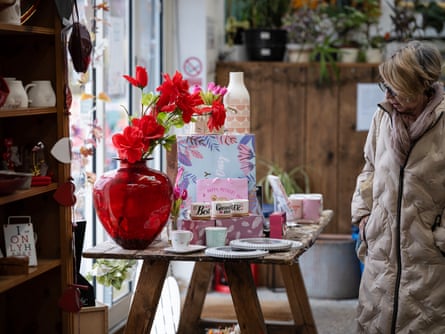
Charlton, who has worked at the recycling centre’s onsite ReUse shop for a year and a half, has salvaged items ranging from furniture, old toys and lampshades to walking frames brought in by local people. She has put aside some cast-iron cauldrons for her sister who is “into crystals and healing” and runs a shop in Cornwall. Items that have come through her shop include vintage crockery, antique crystal vases with solid silver rims, a spindly chair from the 1920s and an old ammunition box.
“I’m waiting for the day that one person will buy something for £2 and sell it for a profit,” she says. “The Del Boy moment.” The kind of item that she has missed and “happily missed – because we’re not experts”.
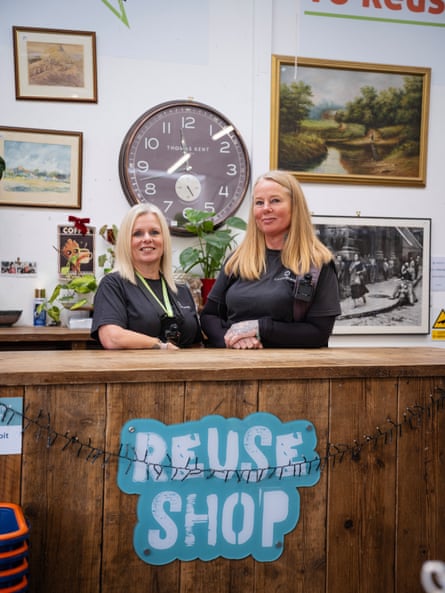
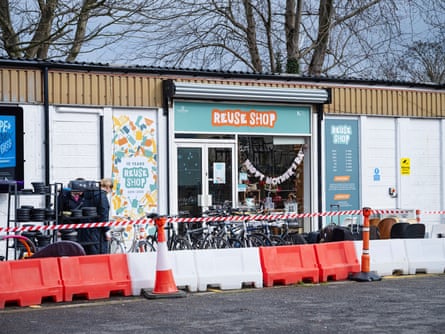
Charlton and I are standing in a store room next to the shop at the Kings Road Reuse and Recycling Centre, sited on a former playing field on the outskirts of Waltham Forest and which opened in 1994, while her sister Kerry attends to customers. It is a cold Friday morning and it’s threatening to rain, but that doesn’t appear to have put off visitors. Already, at 10.30, the place is humming with activity. I can hear debris clattering against the corrugated iron container of the garden waste chute.
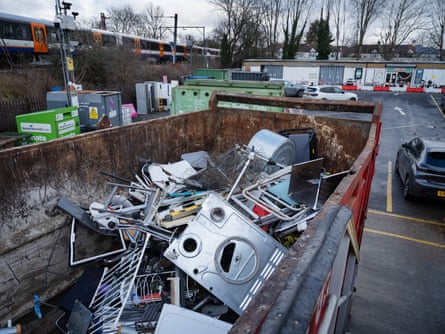
Brightly coloured signs direct visitors to their destination: large containers accessible by a metal staircase. Smaller items are disposed of in household bins neatly lined up by a fence that runs parallel to a train line. Large trucks drive in with replacements for any containers that are full – a seamless show directed by the waste management crew wearing orange hi-vis.
Throughout the day, I meet people shedding their unwanted stuff: two brothers who are renovating their third house together dispose of woodwork and cardboard boxes; one woman drops off pots of unused paint, another woman donates bird books. I meet Guy Lester, who is hauling old bathroom tiles out of his car. He is, finally, renovating his bathroom, after 20 years of living in his house. “It’ll please the wife that the rubbish bags are out of the way,” he says.
Almost everything has a home at the recycling centre, regardless of how damaged it is. The shop is an option for jettisoning saleable items. And then there are sections for fridges, dishwashers, mattresses, golf clubs, bicycles and usable paint; containers for plastic, glass, timber and scrap metal, and blue buckets full of batteries, iPhones and thousands of discarded vapes – the scent of watermelon ice long gone. It’s a small sample of the 5m vapes thrown away in the UK every week; and the 1.6m tonnes of furniture and bulky waste that the UK disposes of each year: 42% of which is furniture, while 19% is electrical and electronic waste, and a further 19% is textiles.
It is a tide that is growing. Total waste from UK households was 25.9m tonnes in 2023, the latest figures available, which is an increase of 1% from 2022 according to government figures. England is responsible for the vast majority of this – generating approximately 84% of the UK total in 2023 – which is in part due to it being the only country in the UK whose recycling rate has been going down rather than up. And that is only official waste – illegal dumping has reached crisis point, with one Guardian report finding that a figure of about 8,000 illegal dumping sites, containing approximately 13m tonnes of rubbish, is a conservative estimate. For context, in the year 2024-25, the Environment Agency shut down only 743 illegal waste sites in England.
Steve Myhill, a retired support officer to the mayor of Waltham Forest, walks up to the small appliances tip with a cardboard box filled with electrical wires. He is impeccably dressed in a neckerchief, baker-boy hat and a brown leather jacket, and has come as a favour for a friend. “I should have a loyalty card,” he says. Myhill has lived in the area for more than 40 years, but became a regular at the recycling centre when his mum died last year and he started clearing out her flat. Many of her belongings were donated to the local charity shops, but items such as her walking frame were brought here.
Once Myhill has finished with his chores, he always visits the ReUse shop, one of about 300 daily visitors. In the past, he has bought an arts and craft cabinet – Waltham Forest is the home of William Morris, after all, he says; a wooden art deco mirror and an old-fashioned bureau, for which he paid £29. “The trick is to not go back with more stuff than I arrived with,” he says.
Production designer Alison Julian arrives in a large car so she can buy as much as she wants. The objects she finds will feature in TV shows, photo and video shoots, and musicians’ tours that she helps to style. For a recent shoot for Ring magazine, devoted to boxing and wrestling, she bought mid-century furniture and a lamp made from shells. Today, she is eyeing up a white tasselled lampshade and a small cast-iron log burner that she is measuring for her home. “I never usually measure them,” she says. “But this one’s a bit too heavy and too dirty to make that mistake.”
Victor Ademosu has found a wobbly bedside table with a slate surface and wooden chest of drawers with cigarette burns that has been left outside in the rain, which he’s buying for £1. Ademosu runs an upcycling project called Footprint for Good for youth offenders, care leavers and children who have been excluded from school. “We’re able to pick up stuff at the end of its life that would normally go to landfill,” he says.
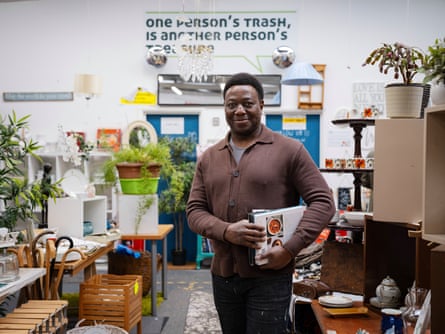
The chest of drawers, he says, “will keep a young person busy for a good month or six weeks, doing a session a week on it. They can give it a whole new life and probably sell it. And they keep the money from that project. It’s a counterweight to saying: ‘I’m going to go on the street and work for someone who’s selling drugs.’” Young people involved in the project have sold their furniture, including sideboards and drawers, for £75-100. “Eventually, it’s a business that young people can do themselves and run from their phones.” There is also a wider value to the work, combining environmental awareness with repair and entrepreneurship skills.
In the Victorian era, dumps were formed on the edges of settlements as waste was taken by barge out of cities and towns. Many were located in places that are now vulnerable to flooding. Last year, more than 100 historical landfills in England were found to have flooded since 2000, posing a serious safety risk as they may be contaminated with toxic substances.
Before the second world war, pretty much all waste went into landfill, says Dr Henry Irving, a historian of waste and resources at Leeds Beckett University. But as part of the war effort, recycling rates reached 80% by 1943, with citizens urged to “make do and mend” to address raw materials shortages; save scrap metal for building tanks, timber for army camps, huts and structures; rubber for gas masks and tyres, paper for munition containers, and kitchen fats for explosives.
Waste became a more monumental problem in the 60s and 70s, when people started to replace the first generation of consumer goods, says Irving. “You might have scrimped and saved to buy a television set in the 1950s. By the 1960s, it’s outdated. You no longer want black and white, you want colour, so you’re looking to upgrade. Local authorities start to realise that people have quite bulky items that they need to get rid of, and that’s why the household dump or tip was born.”
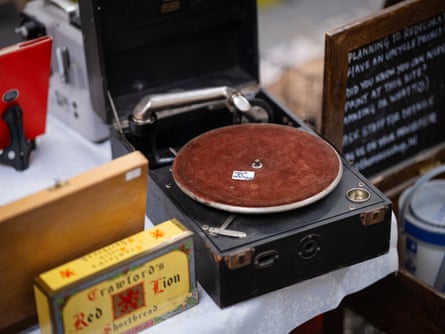
Now, a broader modern consumer culture is fuelling the tide of waste, one that has made fashion and furniture cheap, fast and disposable. Ikea uses robots to make Billy bookcases at a rate of one every three seconds, which are sold for £55. And each year, 1.4bn items of clothing are thrown away by UK adults, along with an estimated 7m mattresses. Planned obsolescence, the practice of designing products so that customers will have to replace them, has spurred consumption. It became a widespread practice after the 1929 Wall Street crash when Bernard London, a New York property broker, proposed using it as a national policy to restore the US economy. But as populations have grown and the strategy has spread around the world – embraced by mobile phone manufacturers – it has proved an environmental nightmare. Electronic waste has become the fastest-growing waste stream, with an estimated 62m tonnes of electronic waste produced globally in 2022.
The North London Waste Authority (NLWA) is the second largest in the country after Greater Manchester’s. It has seven reuse and recyling sites, including the one here at Kings Road. These sites captured 48,784 tonnes of waste material last year, of which 74% was recycled, reused or composted and the remainder was incinerated at the Edmonton EcoPark, a waste-to-energy plant, which provides electricity for the National Grid.
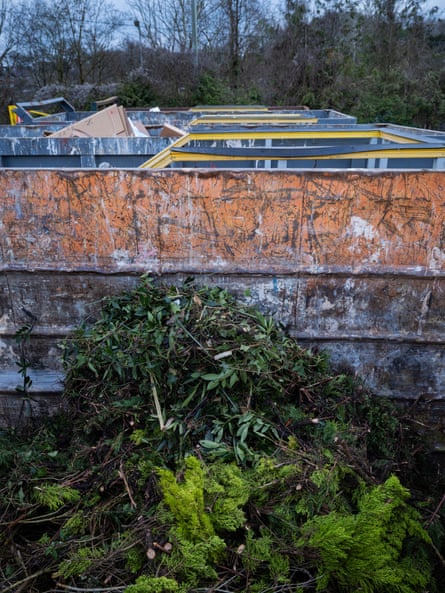
“This is the future,” says one of the waste-management officers, as we look down at the neat containers filled with scrambled electronics and scrap metal. “We live at a time when the climate is becoming crazier,” he says. “In order to survive on this planet we have to recycle.”
Others believe that doing so will require more than recycling. North London Waste Authority chair, Waltham Forest councillor Clyde Loakes, wants a push towards reuse and repair as well. “For my father’s generation, he’s 80 now, reuse was something that he grew up with,” says Loakes. “My dad can still pretty much fix basic electrical items, he knows what to do in a broken gas boiler situation and he can do carpentry. I don’t have a clue.” In the past 12 months, the NLWA has been running a scheme where residents can apply for a repair voucher that will allow them to get household appliances fixed at a collaborating shop at 50% of cost, though to a maximum discount of £50.
Things at Kings Road get quieter around lunchtime, which is when the kettle starts to boil in the site’s temporary building. The ReUse shop is also less busy.
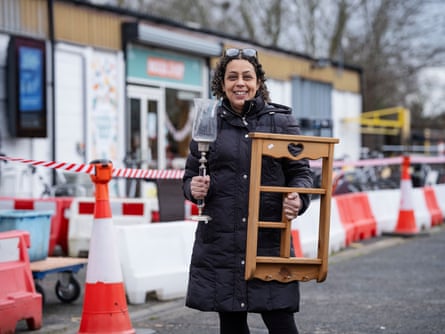
In the afternoon, I meet Anna Hamido, a pastoral worker at a local special needs school, who recently painted her house for nothing using paint she got at the tip. Hamido is off work at the moment and finds that her visits to the dump give her joy. When her mum died, she started looking out for robins, which reminded Hamido of her buying a Christmas lantern with a rope handle made from glass decorated with images of the birds, and some small sculptures that she displayed outside her front door. She is now looking for a foxhunting picture featuring a man in a red coat that she remembers hanging in her parents’ house.
“It’s nice,” says Charlton, “not to see things go to waste when they’ve got so much more life in them.”