3 months ago
134
3 months ago
134
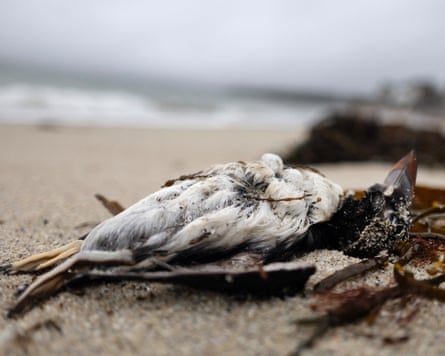
The two puffins washed up among seaweed and bits of plastic on a beach in Newquay, Cornwall, on a damp February morning. Normally, these much-loved seabirds pull in crowds of tourists eager to see their courtship rituals, but these were rolling in the surf, dead. Most people walking past probably missed them.
Their breast bones were sticking out, they had no fat on them, and their muscles were wasted; the pair probably starved to death, unable to find enough food out in the Atlantic Ocean where they spend the winter.
“It was really sad – they’re such beautiful little birds, so charismatic,” says Rebecca Allen, from the Cornwall Wildlife Trust, who was on a morning run when she spotted the carcasses.
The scene is one reported from beaches all over Europe, with tens of thousands of seabirds washing ashore in the past few weeks. It is the biggest seabird “wreck” in Europe in a decade, with reports spanning thousands of miles of coastline from southern Portugal to the northern tip of Scotland.
Seabird wrecks occur when large numbers of dead or exhausted seabirds wash up on coastlines with no obvious cause of mortality. It is believed the latest dead seabirds – mainly puffins – died of starvation due to stormy weather in the Atlantic. Since January, a string of storms – including Goretti, Ingrid and Chandra – have battered coastlines.
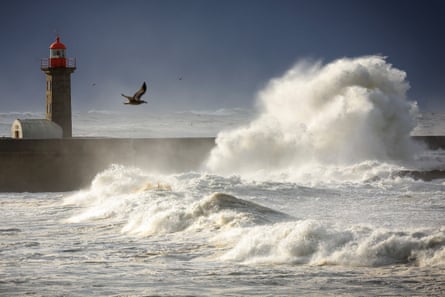
The effects are severe out in the open ocean, as well as on land. Puffins have been particularly affected as they hunt by sight and need clear water to find food. Rough seas make it difficult for them to do this.
By the end of February, more than 300 puffins had washed up in Cornwall alone. Guillemots, razorbills and terns have also been recorded. Typically, there are 40 to 100 such reports for the whole year, according to Allen, who also runs the Cornwall Wildlife Trust Marine Strandings Network, which relies on a network of volunteers to answer calls.
More than 38,000 birds have been found stranded along the Atlantic coast since the start of February. In France, which has the most comprehensive recording system, 32,000 bird strandings have been reported, with 5,000 in Spain and 1,200 in Portugal.
Some were washed up still alive but starving. Several hundred seabirds have been admitted to wildlife rescue centres across Europe. One puffin that was taken to a rescue centre in Aberdeenshire was 34 years old – the oldest bird the centre had ever encountered. It later died.
Allen says: “My concern is that the last seabird wreck happened 12 years ago. Before that, it was several decades earlier. The danger with climate change is that these conditions get more frequent, and if that happens it could be something these birds can’t cope with.”
Samuel Wrobel, senior marine policy officer at RSPB, says the numbers that have washed up are likely to be “a fraction of those that are still out at sea”. He says the death toll already this year points towards it being of a similar scale to 2014, when 55,000 wrecked birds were found across European coastlines, 94% of which were dead. Before that, the last significant wreck was in 1983 when 34,000 seabirds were found in British waters, the largest ever recorded at the time.
“It’s a real dark situation to be in, with that number of dead species, and beloved species that are charismatic and icons of our coastline,” says Wrobel. Puffins are long-lived birds that only have one chick a year, meaning population recovery is likely to be slow. The full impact of the storms on seabird populations will become clear in the coming months as birds return to their breeding sites.
Already, the UK’s seabird populations are highly threatened by overfishing leading to food shortages for the birds, as well as poor planning of offshore wind development. Climate breakdown is altering the location of prey such as sand eels and creating more extreme weather conditions, which can destroy nests and kill chicks during hotter summers.
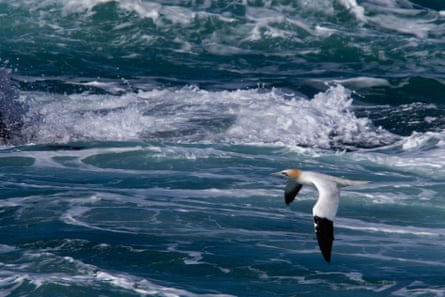
Most recently, avian flu has caused a “catastrophic” fall in seabird numbers since the outbreak of H5N1 in 2021. “These mass mortalities have been hitting quite frequently over the past decade or two,” says Wrobel.
Ten of the UK’s breeding seabirds are on the UK Birds of Conservation Concern red list, including puffins. When the list was created in 1996, it included only one seabird species. “To recover, seabirds need other pressures alleviated,” says Wrobel. “That gives them an opportunity to bounce back. We’re just seeing inaction. Without alleviating those other pressures and with events like this, we will start to see seabirds wiped out from our shores.”
Although it is unlikely that any deaths were the result of disease, dead birds can still carry diseases. People are advised not to touch injured or dead seabirds and to use the online reporting system or call the Defra helpline (03459 33 55 77) for England, Scotland and Wales. In Northern Ireland, the public can use the DAERA online reporting system.
Find more age of extinction coverage here, and follow the biodiversity reporters Phoebe Weston and Patrick Greenfield in the Guardian app for more nature coverage