3 hours ago
6
3 hours ago
6
When the University of Minnesota (UMN) extended an offer to historian Raz Segal to lead its Center for Holocaust and Genocide Studies in June 2024, it did so upon the near-unanimous recommendation of a committee of academics after a rigorous search process. The scholars had enthusiastically praised Segal, with one committee member describing a presentation he gave as “breathtaking”.
But five days after making the offer, the university abruptly withdrew it, citing “perspective” it had received from members of the community. The reversal followed backlash over Segal’s criticism of Israel’s actions in Gaza, which he called “a textbook case of genocide” in an October 2023 op-ed published in Jewish Currents. Segal’s critics condemned the piece, published just days after the 7 October attacks in Israel, accusing him of justifying Hamas crimes – an assertion that Segal rejected and the article does not sustain.
Last week, more than two years since the offer was rescinded, Segal reached a $250,000 settlement with the university. As is standard with such settlements, the terms of the deal stipulate the payout is not an admission of wrongdoing on UMN’s part. The university did not respond to a request for comment.
Segal said the significant sum should encourage the dozens of scholars who have been punished for criticizing Israel with firings, suspensions and investigations to “fight back”.
The settlement came after Segal obtained dozens of emails through a public records request, revealing a pressure campaign on university officials by donors, legislators and pro-Israel activists. The documents shared exclusively with the Guardian, reveal how the university shifted from defending Segal to eventually walking back their decision to hire him.
“We cannot allow someone like Raz Segal a blatant anti Zionist to head the department of Holocaust studies [sic],” one donor wrote to the chair of the university’s board. “There are many who will pull there [sic] pledges to the university if this isn’t addressed.” According to Segal, hundreds of emails were sent to the university following the same template, indicating a coordinated campaign.
The Center for Constitutional Rights, which represented him, argued that the public university’s actions against Segal were unconstitutional, because they retaliated against him over constitutionally protected speech.
“Dr Segal had the courage to sound the alarm to try to prevent Israel’s genocide of Palestinians,” said Maria LaHood, the center’s deputy legal director. “And for this, the University of Minnesota administration overruled the will of its faculty and revoked his job offer in violation of the first amendment and fundamental principles of academic freedom.”
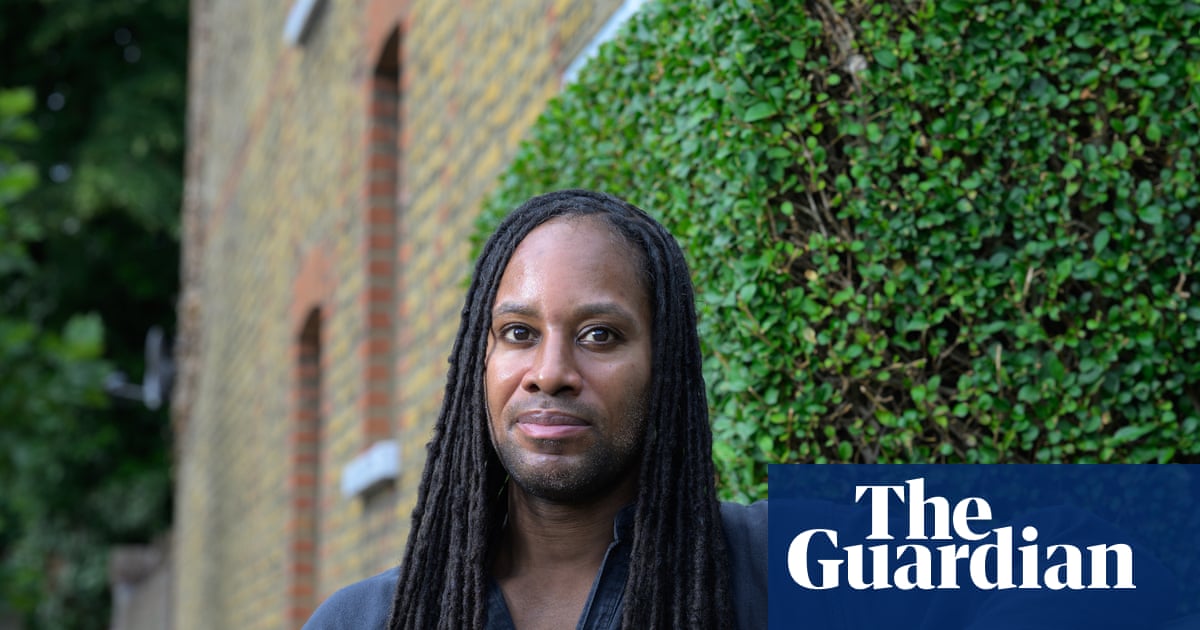
Segal, who is Jewish and a dual Israeli-US citizen, the grandchild of four Holocaust survivors and a scholar of the Jewish world and the Holocaust, said in an interview that UMN leadership “determined that I’m the wrong kind of Israeli and the wrong kind of Jew”. He is now a tenured professor at Stockton University in New Jersey, where he directs a master’s program in Holocaust and genocide studies.
While he was early to argue that Israel’s actions in Gaza amounted to genocide, that position has since been endorsed by scores of scholars, human rights groups, governments and United Nations officials.
“I really wish I had been wrong,” Segal said. “But unfortunately I wasn’t.”
Two days after the University of Minnesota offered Segal the job on 5 June 2024, Karen Painter and Bruno Chaouat, UMN professors and members of the advisory board for the center Segal was tapped to lead, resigned in protest.
In a letter to university leadership, Chaouat, a professor of French and Jewish studies, and Painter, a musicology and Jewish studies professor, accused Segal of “justifying Hamas atrocities” and “blaming Israel” for the 7 October attacks.
Segal’s article cited statements from Israeli officials, a total siege on Gaza and an aerial campaign that, by 13 October 2023, had already dropped 6,000 bombs on the territory. The same piece calls Hamas’s attacks “mass murder” and “a war crime under international law”, characterizations he has made elsewhere, including in the Guardian. “I would never justify Hamas,” he said.
Chaouat did not respond to a request for comment. Painter said that while she had “grave concerns” about Israel’s conduct in Gaza, “Segal was not an appropriate choice to head our Holocaust Center”, and that the search process to fill the position “circumvented the process contemplated at the time the Center was founded, which required consultation with the broader Jewish community”.
As news of the hiring got out, the university began to field media requests. It initially stood by Segal, emails show, with communications staff workshopping public statements and debating whether to say he had received the search committee’s enthusiastic “recommendation” or “support”.
But as pressure intensified, the university began to retreat. On 8 June 2024, a senior member of the communications team warned colleagues that “defending the candidate too much at the moment can be risky”. The team scrapped a sentence from a response it had drafted for media outlets saying that the university did not apply “political litmus tests in hiring”. They also reached out to Segal asking to confirm whether he was “an Israeli native” in order to deal with allegations he was “anti-Israeli”.
Segal responded that he was born in Israel, grew up there and that his parents and sister lived there, as well as friends and colleagues. “I care deeply about the place,” he wrote.
Two days later, UMN leadership informed Segal in a two-sentence email they had changed their minds after “additional members of the University community have come forward to express their interest in providing perspective on the hiring of the positon [sic],” the university’s then interim president, Jeff Ettinger, wrote to Segal.
“Because of the community-facing and leadership role that the Director holds, it is important that these voices are heard,” Ettinger added. “Accordingly, the offer letter of June 5, 2024, is hereby withdrawn to allow an opportunity to determine next steps.” Ettinger offered no further explanation.
The letter came after a barrage of complaints to the university. One donor, Lynne Redleaf, warned that if the university went through with the hire, “it will almost certainly make fundraising for this Center grind to a halt”. She added that she had taken time to “dig in to learn about Raz Segal” and that his references in various writings on Israel to “apartheid” and “settler colonial rule” led her to conclude that Segal was “far too extreme to serve as Director of the Center for Holocaust and Genocide Studies and he is, in fact, an anti-Zionist”.
“His appointment as director is just as offensive as appointing Byron Donalds, who recently praised Jim Crow laws, to lead the African American Studies Department,” Redlead added, referring to a Black, Republican legislator from Florida whose comments about racial segregation had sparked a widespread controversy around that time.
“Thank you for your heads up on this,” Ettinger responded to Redleaf. “Timely and helpful.”
Ettinger did not respond to a request for comment. Redleaf declined to comment.
University leaders also received hundreds of nearly identical emails expressing “concern” with Segal’s appointment and calling his Jewish Currents op-ed “particularly troubling to those who support Israel’s right to defend itself”. Most of those emails included the hashtag #Mothersagainstcollegeantisemitism – referring to a large network of pro-Israel parents who have spearheaded campaigns targeting universities over alleged antisemitism on campuses.
Another email, from the director of the university’s Center for Jewish Studies, warned a university official that the Jewish Community Relations Council (JCRC) of Minnesota and the Dakotas, a group that claims to represent “the public affairs voice of the Jewish community”, was planning to coordinate a “volley” of donor objections, even after the offer had been withdrawn. The director, Natan Paradise, said he had warned the JCRC that the group risked creating an atmosphere so toxic it would be impossible to recruit candidates for the role.
Local legislators entered the fray as well. On 13 June 2024, Marion Rarick, a Republican state representative and lead of the legislature’s higher education committee, wrote in a letter signed by 69 of her colleagues that they were “elated” the university had paused Segal’s hiring but expressed concern it took the “outcry from the Jewish community to bring about this action”.
Segal took issue with the implication that his detractors speak for a broader Jewish community, noting that many Jewish people inside and outside UMN had written to the university to support him. Beth Gendler, director of Jewish Community Action, a progressive group, wrote in an email to Ettinger: “If, as you have indicated, you intend to consult with community members, we implore you not accept the false assertion of one consensus voice for Minnesota Jews.”
Ethan Roberts, the JCRC’s deputy executive director, confirmed that the group organized opposition to Segal’s appointment.
“The issue was not whether Professor Segal had the academic freedom to express controversial opinions. He unquestionably did,” he added. “The question was whether someone holding these views was appropriate to lead a Holocaust and genocide center with a longstanding, community-facing relationship with Holocaust survivors, their descendants, Jewish students, Minnesota’s broader Jewish community, and [sic] had been a longstanding partner to our organization.”
He said that the “minority of Jewish Minnesotans” who supported Segal “had every right to express that position, just as the majority of Jewish Minnesotans who opposed his appointment had every right to express theirs”.
Scores of Jewish professors and community members wrote to the university in defense of Segal, the emails show, including 40 leading Holocaust and genocide scholars who signed a letter arguing that the university’s actions set a “dangerous precedent”.
Ettinger’s move also drew the ire of UMN faculty, who passed a no-confidence vote against him and the university provost; and the American Association of University Professors, which called on the university to reinstate the offer. Dozens more emails flooded in – this time expressing shock and anger over the university’s decision.
“I was dismayed to see this news,” one student affiliated with the Holocaust center wrote. “This makes us worried not only for Raz’s appointment, but for the future of academic freedom and independence in the [University of Minnesota].”
The emails also showed that the university implied to Segal on at least two other occasions it would offer him tenured positions elsewhere in the university.
But more than a year later, no new offer has materialized. Segal said he feared the “stigma” surrounding his withdrawn offer from UMN had damaged his chances to pursue similar academic roles, at least in the US. But he has continued to write about Israel’s actions in Gaza from a scholarly perspective, arguing that genocide in Gaza is “far from over”.
Segal said he had hoped the university would restore the original job offer it had made rather than agree to pay a settlement, but that it was made clear to him that that was “off the table”.
The position remains unfilled.