3 months ago
229
3 months ago
229
Around the time of Peter Mandelson’s appointment as the UK’s ambassador to Washington in late 2024, Nigel Farage, our possible next prime minister, said that while he “might disagree with Mandelson on his politics” he was “a very intelligent man”, who would be a good choice for the job. If the Tories raised objections at the time, they are not exactly seared to this day on the collective memory. As one senior Labour figure put it to me on Sunday: “They all thought it was a very smart political move back then. Now they are all full of this righteous indignation.”
Certainly, in MPs’ defence, we know much more now than we did then about Mandelson’s enduring links with Jeffery Epstein. And thanks to the Guardian’s extraordinary revelation last week, which rekindled this crisis and turned it into one about the entire workings of government, we discovered that Mandelson actually failed the official Foreign Office vetting job for the job but was appointed nonetheless.
One takeaway from the staggering Mandelson debacle, so far, is that journalists, not politicians, deserve the plaudits for plugging away and getting nearer to the truth. In 2023 the Financial Times’s Jim Pickard reported that Mandelson, who had twice resigned from Labour cabinets, had stayed at Epstein’s lavish townhouse in Manhattan while the financier was in prison for soliciting prostitution from a minor.
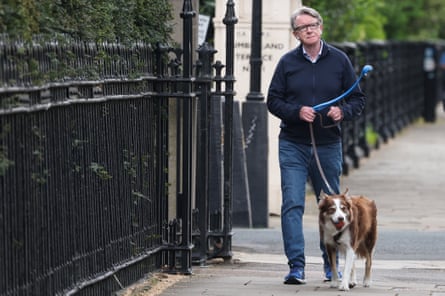
The executive and legislative arms of government had for many years known more than enough to understand the dangers of slotting this man into a role at the pinnacle, with access to much of the most sensitive information held anywhere in government. But the prevailing political view was, in late 2024, that Mandelson, the devious tactical genius who had helped propel Tony Blair and New Labour to power, was somehow worth the risk. The thinking was that one so brilliantly calculating in his every thought and utterance was a clever choice to represent British interests in Washington and handle the impossible Donald Trump. Mandelson, meanwhile, span his own impending appointment in late 2024 to those in the media who would listen, and treated others in the media who in any way questioned it with contempt. On one occasion, reacting to the FT as it pursued him over his stay in Epstein’s house, Mandelson told the paper to “fuck off” with its obsession over him and Epstein.
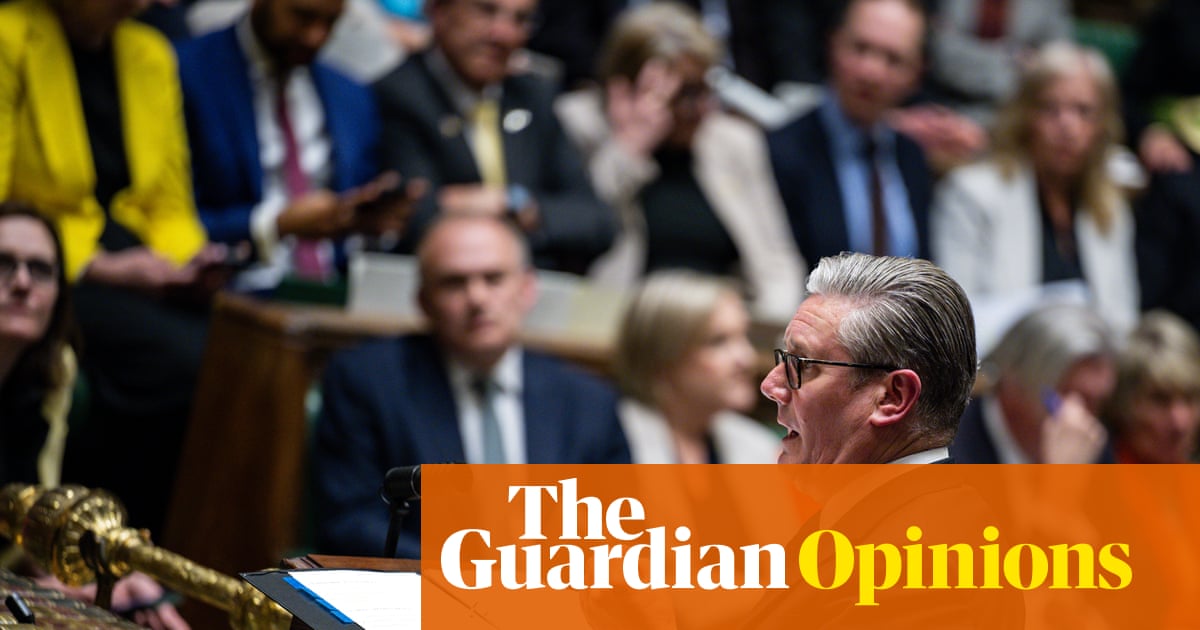
On Monday afternoon, our parliament, and our prime minister, united in belated outrage at the way the appointment had come about. In so doing its members merely highlighted their prior complicity, and culpability. Starmer danced on the head of a pin, blaming Foreign Office officials for failing to tell him that his choice for Washington had failed security clearance, and dumping on officials. He admitted that he had not only been wrong to do so but also, for the first time, that his judgment had been flawed.
Kemi Badenoch dug deep into the weeds with six forensic questions about process but for some reason did not directly demand Starmer’s resignation. Badenoch had given Starmer sight of her questions beforehand, so he was able to swerve them with some ease. She might have done better to go for a grander approach, blending the forensic with a simple inquisition into why on earth Mandelson had ever crossed his mind. Ed Davey, for the Liberal Democrats, failed to rise to the moment, lamely borrowing Norman Lamont’s bitter phrase about John Major from 1993 that he gave the impression of being in “office not in power”. Farage was nowhere, aware perhaps that his support for Mandelson’s appointment would not be a good look. On an occasion that invited a great parliamentary speech, even a great phrase that captured the moment – think Tony Blair and his “weak, weak, weak” verdict on John Major, or David Cameron about Blair: “He was the future once” – there was nothing.
It was left to Diane Abbott to see the key point of all this and to rise to the moment with devastating clarity. Reeling back the years, she simply recapped the reasons for Mandelson’s departures from cabinet. “Peter Mandelson has a history,” she told the House, drawing laughter. It was so obvious. In so doing, she was also questioning why Starmer had placed faith in New Labour types from the opposite wing of the party to her, when he had posed as of the left.
Abbott’s short speech was a reminder of the innate problem with Starmer as a politician and as a Labour prime minister. He lacks any ideological spine or consistency. He thought it was pragmatic to look left when wanting to be Labour leader, then right to the likes of Mandelson and Morgan McSweeney when he became prime minister. He has always lacked a clarity of purpose. “It has a tragic element, a decent man but lacking substance,” said a senior Labour figure in despair. “He travels so light because there is nothing there.”
The great 19th-century constitutional theorist Walter Bagehot said that one of parliament’s roles in our democracy was to express through its MPs the outrage of the people. Well, the people are outraged, but throughout this entire fiasco – and even on Monday, when they had their chance to deliver on their duty to those they serve – the truth is that they largely failed.
-
Toby Helm is a political commentator and former political editor of the Observer