1 month ago
93
1 month ago
93
Fury within Whitehall about the treatment of Olly Robbins remains white hot several days on from Keir Starmer’s decision to sack the senior Foreign Office civil servant.
“It’s just total self-serving, narrow, selfish, political-endgame stuff,” said one supporter of Robbins, who was dismissed for failing to tell the prime minister that the now disgraced former US ambassador Peter Mandelson had not passed UK security vetting.
There is strong support for Robbins within Whitehall, with senior civil servants said to believe he was in effect sacked for doing what No 10 wanted by swiftly passing Mandelson through vetting, and putting in place mitigations to get around the security concerns.
But on the political side, civil servants have expressed incredulity and anger at what they see as the prime minister being blindsided by another Mandelson-related bomb. Starmer has described the decision not to tell him about the failed vetting as “staggering”.
It is a new low point for the relationship between No 10 and the civil service, after the ousting of the relatively new cabinet secretary Chris Wormald in February, and the prime minister’s accusation a year ago that “too many people in Whitehall are comfortable in the tepid bath of managed decline”.
“The net effect is a chilling one,” said one mid-ranking official. “Why will we do anything vaguely risky that ministers want if we think they won’t have our backs if it goes wrong?”

Any goodwill that existed towards a Labour administration after 14 years of the Conservatives appears to have evaporated in light of the perceived brutality of the way Robbins and Wormald have been treated.
Robbins learned he was losing his job in the civil service by letter on Monday morning, several days after Starmer forced him out as permanent secretary.
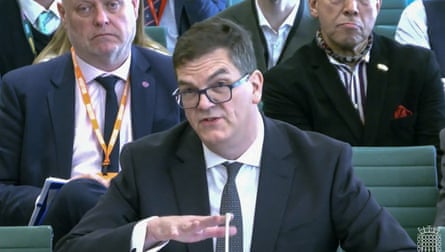
Giving his own side of the story at a parliamentary hearing on Tuesday, the career civil servant, who has worked under many prime ministers since Gordon Brown, sounded shocked at the way he had been so peremptorily dismissed. He would not elaborate on the exact reasons given.
“The guild of former permanent secretaries is on his side,” one former senior No 10 official said.
“Going back to days gone by, I don’t think [the former cabinet secretary] Jeremy Heywood would have allowed a permanent secretary to have been dismissed like this. Even under the Conservatives there was more respect for the civil service, and even Liz Truss getting rid of Tom Scholar was more of a ‘new broom’ approach and about wanting her own staff, rather than this sort of public humiliation towards one of his own appointments.”
Dave Penman, the general secretary of the FDA union for civil servants, who sat behind Robbins during Tuesday’s parliamentary hearing, put it robustly: “After the evidence today, people will look at this and come to the conclusion that Olly was tossed out by the prime minister and did absolutely nothing wrong. He got the sack for doing what he was asked to do.
“I don’t think anyone is going to conclude that Olly should have been dismissed or treated the way he was. It was completely unjustifiable, and yet that’s what happened.”
A string of grandees, including the former cabinet secretary Gus O’Donnell and the former permanent secretary of the Foreign Office Simon McDonald, have also questioned the wisdom of dismissing Robbins. O’Donnell warned of a crisis in relations between ministers and civil servants.
While the rows continue over who is to blame, the concern within the Foreign Office is now the security implications of greater disclosure around vetting, and frustration with No 10 for allowing it to happen, with one source describing some of the security establishment as “having kittens”.
Peter Ricketts, a former diplomat, gave his verdict that Robbins came across as an “outstanding civil servant, forensic, complete master of the issues and passionately committed to national security and the integrity of the vetting process”.
However, Sir Richard Dearlove, the former director of MI6, took a slightly different view in an interview with Times Radio, saying that while responsibility lay with No 10 and Robbins was a “scapegoat”, he should have walked into No 10 and said: “The man has failed his vetting”.
Other former officials who have been in effect forced out on Starmer’s watch are also observing almost gleefully from the sidelines, willing Robbins on to do some damage to No 10.
In his evidence, Robbins made no direct criticism of Starmer but he did signal difficult relations with the political side, talking of “an atmosphere of pressure” and “dismissive” attitude to the vetting process. And he refused to name the more junior officials who had taken part in the vetting, saying he did not want more “scapegoating”. Robbins also revealed his discomfort at No 10’s inquiries about installing a former director of communications, Matthew Doyle, in a diplomatic role, when experienced officials were being moved out of their posts.
“It does seem that Robbins has been pretty badly set up by No 10 and it reflects pretty badly on the judgment of No 10 all round,” said Alex Thomas, a former civil servant and the Institute for Government’s executive director for impact and influence.
But he also reflected on whether politicians and civil servants could have worked better together during the process related to Mandelson, saying: “The sadness for me is of two tribes that don’t seem to be working well together.
“Olly would absolutely say he understood what the prime minister wanted, and was doing a good job as a civil servant, but it wasn’t treated effectively as a shared question that you work through, with a sense of ministers and civil servants not just being aligned, but actually working together in a trusting relationship to deal with an issue. It’s another thread pulled from the relationship.”