2 months ago
92
2 months ago
92
Governments across Asia are ramping up their use of coal, the dirtiest fossil fuel, as they try to cover huge energy shortfalls triggered by the US-Israel war on Iran.
The move has triggered warnings from climate experts who point to coal’s devastating environmental impact, and say the energy crisis should be a wake up call for governments to invest in renewables, which can offer a more stable supply that is not exposed to price shocks.
Across the region, from Bangladesh to South Korea, governments are trying to compensate for a drop off in imported energy, much of which comes from the Middle East.
South Korea said it will delay the shutdown of coal-fired power plants and has lifted caps on electricity from coal, while in Thailand, the government has increased output at the country’s largest coal-fired plant. The Philippines, which has declared a “national energy emergency” as a result of the war, also plans to boost operations of its coal-fired power plants.
In South Asia, India, which relies on coal for nearly 75% of its power generation, has asked its coal plants to run at maximum capacity and avoid planned outages, while Bangladesh increased coal-fired power generation and coal-fired power imports in March.
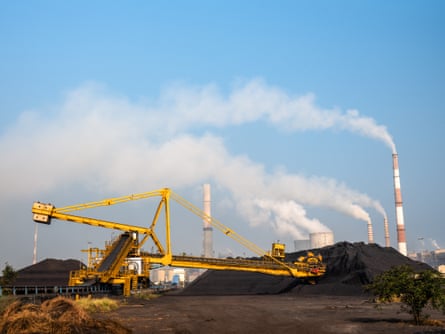
Governments are racing to overcome shortfalls, especially in the supply of liquefied natural gas (LNG), which has been promoted as a bridge fuel in the transition from coal to cleaner energy – though research has shown exported gas emits far more greenhouse gas than coal.
Many countries in the region rely on LNG to generate electricity, as well as for industries such as fertiliser manufacturing. Demand in Asia had been forecast to double in the next 25 years.
However, supplies have been cut off by the effective closure of the strait of Hormuz though which a fifth of worldwide LNG shipments pass. Strikes on a major LNG export facility in Qatar will exacerbate the shortage and have a years-long impact on the industry, say experts.
Almost 30bn cubic meters of LNG has been removed from global supply chains, of which more than 80% is missing in the Indo-Pacific region, said Henning Gloystein, managing director of energy and resources at Eurasia Group. The last remaining cargoes that passed through the strait before the conflict spiralled will arrive in the next week, he said.
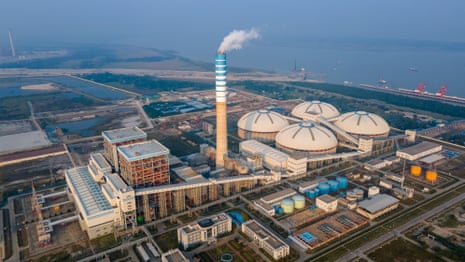
“The global market has flipped within four weeks from quite a healthy supply surplus … into a very severe deficit – and that’s going to not just lead to price spikes, but real fuel shortages.”
“Those countries that have coal reserves will be [using] that because it’s the fastest, cheapest way to replace LNG,” he added, though he noted that countries such as India are also ramping up renewable energy.
Delhi has sped up clearances for commissioning of wind power plants and battery energy storage systems.
Pauline Heinrichs, an expert in climate and energy at King’s College London, said the crisis should be a turning point for governments. “The impact of coal on climate and health outcomes is devastating and disastrous – and we’ve proven that this is the case for many decades. Not only does it worsen climate risks, of course, but the same goes for pollution and for toxicity,” she said.
The current energy crisis underlined the importance of renewable energy “not just a climate priority, but ultimately for energy security more broadly in Asia”.
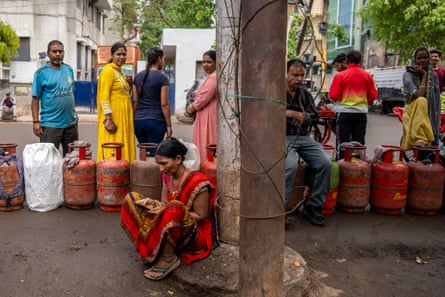
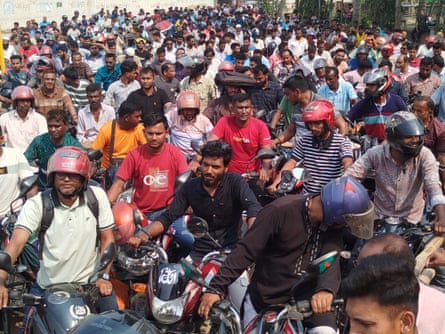
“Those economies that have a substantial amount of renewable energy are in fact less vulnerable,” she said.
Governments should not allow a return to coal to become baked in to the energy system in the long term, she added. “We need to learn that this is the moment to break that cycle of responding to short-term fossil fuel induced shocks with investments in fossil fuels, because they’re never short-term – they’re always long-term infrastructure investments of sorts.”
“It’s not sustainable to rely on coal,” added Dinita Setyawati, senior energy analyst for Asia at thinktank Ember, who is based in Jakarta. “Homegrown renewables are definitely the way to go to improve more energy security and resilience.”
Across Asia countries are searching for ways to reduce energy consumption, with the Philippines and Sri Lanka introducing four-days weeks for many government staff, and Vietnam encouraging people work from home. Bangladesh closed its universities early, bringing forward the Eid al-Fitr holidays, and has introduced more planned blackouts, while Pakistan has moved schools to remote online teaching.
Gloystein added it will take years to recover LNG supplies. “This isn’t a short-term thing – people hope that next week there will be some form of a climb down or ceasefire and then we’ll go back to normal,” he said. “This is going to stay with us for a while because the damage that has been done, it’s going to take years to repair.”