3 months ago
155
3 months ago
155
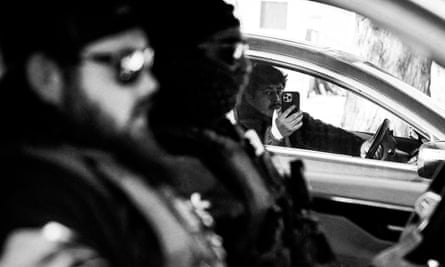
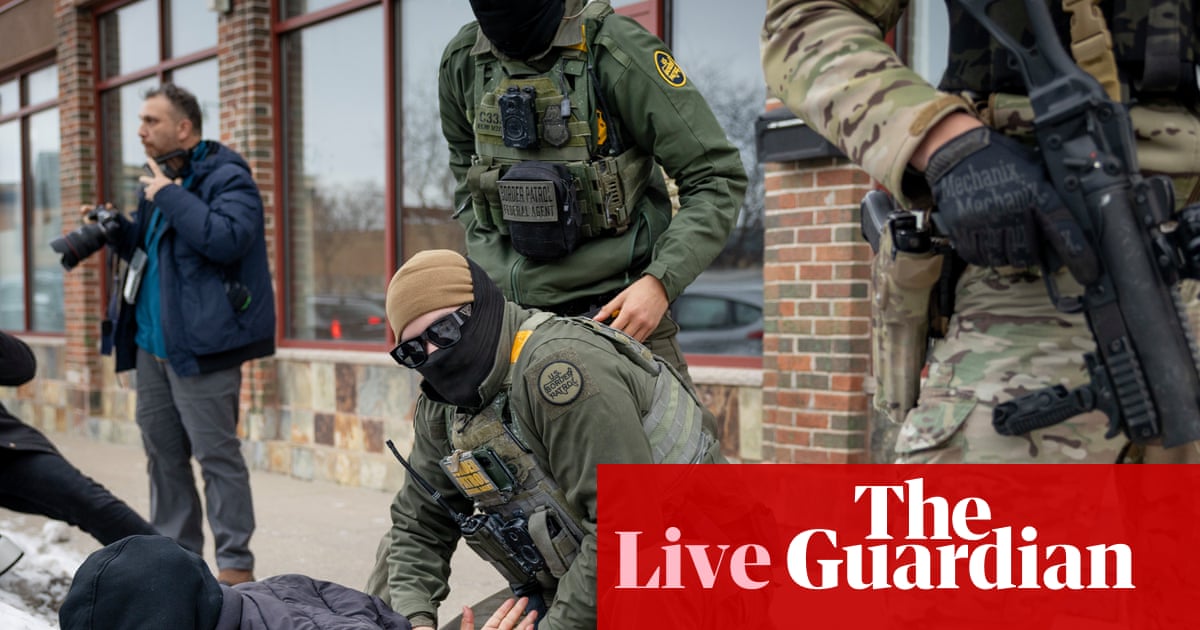
On Monday night, nearly 80,000 people hopped on a video call to learn how to “observe ICE”, a non-violent and constitutionally protected practice of documenting federal immigration agents’ activities in public. Some wrote in the chat where they were from: Arkansas, Texas, Michigan, Florida and many other corners of the country. Others typed why this was important to them: calling for “ICE out” of their communities and demanding the abolition of the agency itself. “The fact we’re all here gives me hope we’ll come out the other side,” wrote one participant. Within 24 hours, another 200,000 people had watched the recording on YouTube.
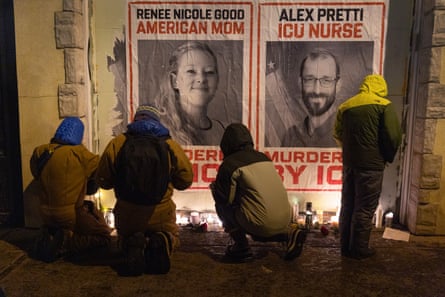
The rising interest in ICE observing came two days after Minneapolis resident Alex Pretti was shot and killed by a federal immigration agent and less than three weeks after an agent killed Renee Good.
“Two of my neighbors have been killed, but because of ordinary people documenting the actions of ICE, we’re able to show the truth of what happened to Renee and Alex”, a Minneapolis resident named Marjorie told those on the call. “And we’re also able to track what is happening in our community, and ensure that our neighbors are not being simply disappeared.”
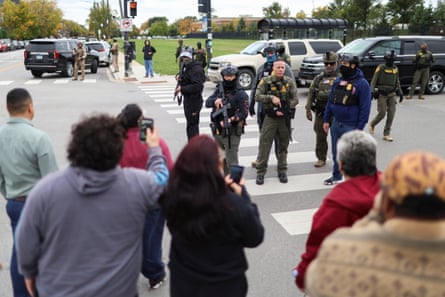
While ICE raids continue in the Twin Cities, as well as Phoenix, Arizona, southern California and other parts of the country, organizers say the killings of Pretti and Good have inspired thousands of people to join local ICE observer groups. In addition to documenting ICE operations, a heavy presence of observers can deter agents from detaining people. Earlier this week, Minneapolis city council president Elliott Payne said: “Because we had so many patrols out, multiple abductions were prevented.”
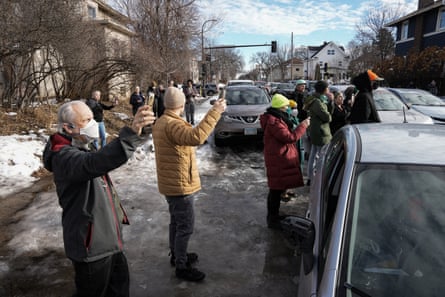
Even those who had been observing ICE for months, from the Pacific north-west to the southeastern US, told the Guardian that they were more determined than ever to keep documenting federal agents. This was despite escalating violence from agents, the threat of harassment or detention, and the government continually casting observers’ work as “domestic terrorism”, as federal officials did after Good and Pretti’s deaths. In fact, witness testimony and footage countered what the White House said about Pretti’s killing being an act of “self-defense” – a testament to how vital ICE observing is, organizers said.
“I am petrified, to be sure,” said Andrea, an ICE observer in Chicago who asked to be identified by a pseudonym for safety reasons. “But [I have] no intentions to back down or not show up. That just isn’t an option.”
Navigating ‘shifting’ legal risks and unpredictable agents
Adding to the threat of ICE agents escalating violence against observers is the federal government’s threat of legal ramifications. Recording police and federal authorities in public areas is a protected first amendment right. Still, White House officials have claimed that it is “illegal” and an act of “violence” to record ICE agents, equivalent to “doxing”. After the deaths of Good and Pretti, federal officials called both residents “violent” and “terrorists”, even though video evidence showed otherwise.
The White House and DHS accused Good of charging officers with her car, but video footage captured by observers showed Good had slowly turned her car away from, not toward, agents. White House officials claimed Pretti sought to “massacre” immigration agents because he had carried his permitted handgun that day, but video captured by observers showed federal agents had already taken his handgun before shooting him on the ground. The White House and DHS have since attempted to walk back some of these statements, and the Department of Justice announced Friday that it would investigate Pretti’s killing.
The White House did not respond to questions from the Guardian about an apparent crackdown on protesters and legal observers, or the characterization of them as “domestic terrorists”. White House spokesperson Abigail Jackson said: “President Trump is taking important action to make America safe again and protect federal law enforcement officers from violent left-wing rioters when local Democrat leaders refuse to act.” DHS did not respond to request for comment.
At the same time, the Trump administration is investigating Minneapolis’s ICE watch organizing. On Monday, FBI director Kash Patel said he intends to criminally investigate group chats on the encrypted app Signal used by Minneapolis residents for organizing purposes, calling them “clearly a coordinated infrastructure” and comparing them to the mob. The justice department declined to comment.
“Post-Trump[’s re-election], you can’t deny that there has been a shift” in the level of risk for engaging in civil disobedience, said attorney Lauren Regan of the Civil Liberties Defense Center, which has represented activists and organizers facing charges from their advocacy since 2003. “When I’m doing ‘Know Your Rights and Risks’ training for activists and movement people, we are talking about a higher-risk moment in time, in terms of the potential for arrests, potential consequences of political activism.”
However, Regan said there’s been little evidence that federal charges against observers or protesters have stood up to legal muster. An analysis from the Associated Press found that in 100 federal charges between May 2025 and December 2025, 55 were reduced to misdemeanors or dismissed outright, and over 40% of cases in what the Trump administration deemed “domestic terrorism” were “relatively minor misdemeanor charges”. Those still charged with felonies had allegedly physically assaulted officers or thrown rocks at federal vehicles.
For example, Chicago resident Marimar Martinez was charged with felony assault after being shot five times by federal immigration agents who claimed she drove into them in October. The charge was dropped a month later, as Martinez and her legal team challenged their depiction of events. Now, in the wake of Good and Pretti’s killings, Martinez is seeking to have evidence from her case unsealed.
“There is a lot of propaganda rhetoric and threats around making run-of-the-mill protest into ‘terrorism’… but at the end of the day, right now, from my vantage point, when you look at the statistics of what cases have actually been indicted and prosecuted and sentenced? You’re not seeing a huge shift in that stark line,” Regan said.
Regan and other legal experts believe that the threat of heightened charges is an intimidation tactic, not necessarily a legal effort that will pay off.
Regan added: “They lean into the propaganda war far more than the legal war.”
Protecting citizens from unwarranted ICE escalation has proven more difficult. On 16 January, a federal judge in Minnesota barred ICE agents from retaliating against ICE protesters, including with pepper spray and arrest, or stopping drivers without reasonable cause; in less than a week, an appeals court overturned the ruling. In the five days in between, clips of an observer being pepper-sprayed directly in the face circulated online. Within 72 hours of the ruling being overturned, Pretti was killed.
How organizers are adjusting tactics to stay safe
In the wake of Good and Pretti’s deaths, with more people outraged, scared and looking to get involved, organizers said they’re doubling down on basic community organizing safety practices.

“What we’re telling folks right now is that [the administration] will continue to criminalize observers and supporters. And unfortunately, they have a very large megaphone,” Armando Gudino, executive director of the Los Angeles Worker Center Network, which advocates for the rights of low-wage and immigrant workers in the city, said after Good’s killing. “So we have to be even more careful.”
During the Monday night online training, staffers role-played filming an ICE officer, while viewers weighed in about how they could be safer – did she back away fast enough when the agent told her to? Was she still recording while engaging with them? In the chat, some viewers encouraged others to carry makeshift body cameras for interacting with ICE.
“As things become more popular on the side of the people, you see more desperate attempts by the regime to try and deter it, shut it down, minimize it,” said Regan. “One of the goals of an authoritarian regime is to scare the people into submission, and the most important thing that we can do to counteract that is to continue showing up.”
When leading trainings, Regan advises attendees to make a “safety plan”, sharing with a loved one where they’re going and establishing an emergency contact person if they are arrested or injured. They train attendees to read the crowd and law enforcement for intensity and potential inflamed situations.
Fearing government tracking, organizers say they’ve been turning off their Bluetooth and wifi at protests and areas they expect to be in direct confrontation with ICE, and most are anonymizing their online usernames when using encrypted apps like Signal to communicate – tactics that have been a part of community organizing tech safety since before the 2020 Black Lives Matter uprisings.
Several organizers said that the administration’s aggressive tactics have, perhaps contradictory to the administration’s intent, also led to wider collaboration between organizations. At a time when immigrants and people of color are especially fearful of being racially profiled and arrested by immigration enforcement agents, Gudino said, it has been helpful to coordinate with legal aid groups and volunteer networks who can patrol neighborhoods for the presence of ICE agents, and help provide immediate legal aid and assistance in the aftermath of raids.

Organizers also let people know they can help their communities without engaging in ICE watching – whether that’s providing mutual aid and meal trains for vulnerable people unable to leave home amid an ICE siege, or bulk ordering whistles for local ICE watchers to warn their neighbors about nearby agents. “Everybody has a different risk assessment, but everyone can still show up,” said Regan. “There is a place and a way to participate for everyone.”
Growing participation in ICE observing
Despite these challenges, every organizer and volunteer who spoke with the Guardian asserted that they were undaunted, even if shaken, by the federal government’s backlash.
David Chung, an organizer with ICE Out of New York, said the day after Good’s killing, hundreds of New Yorkers gathered at a press conference held by DHS secretary Kristi Noem to make their feelings – and presence – known.
“For about two and a half hours, the energy was really electric, of people showing their defiance, their anger towards this administration,” said Chung. “And it wasn’t just the energy, but having conversations with people who are there. They wanted to know: ‘How can I get more involved? How can I take the next step? What are some things that we can do?’ I didn’t hear anyone that was saying: ‘I’m too afraid to come out now.’”
Omar Flores of the Chicago Alliance Against Racist and Political Repression recounted the same type of energy at an emergency action in Chicago after Good’s death, then again, after Pretti’s, saying “several thousand” people showed up. “While people are taking more precautions, folks seem to be undeterred,” Flores said.
At the Monday night ICE observer training, the chat was active with people wanting to help, connect and share gratitude for those who have already been doing this work. “Many thanks to Minneapolis for the weight they have been carrying,” one participant wrote.
Majorie, the Minneapolis resident who opened the call, emphasized that being in community is getting involved. “I know some of you think you’re not qualified, or that you’re waiting for someone to tell you how to do this right,” she said. “But let me tell you that the person who is going to do that is you. You’re on this call, you have five neighbors right now who are waiting for you to talk to them and get organized. And that’s how you start. You won’t be perfect, you’ll make mistakes, but you just have to start.”
Additional reporting by Maanvi Singh