3 months ago
95
3 months ago
95
What a pity Benjamin Netanyahu remains at large after an international arrest warrant for alleged war crimes committed in Gaza was issued in 2024. Had he been detained, as he certainly should have been, the peoples of Iran, Lebanon, the Gulf – and Israel itself – might have been spared much present-day pain and suffering.
The Israeli prime minister’s lifelong, passionate obsession with eradicating the real and imagined threats posed by Iran was reportedly a key factor in prompting Donald Trump’s abrupt, unprovoked plunge into all-out war. Netanyahu should be in jail, not committing more crimes while the powerful but ego-driven US president negligently looks on.
Netanyahu ridicules claims that he dragged the US into war. “Does anyone really think that someone can tell President Trump what to do?” he asked this week. “He didn’t need any convincing.” But Oman’s foreign minister flatly contradicts him, saying Netanyahu’s opposition convinced Trump to abandon indirect talks with Iran, overseen by Oman in Geneva, that were close to success.
Israel’s plan of campaign has rapidly taken on a life of its own since joint operations with the US began on 28 February, with the Israeli air force and army inflicting death and destruction on an ever-expanding range of military and civilian targets across Iran and Lebanon. But this week’s Israeli bombing of Iran’s South Pars gas field – a significant escalation that led to further spikes in global energy prices and fierce Iranian retaliatory strikes against Gulf countries’ oil and gas facilities – was a step too far. It was disowned by Trump, who claimed he knew nothing about it in advance. That was contradicted by anonymous US and Israeli officials.
The episode provoked a spate of reports about how US and Israeli war aims are diverging. One basic difference concerns Iran’s future governance. Netanyahu is unequivocally seeking to totally collapse Iran’s regime. Though his stated aims change daily, Trump has indicated he could do a Venezuela-type deal if new leaders emerge in Tehran who are prepared to cooperate with the US.
By forcing the world to stare deep into the energy abyss, Netanyahu may have inadvertently set limits on what until now, for him, has been an open-ended war of choice. Apparently keen to placate Trump, he now says South Pars-style aerial attacks on Iran’s energy infrastructure will not be repeated. But he is also talking about putting troops on the ground – another potentially huge expansion of the war – and Trump has not ruled it out.
Trump wields power as he sees fit, yet in practice, over the Gaza war and since, he has often appeared to be willing to defer to Netanyahu’s aggressive policies. He repeatedly consulted the Israeli leader by phone and in person in the weeks before the Iran war. Marco Rubio, the secretary of state, suggested to Congress that the US was effectively hustled into action by Israel’s determination to go ahead regardless.
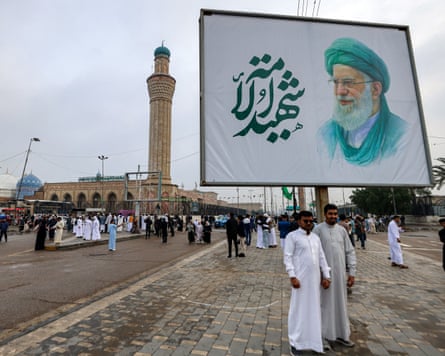
The exact timing of the war’s onset was dictated by the CIA’s and Israeli intelligence’s discovery that Ali Khamenei, Iran’s supreme leader and number one Netanyahu bogeyman, was to meet regime officials at his Tehran family compound on 28 February. Khamenei was illegally targeted by Israeli missiles. His assassination hugely upped the ante from the start.
Further evidence that a credible, workable US-Iran nuclear deal was within reach, two days before the war, emerged in an exclusive Guardian report published this week. It said Jonathan Powell, the UK national security adviser, believed that Iran had made “surprising” concessions in Geneva that could have led to an agreement.
But Trump and his amateur negotiators, Steve Witkoff and Jared Kushner – mindful of Netanyahu’s longstanding opposition, voiced during repeated visits and calls to the White House, and lacking adequate technical advice – were unconvinced. Two days later, without warning, diplomacy was abandoned and the war was launched.
Netanyahu is one of the leading warmongers of the age, along with Russia’s Vladimir Putin – although Trump, a self-nominated Nobel peace prize candidate, is catching up fast (he’s now threatening Cuba, after his Venezuela coup). For years, Netanyahu has styled himself “Mr Security” and despite his personal culpability for the 7 October 2023 catastrophe – the Hamas-led attack in which 1,200 people were killed – continues to do so ahead of autumn elections.
Israel is safe in his hands, he claims. Yet again and again, he has unilaterally launched into wars and conflicts in Lebanon, Yemen, Syria, Iraq, Iran last June, notoriously in Gaza, and now in Iran again. His bellicosity fails to improve Israel’s security in any lasting sense. For example, he vowed to totally destroy Hamas in Gaza. He failed. But more than 70,000 Palestinians are dead.
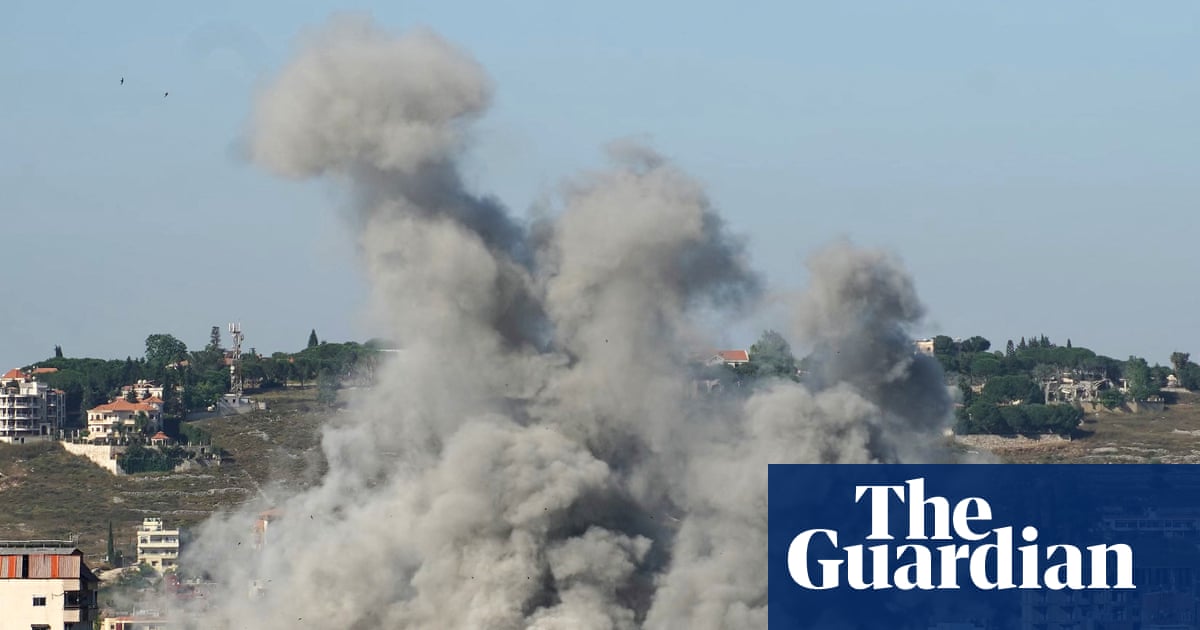
As in Iran, Netanyahu is pursuing yet another heavy-handed, futile campaign against Hezbollah in Lebanon, in which hundreds of civilians have died and more than 1 million are displaced. Yet Israeli claims this will eliminate terror threats “once and for all” are risible.
On the contrary, Iran’s surviving leaders may turn even more hostile and vengeful – and persuaded, which they weren’t all previously, of the necessity of acquiring nuclear weapons. Past US leaders, such as Joe Biden, have typically sought to hold Israel in check for exactly such reasons. But Trump, who can calibrate the relationship according to his wishes, nevertheless gives Netanyahu free rein, mounting unprecedented joint military operations.
Netanyahu is the Middle East’s foremost proponent of the “forever war” – the phenomenon Trump and his supporters loathe the most. Yet for all his public protestations, Netanyahu is largely unconstrained by such US concerns. He doesn’t appear to give a fig for the global oil crisis, the war’s negative impact on Gulf allies and Europe’s and Asia’s consumers, or for the damage it is doing to the transatlantic alliance and Ukraine’s fight for freedom. His singular, overriding aim is to destroy the Iranian threat.
As for Trump, even by his execrable standards, his behaviour in the past three weeks has been abominable. He persistently misled the public about an “imminent” Iranian threat, about Tehran’s imagined timeline for obtaining nukes, about nonexistent ballistic missiles threatening the US, about supposed European treachery, about who caused the Minab school massacre.
He fiddles with his golf balls while oil terminals burn. He boasts about his White House ballroom as thousands are killed or injured. He publicly insults too-loyal allies such as Keir Starmer. He flirts with potentially disastrous plans to deploy ground forces to seize Iran’s enriched uranium stockpile.
And all the while, Trump tries to dodge blame for his shockingly incompetent failure to anticipate Iran’s long-signalled move to widen the war in the Gulf and close the strait of Hormuz.
Amid the smoke of burning oilfields, ruined homes and the cries of the injured and bereaved, a few things are clear, three weeks into this conflict. One is that Iran’s regime still stands and is still fighting back; there is no sign yet of a popular uprising. Another is that the late Ayatollah Khamenei’s plan to spread the cost of the war across the region is working.
A third is that falling stock markets, rising energy prices, global economic disruption – and clouded midterm election prospects – are seen by Trump personally as a bigger threat than any Iranian bomb or missile. For these reasons – and not out of much-needed concern for the human, legal and moral aspects of the war – he belatedly moved this week to rein in Netanyahu.
The bigger question is whether Trump can extricate himself and the US before it all gets much, much worse. If and when he calls a halt, will Iran, will Israel, actually listen?
-
Simon Tisdall is a Guardian foreign affairs commentator
-
Do you have an opinion on the issues raised in this article? If you would like to submit a response of up to 300 words by email to be considered for publication in our letters section, please click here.