3 months ago
196
3 months ago
196
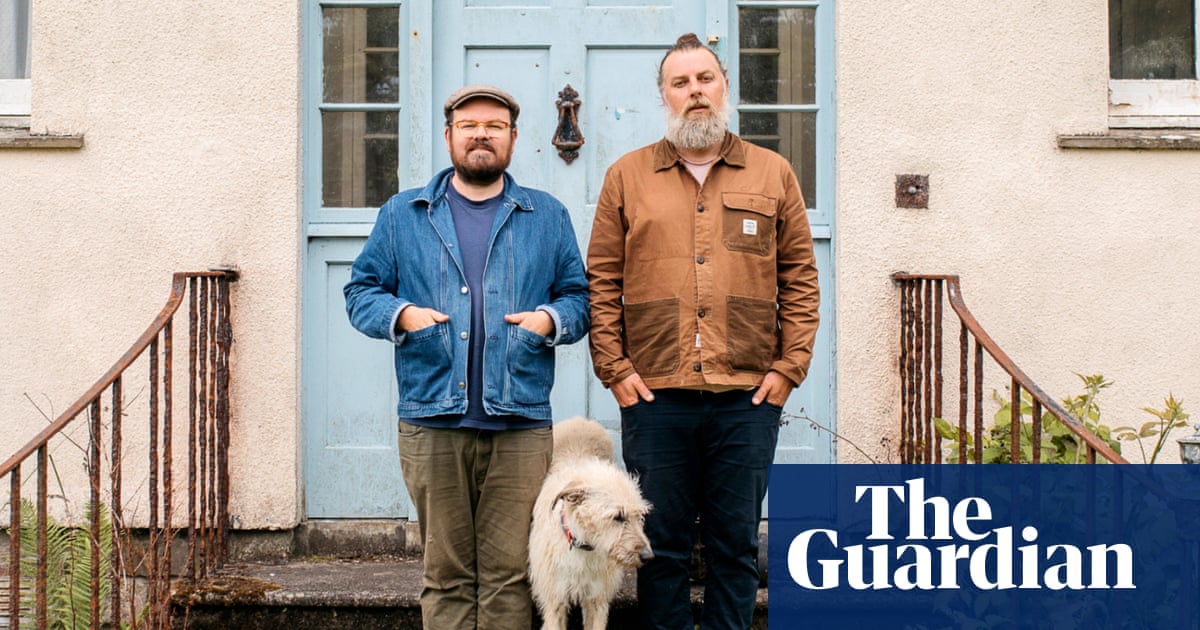
Ulva House is a building site. There are workmen up ladders, hammering, plastering, but I leave my muddy walking boots by the door. There’s no central heating or hot water and Banjo Beale and his husband, Ro, have been camping out here for weeks, but he greets me, dazzlingly debonair, in a burnt orange beanie and fabulous Moroccan rug coat.
The 2022 winner of the BBC’s Interior Design Masters, who went on to front his own makeover show Designing the Hebrides, Banjo’s vibe is more exuberant Laurence Llewelyn-Bowen than quizzical Kevin McCloud. His latest project with Ro, the transformation of a derelict mansion on the small Hebridean island of Ulva into a boutique hotel, is the subject of a new six-part series, airing on BBC Scotland. I’m here for a preview of the finished rooms.
At just 7.5 miles long by 2.5 wide, Ulva, across a narrow strait from the Isle of Mull, was privately owned until recently. When it went on the market in 2018, a community buyout was orchestrated with the aim of attracting people back to Ulva and breathing new life into the island.
The first national census in 1841 recorded a population of 570 on the island, but largely owing to the brutal evictions of the Highland Clearances (when lairds forced crofting tenants off the land, replacing them with sheep), by 2015 there were just three adults and two children living here.
Community buyouts are becoming more common across Scotland, following the example of islands such as Eigg, empowering locals to take control of their futures and save local businesses. Numbers on Ulva have since swelled to 16 – the long-term target is 50 – after an advert was posted inviting applications for settlement here. Now, two Aussies (Banjo and Ro) and their wolfhound/greyhound cross, Grampa, are shining an even brighter spotlight on this remote island and helping to turn its fortunes around.
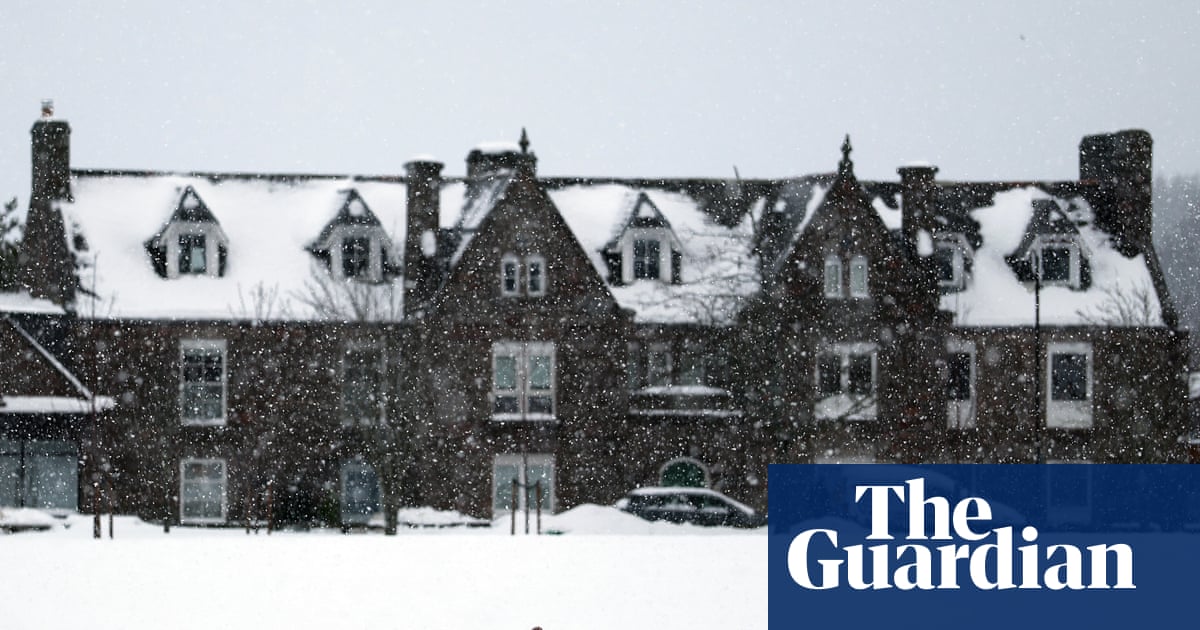
There has been a house here, once the seat of Clan Macquarie, since the 17th or 18th century. The original property was replaced by a Regency-style mansion at the beginning of the 19th century and, after a fire in the 1950s, it was rebuilt on the same footprint. The elegant, Grade B-listed, modernist mansion (with a nod to Arts and Crafts and Regency-influenced interiors) “has good bones” Banjo tells me, but it was derelict when they first stumbled upon it – and decided to plunge their savings into converting it into a hotel. They have secured a rent and repair lease and part of the profits will be ploughed back into the community. “The good thing about Ulva being community owned,” Banjo explains, “is we’re all in this together.”
The pair first washed up in the Hebrides because Ro had a dream of becoming a cheesemaker and they had heard about Sgriob-ruadh (pronounced skrib-rooa), the dairy farm turned award-winning artisan cheesemaker on Mull. Ro learned how to make cheese while Banjo dipped his toe into interior design, doing up the striking Glass Barn cafe with its owner, Chris Reade; rummaging through the old farm buildings for things he could use – and sparking a new passion.
In the entrance hall of Ulva House, and curving up the grand staircase, a romantic mural features palm trees against a mountainous landscape, painted by the artist Melissa Wickham, while a profusion of towering pot plants is scattered around a bamboo-clad reception desk.
“Ro loves tropical stuff,” Banjo smiles. “I’m more classical. The project is a coming together of our styles. We want it to feel bohemian, whimsical.”
I follow him into the Library Bar. “I think I am a frustrated antiques dealer,” he admits as I admire the giant zinc and marble-top bar. “I’ve been collecting pieces for years; most of it’s in storage in a huge shed at the cheese farm.”
Belgium and France are his main hunting grounds; he found the Parisian pitch pine bar near Lyon, a steal at just £1,500. How they got it over from Mull on the tiny passenger ferry is another story. “It had to straddle the boat, then we used a horse float [horse trailer] to get it from the jetty (there are no cars on Ulva) and took the windows out to get it in.”
The library is opulent. You can imagine nursing a negroni and thumbing through the pages of some of the old books. Above the fireplace are framed plans Banjo found in a salvage yard, the date 1827, and signed “Macquarie”. Another Macquarie, he tells me, Major General Lachlan Macquarie (1762-1824), who was born on Ulva, became governor of New South Wales.
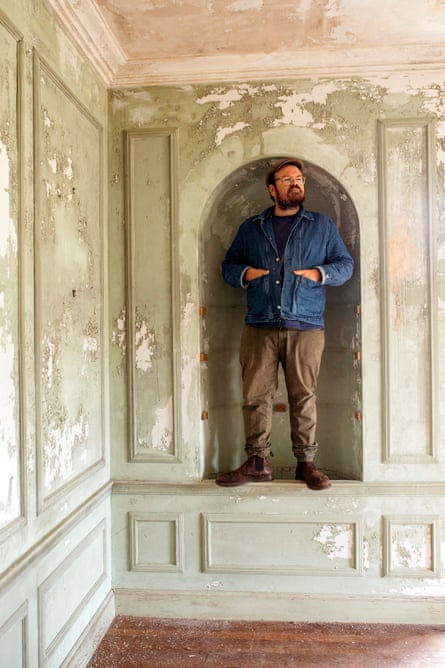
The light-infused Orangery or drawing room is a glorious space peppered with more pot plants, distressed urns, vintage rattan chairs, and unframed oils on the walls. The peeling pale green paint has been painstakingly preserved with a layer of varnish, a Miss Havisham-esque process he explains is called “arrested decay”.
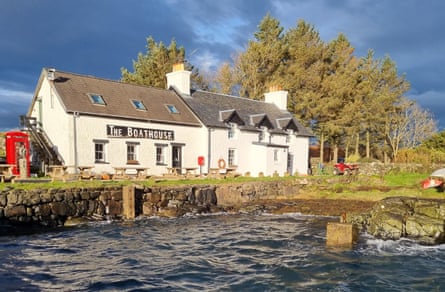
When it opens later in the year, the seven-bedroom hotel will be open seasonally, with Ro doing the cooking. Until then, visitors to the island can take their pick between two off-grid bothies and a revamped hostel. Banjo’s makeover of Cragaig Bothy for the community featured in an episode of Designing the Hebrides. In fact, the hotel is his third project on Ulva. Last summer, he and Ro, along with a young farmer, charcuterie-maker and baker, Sam, also took on the lease of The Boathouse, the white waterfront restaurant by the jetty.
It became an instant hit, with people flocking over from Mull for platters of langoustine and lobster perched at picnic tables near the rocks, and meandering along the waymarked walking trails that crisscross the island.
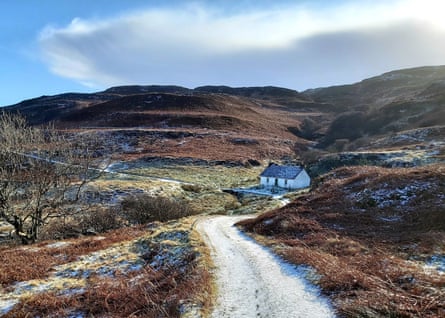
I’m staying in Bearnus Bothy for the weekend, a five-mile hike from the jetty along a coastal track. It’s run by Andy and Yvette Primrose, who live off-grid on the neighbouring island of Gometra – an island off an island off an island. The couple are climbers – Yvette has tackled the north side of Everest and her book Expedition from the Backdoor is the tale of her 660-mile journey on foot from Shropshire to Knoydart, on the west coast of Scotland. They also run the island’s hostel.
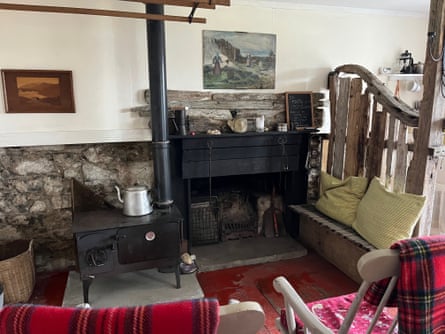
The pretty, whitewashed bothy above the beach is a welcome sight after a squally walk – as is the basket full of logs and the pulley above the stove for drying wet clothes. There are just two rooms, a bedroom with old-fashioned twin beds topped with woollen blankets and a kitchen/diner, a bathroom with flushing toilet and Belfast sink in between. There’s also a tin bath, which can be filled with water heated on the wood-burning stove.
In front of the fire are two rocking chairs with tartan blankets. Lighting is by candles, tealights and battery-operated fairy lights. There are crocs and wellies by the door. A bookcase is stacked with novels, walking and wildlife guides and games to while away long evenings.
Flicking through the visitor book by candlelight, I read about Swallows and Amazons-style family adventures, swimming from the beach below the bothy, sailing trips and picnics. Inspired, I hike over to Gometra, accessed at low tide over the sand, at high tide over a footbridge, scouring the shoreline with binoculars and spotting seals basking on rocks and a family of otters playing in the water. Soaring high above is a hen harrier. There’s not another soul around.
Solitary rambles might soon be a thing of the past, of course, now that the island is being “re-peopled”. And, with a hotel opening on the horizon, the future for Ulva is starting to look brighter and a little busier.
Accommodation was provided by Bearnus Bothy (airbnb.co.uk), minimum two-night stay from £121. CalMac (calmac.co.uk) ferries sail from Lochaline on the Scottish mainland to Fishnish on Mull, from £6.50 return for foot passengers, £25.60 for a car. The Ulva foot passenger ferry costs £8 return for adults, £4 for children.