3 months ago
90
3 months ago
90
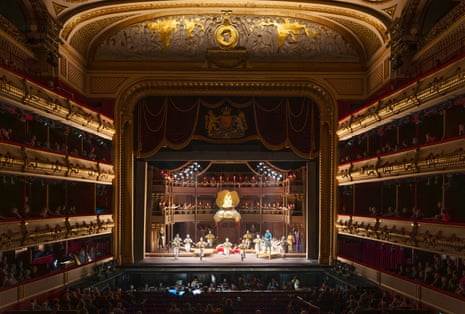
Andrei Șerban’s staging, with dazzling designs by Sally Jacobs, made its debut in 1984 and is the Royal Opera’s longest-running production. This is its 19th revival: the performance on 18 December will be its 295th at Covent Garden. Turandot tackles grand emotions and even grander themes: love, fear, devotion, power, loyalty, life and death in a fantastical, fairytale version of imperial China. And, of course, there’s surely opera’s most famous moment, the showstopper aria Nessun Dorma.
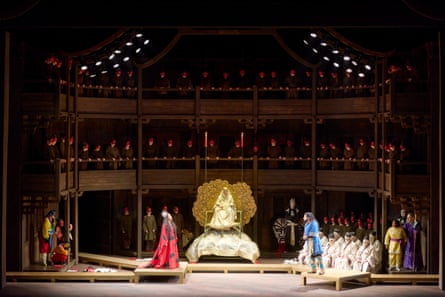
“If the opera has depths, Șerban is content to ignore them, but for once it doesn’t seem to matter. The three-storey Chinese pagoda set, army of extras and troupe of masked dancers make his cartoon-coloured creation the nearest the company has to a West End spectacular,” wrote the Guardian’s Erica Jeal reviewing a 2005 revival.
-
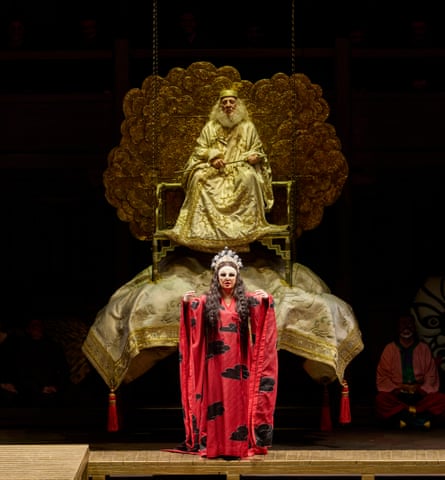
Puccini’s libretto states that the emperor appears among “clouds of incense … among the clouds like a god”. In this production he does indeed appear as if from the heavens, his magnificent throne lowered slowly to the ground.
“Puccini wanted opera to be lyrical, and was sceptical of a lot about modernism, but with this he also looked forward – with many moments of dissonance and strange colouristic effects,” says the Royal Opera’s head of opera Oliver Mears, who thinks this epic production is the perfect introduction to the art form. “It’s a colourful, opulent spectacle that’s stood the test of time and after four decades, remains an outstanding showcase for great singers.”
In this current revival, the role of Turandot is shared between Anna Netrebko, Maida Hundeling and Anna Pirozzi. Calaf, the unknown prince is sung by Yusif Eyvazov, Arsen Soghomonyan and Roberto Alagna, and Liù is shared between Masabane Cecila Rangwanasha and Juliana Grigoryan. Raúl Giménez is the Emperor.
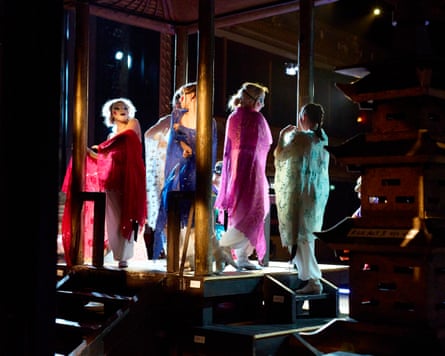
Turandot was Puccini’s 12th and final opera. “Its bones are bigger than in any of his other works: the chorus plays a larger role, the orchestra is larger, and Puccini is constantly reaching for an epic quality. In most of his other operas, it’s the intimacy, the small ensembles, that are most crucial. But here the set pieces with chorus are the main feature and it is these that make this opera so popular – the sheer spectacle of so many people on stage,” wrote Antonio Pappano in an essay for the Guardian published in 2023.
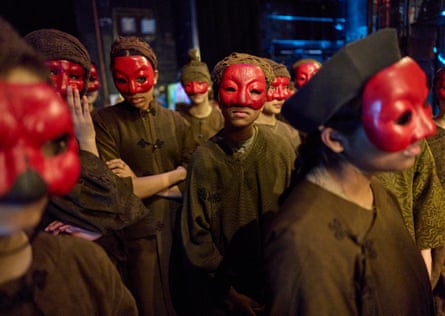
-
Members of the Youth Opera Company, the Royal Opera’s in-house chorus of nine to 13-year-olds. The YOC is a free initiative that gives children from diverse backgrounds the opportunity to perform in Royal Opera productions and offers training in performing arts, stagecraft and music.
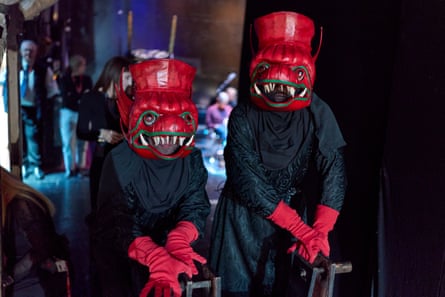
“Andrei Șerban’s staging combines spectacle with the claustrophobia of a legendary Peking where a steady stream of executions has turned the populace into a blood-crazed mob, wrote George Hall, reviewing the 2009 revival. “Whether the result is a disturbing revisiting of the battle of the sexes, or Puccini’s premonition of the fascism that was overtaking Italy as he composed the piece, his final opera packs a punch.”
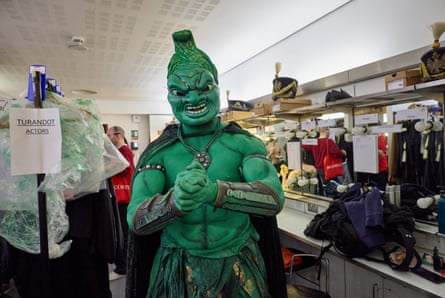
-
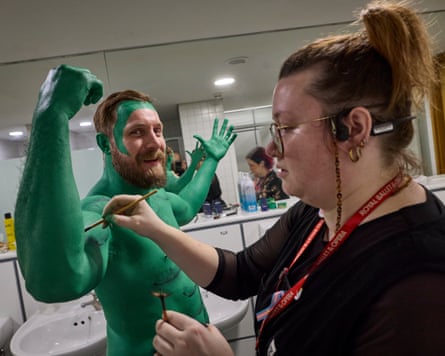
Actor and stuntman James Unsworth has his body painted green in preparation for his silent role as the executioner.
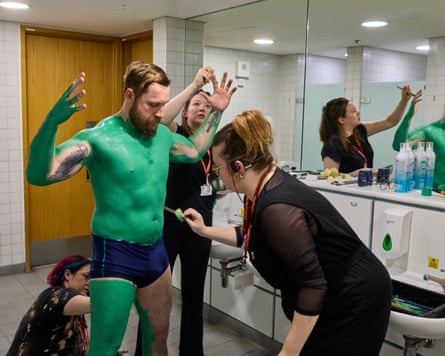
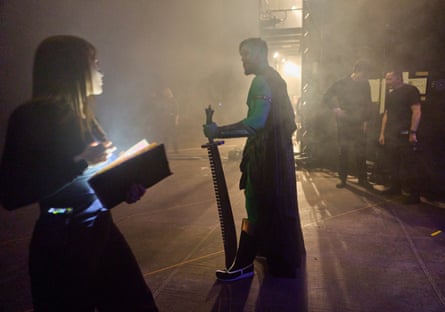
This terrifying larger-than-life executioner dispatches to the next life those who have failed to guess the three riddles that, if answered correctly, will win Princess Turandot’s hand.
-
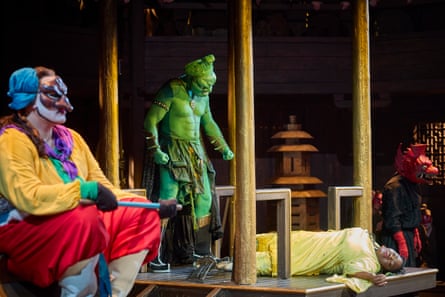
James Unsworth as the executioner, with the brave and loyalLiù (Masabane Cecilia Rangwanasha) at his feet.
-
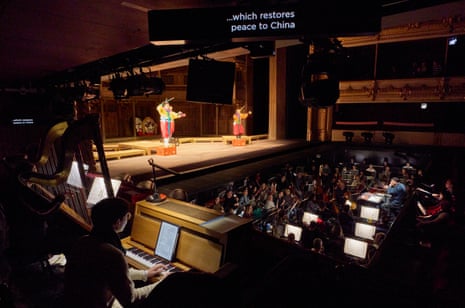
Daniel Oren conducts the orchestra of the Royal Opera House.
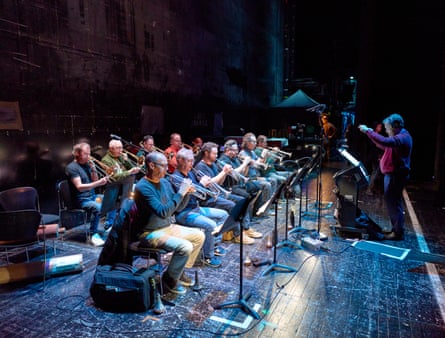
Puccini died in 1924, leaving Turandot unfinished. He’d written much of the third act, up to the death of Liù, but there were only sketches as to his thoughts on how the work should end. His student, Franco Alfano, wrote a completion that gave the tale a hasty and happy – if psychologically unconvincing – ending that reprised the famous Nessun Dorma aria. It is this ending (albeit a shortened version) that has been used in almost every production ever since the work’s premiere at La Scala, Milan, in 1926.
-
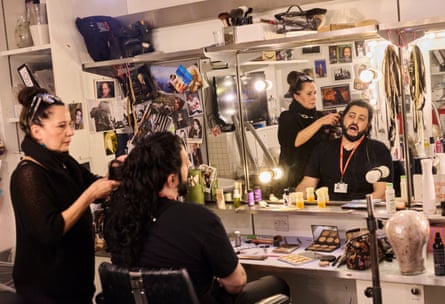
Azerbaijani tenor Yusif Eyvazov has his hair and makeup done, and does vocal warmups in his dressing room.
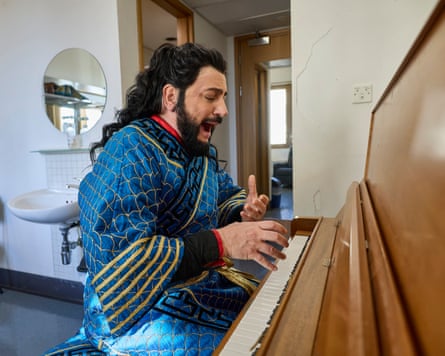
Andrei Șerban’s staging concerns itself less with the complex psychology of a work in which – as some have noted, the hero, Calaf, has a suicidal obsession with Turandot, while she is frigid, guarded and violent – and more with the spectacle.
-
Russian soprano Anna Netrebko sings the role of Princess Turandot
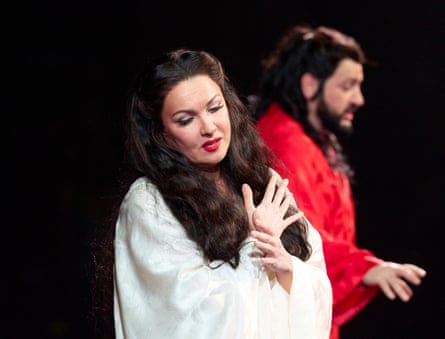
-
Anna Netrebko as Princess Turandot and Yusif Eyvazov as Calaf
And what of Nessun Dorma itself? It’s a fiendishly difficult aria with its high As and Bs - right at the top of any tenor’s range. A 1972 recording of Luciano Pavarotti singing it was chosen to soundtrack the 1990 World Cup hosted by Italy and it became a pop culture hit of epic proportions. The Three Tenors album is still today the best-selling classical album ever – some 12m copies were sold.
The aria is sung by the unnamed prince (Calaf), who has won the hand of the unwilling Turandot by solving three riddles. But he poses a riddle of his own: if she can find out his name before dawn then he will give up his life thus releasing her from the hateful marriage promise. The princess turns the city upside down and tortures those who she thinks can tell her the prince’s name, but she fails. No one shall sleep (“Nessun dorma”) sings Prince Calaf, “I will conquer” (Vincerò-ooo), and he does.
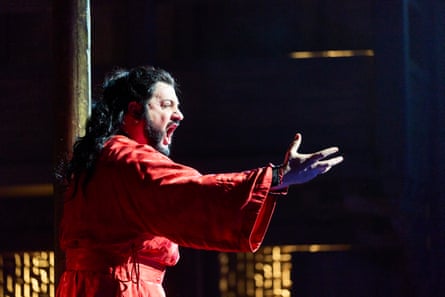
-
Azerbaijani tenor Yusif Eyvazov as Calas sings aria Nessum Dorma.
The gloriously idiosyncratic Good Opera Guide written by the late Sir Denis Forman summarises Puccini’s opera as “the one where a prince avoids decapitation by winning a word game, and nobody sleeps” and its setting as “Peking, China in the middle ages also fairyland.”
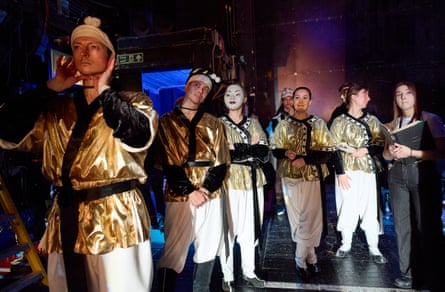
-
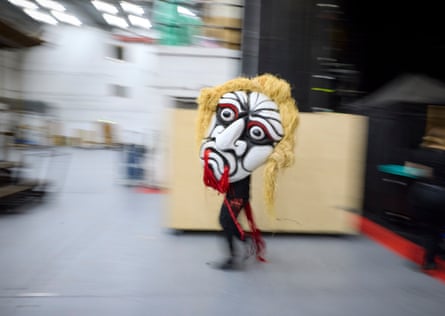
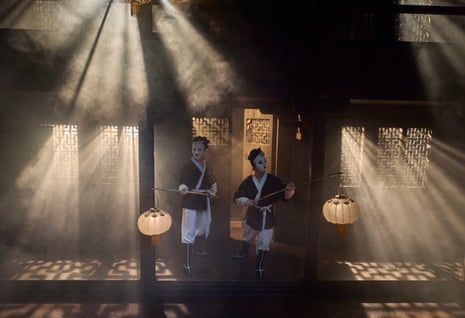
Dancers waiting in the wings.
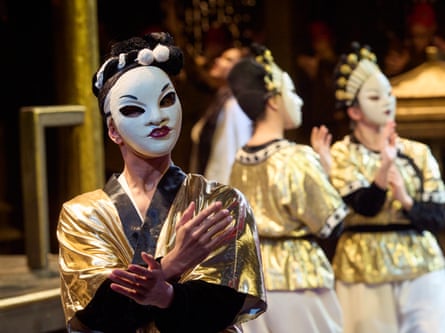
The fantasy version of Peking might be fairyland but that didn’t stop the People’s Republic of China banning it until 1998 because it was felt the opera portrayed China unfavourably.
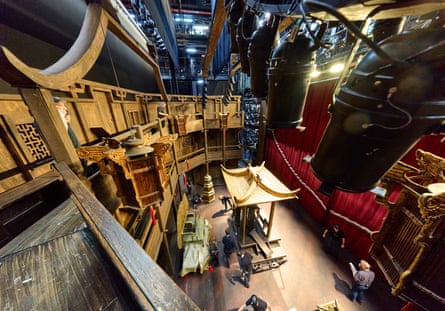
-
Backstage during rehearsals for Turandot at the Royal Opera House.
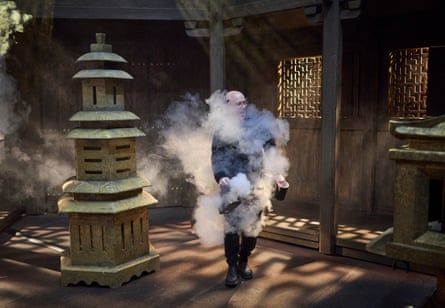
-
A member of the stage production staff spreads dry ice around the stage area before the start of Act three.
Puccini never travelled to China (or Japan – where Madama Butterfly is set) but he fell under the oriental spell that swept the west in the late 19th century, notes Jonathan Burton in a programme essay. “Following the opening up of the far east to commercial, diplomatic and cultural contacts in the mid-19th century, Europe and America became obsessed with all things emanating from the ‘mysterious east’. Debussy and Ravel heard Javanese gamelans at the Paris Exposition of 1889 and incorporated the sounds into their music, Van Gogh and Degas discovered the woodcuts of Hokusai and Hiroshige, Gilbert and Sullivan wrote The Mikado to coincide with a Japanese exhibition in London in 1885, and in drawing rooms bedecked with Japanese prints, Chinese screens and bamboo wallpaper, western hostesses in silk kimonos presided over jasmine tea and games of mah-jongg.”
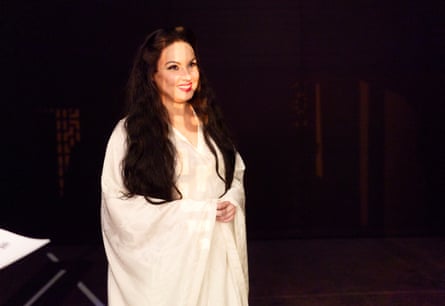
-
Anna Netrebko as Princess Turandot, waits backstage for the curtain call.
-
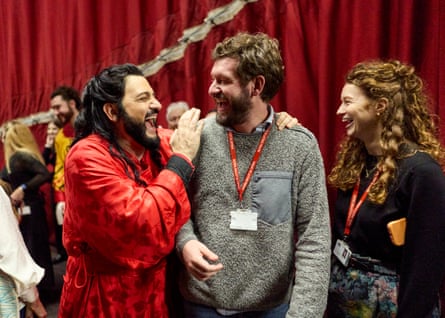
Yusif Eyvazov (Calaf) embraces revival director Jack Furness after the show.
“Puccini’s unfinished opera is itself an enigma that resists decoding,” says Jack Furness, who has directed the past four revivals of Șerban’s production. “In this staging … each musical gesture of the score is reflected onstage with overt theatricality, imagination and flair, drawing on a range of world-theatre traditions. In recent revivals we have emphasised the deep links of both the story and production to the Italian commedia dell’arte. And Kate Flatt’s choreography, which ritualises the drama and controls the flow of time, never fails to take the breath away.”