3 months ago
250
3 months ago
250
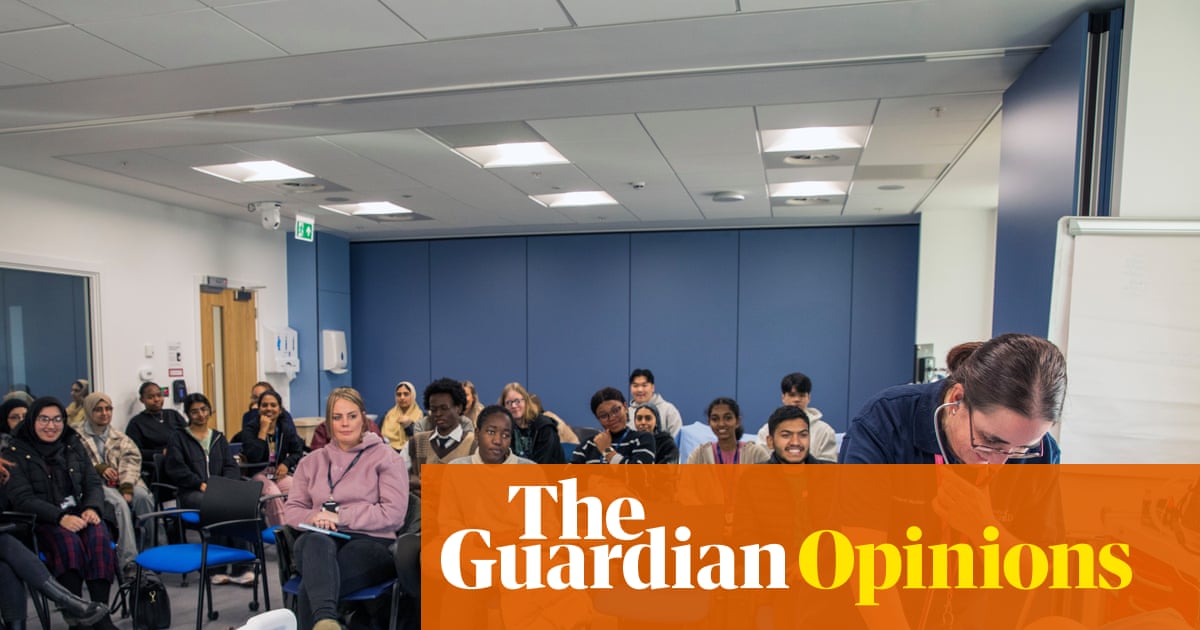
When I mentioned to colleagues in the NHS that I was helping with admissions interviews for medical students, several responded with the same wry smile and weary shrug: “Do they know what they’re getting into?” Anyone working with the health service over the past few decades has seen the job conditions get tougher, salaries stagnate and idealism erode within a crumbling system. Brexit, Covid, austerity and the rise in the cost of living haven’t helped.
From the students’ perspectives, they’ve gone through a lot to get here too. Not just the usual high-level academic performance and résumé-building either. This is a group who dealt with school closures and lockdowns during impressionable years, many come from crowded schools with little support and coaching, and yet they’ve found a way to persevere.
Having spent years teaching in medical schools and talking to students, my main feeling is hope. They’re smart, respectful and polite, with interesting backgrounds and ideas. Rather than being put off by the pandemic, some have been drawn to medicine because of the key role of the NHS during those difficult years, and remember joining the Thursday “clap for carers” and putting rainbow signs in their windows at home. Quite a few are keen to get into public health research and want to combine clinical and academic careers.
These are young people who could walk into finance, tech, consulting, influencing … careers where their intelligence and work ethic would be rewarded with salaries unthinkable in medical pay packets. They could choose a different life. But they have chosen medicine.
What lies ahead isn’t pretty: night shifts, weekends on-call and a future of working in intense environments. This could be in A&E or surgery, where treatment is literally about life and death. Or working in a GP practice where they’ll meet patient after patient where the suffering isn’t only medical, but also social – financial precarity, loneliness, bad housing – and they’ll be expected to find a solution. As Covid showed us, it could be working through a pandemic and watching your colleagues get sick and die (sometimes because of inappropriate PPE), or burn out and walk away from medicine.
And don’t even mention the pay: after all those years of training, pay starts at £18.62/hour in England, although with overtime over nights and weekends this can go up to £20-30/hour. Yes this is a good wage, but is it in line with the qualifications, responsibilities and expertise the job requires? They used to be officially called “junior doctors”, but the newly introduced title “resident doctor” is more appropriate given they’re often the first point of contact for sick patients and have independent clinical responsibilities. The allocation system for resident doctors means that they can’t commit to living in a specific city or location: they can note their preferences but could end up being placed in hospitals hundreds of miles away, depending on the match between request and need.
Medicine used to, at least, be a stable profession with a job at the end of the long training road. But what awaits many graduates is uncertainty, whether it’s training bottlenecks, chaotic rotas or even unemployment, given funding cuts. The UK already has fewer doctors per capita than many comparable nations and struggles to retain the ones it has, given more attractive careers abroad, for example in Australia or Ireland. As a GP colleague said to me: “When many GP registrars finish their full training, there are no jobs for them, because of the lack of investment in general practice. So, they are forced to locum [ad hoc work] and many are leaving the country.”
I have mixed emotions thinking about the past week. Sitting across from these candidates, who are articulate, values-driven and hard-working, I felt enormous hope. They are exactly the sort of people you’d want making decisions in a crisis, breaking difficult news to a family, or calmly helping someone put together a life that has gone physically or emotionally off track.
But I also felt sadness, because I know that the system they are stepping into may not treat them with the same care they plan to offer others. We need to ask: if we expect these young doctors to invest their lives into the NHS and the values underpinning publicly provided universal healthcare, shouldn’t we make sure this commitment isn’t betrayed? That at the very least there’s a job at the end of the long road? And that they are not wasted in a system that undervalues their training and increasingly replaces them with less-trained practitioners simply to fill staffing gaps?
after newsletter promotion
Medicine is a profession grounded in intelligence, judgment, empathy and knowledge built over years. It deserves respect and resources. Perhaps these young people will live through a radically different NHS. Perhaps not. What we can do is ensure that the next generation feels valued and doesn’t become disenchanted so badly that the hope these young people emanate at the start of their journey transforms into cynicism.
-
Prof Devi Sridhar is chair of global public health at the University of Edinburgh