3 months ago
157
3 months ago
157
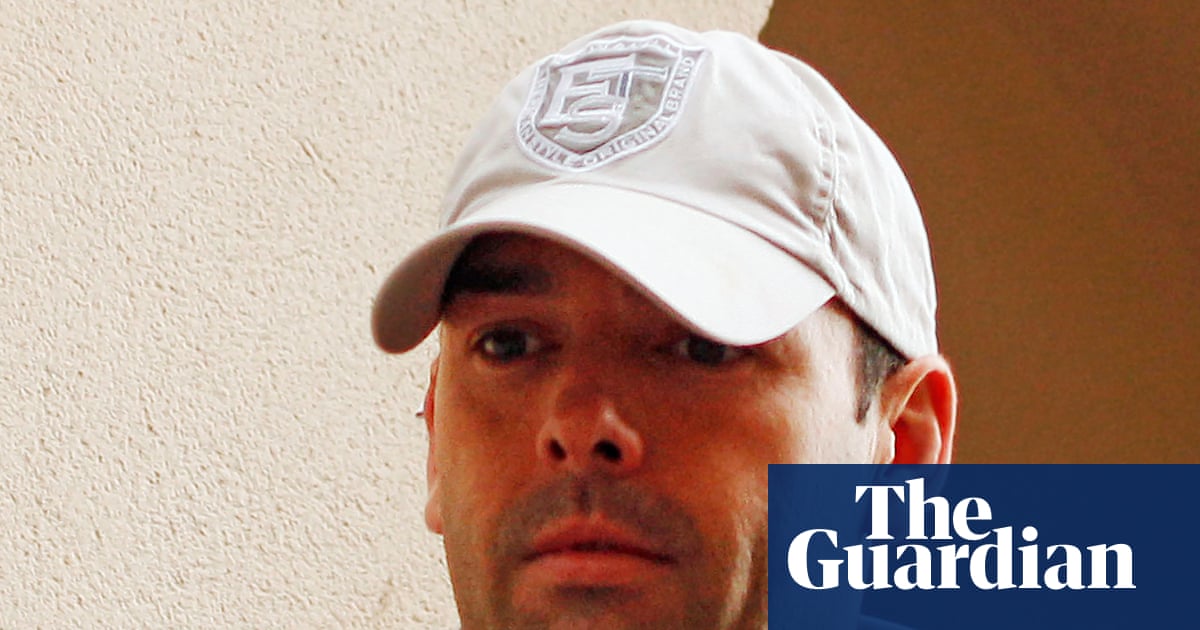
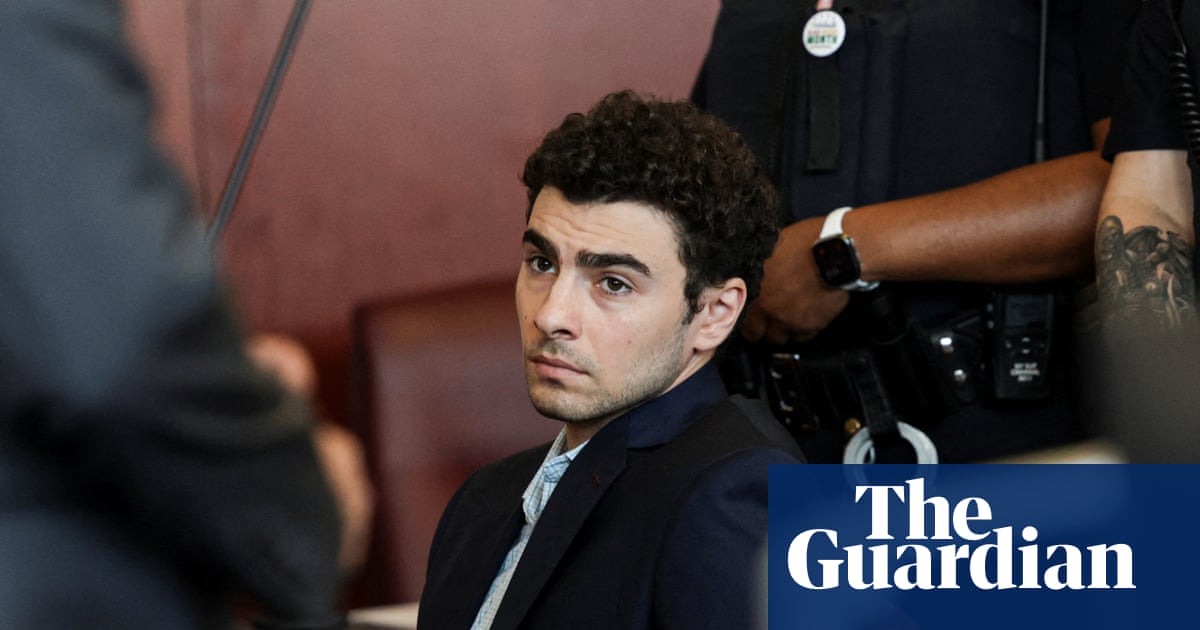
Ben Roberts-Smith has been granted bail under strict conditions while he awaits a potential trial on alleged war crimes.
The Victoria Cross recipient, once Australia’s most lionised soldier, faces five charges of war crime murder over allegations he killed unarmed civilians during his service with the Australian SAS in Afghanistan.
Each charge carries a potential life sentence in prison. Roberts-Smith has not yet entered a plea but has always strenuously denied any wrongdoing.
In Sydney’s Downing Centre local court on Friday, Judge Greg Grogin said the risk Roberts-Smith would flee Australia to avoid court, or that he would interfere with witnesses or evidence, could be mitigated by strict reporting requirements.
Roberts-Smith will be released on bail under a requirement that he report to a police station three times a week. He must only use a single phone and computer, to which police will have access.
The court demanded a $250,000 surety, which would be forfeited if Roberts-Smith failed to attend court, or in any way breached his bail. Roberts-Smith will be allowed to travel to Sydney and to Perth for legal or medical reasons.
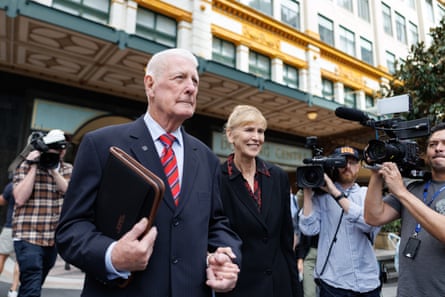
The court earlier heard Roberts-Smith’s father, Len, a former judge, had offered to provide a surety. Len and Roberts-Smith’s mother, Sue, were seated in the front row of court.
Grogin warned that Roberts-Smith would undoubtedly be “under surveillance” while on bail, and if he breached his conditions “he would once again find himself donned in green”, a reference to the prison-issued uniform Roberts-Smith wore before court on Friday.
“I am satisfied that the proposed conditions ameliorate the unacceptable risk of flight – that is failing to apply – and interfering with witnesses or evidence, and I will be granting bail.”
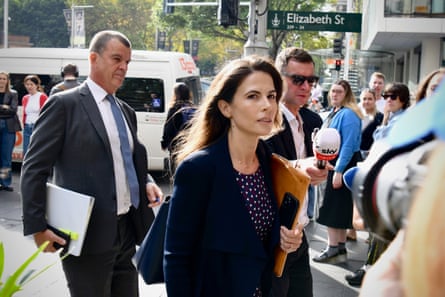
Grogin said Roberts-Smith’s access to the national security information he required to defend himself against five allegations of murder would be unfairly compromised by being in custody.
It would probably be years before the case came to court, Grogin said.
“Mr Roberts-Smith will have to face a trial, with a jury, with a unanimous verdict, with a finding of proof beyond reasonable doubt. There can be no way anyone today can predict what the outcome of that trial will be, or when it will, or in fact if it will be.”
Roberts-Smith appeared by video link from Silverwater remand prison, where has spent the past 10 nights since his arrest on 7 April.
Judge Grogin impressed upon Roberts-Smith the need to strictly comply with all of his bail conditions.
Earlier in the hearing, the court heard Roberts-Smith was planning to move overseas – and had not told authorities investigating him – when he was arrested at Sydney airport last week.
“The accused was on the cusp of attempting to relocate overseas, and a decision had been made to withhold that information from authorities with whom he was in contact,” Simon Buchen SC, for the prosecution, told the court.
Opposing bail, Buchen argued there were two significant risks if Roberts-Smith was released from remand ahead of his trial: that Roberts-Smith would attempt to flee to avoid appearing in court, and that he would attempt to interfere with witnesses and evidence.
“The applicant had made advanced plans to relocate overseas. Consideration was being given to moving to various destinations overseas … And importantly, a decision was made to withhold that information from authorities.”
Buchen said evidence before the court in the defamation case had demonstrated Roberts-Smith possessed “a willingness and a capacity … to subvert court processes” in order to conceal evidence, including the use of burner phones, intimidating witnesses, and collusion.
Buchen said, given the nature of the allegations detailed in the charges, the consequences of a conviction were of “profound gravity”.
But lawyers for Roberts-Smith argued that there were exceptional circumstances surrounding this criminal case.
Slade Howell, representing Roberts-Smith, argued his case was unique and would be subject to significant delays “because of the size and complexity of the material”, and because of national security concerns.
“The prosecution of these allegations will take many many years, and will have many twists and turns.”
Howell argued Roberts-Smith would not be able to access national security information, nor prepare his defence with his legal team, from prison.
“Fundamentally, the fairness of the proceedings will be compromised by the applicant having to defend himself from remand custody.
“There will be no workable solution to this … to access the evidence, to speak openly with his lawyers. He must be at liberty on bail.”
Howell also flagged that Roberts-Smith might, in future, make an argument before court that, because of his notoriety, he cannot get a fair trial.
“It is very likely, in due course, that a superior court or courts may need to consider whether the extraordinary pre-trial publicity surrounding these allegations, publicity that has persisted for many years, and still persists, means that a fair trial of the allegations is simply not possible.”
Howell said there was significant disagreement over the facts of the allegations, and a very real chance that the charges could not be proven.
“The allegations all involve highly contested matters of fact. They concern events which took place overseas in a war zone between 14 and 17 years ago. There have been different things said by different people at different times over many years.”
For any conviction, a jury would need to reach a unanimous verdict, Howell said, as majority decisions are not permitted in commonwealth trials.
The five charges against Roberts-Smith relate to three incidents during his deployments with the SAS to Australia’s two-decade, ultimately unsuccessful mission to Afghanistan.
On 12 April 2009, Roberts-Smith is alleged to have been complicit in the deaths of two men, named Mohammed Essa and Ahmadullah, at a village called Kakarak in Uruzgan province in southern Afghanistan.
Roberts-Smith’s criminal court attendance notice alleges he “aided, abetted, counselled or procured another person, [an Australian soldier anonymised as] Person 4, to commit an offence … in that Person 4 intentionally caused the death of … Mohammed Essa”.
The notice also alleges Roberts-Smith “intentionally caused the death of a person identified as Ahmadullah, who was not taking an active part in hostilities”.
The third charge relates to the alleged murder of a farmer called Ali Jan in the village of Darwan in September 2012. Ali Jan was “not taking an active part in hostilities”, the court attendance notice states.
The final two charges, also of war crime murder, relate to the alleged murder of two prisoners during a mission in Syahchow in October 2012.
Roberts-Smith is alleged, in his court attendance notice, to have “jointly committed an offence with [an Australian soldier anonymised as] Person 68, in that they intentionally caused the death of person identified as ‘Person Under Control 1’ … who was not taking an active part in hostilities”.
He is also alleged to have “aided, abetted, counselled or procured another person, [an Australian soldier anonymised as] Person 66, to commit an offence … in that Person 66 intentionally caused the death of person identified as ‘Person Under Control 2’ … who was not taking an active part in hostilities.”
Roberts-Smith, a former SAS corporal, was awarded the Victoria Cross for “most conspicuous gallantry” during the battle of Tizak in 2010.
He was named father of the year and served as chair of the government’s Australia Day council. He has enjoyed high-profile and sustained support from some of Australia’s most powerful and richest people, including Kerry Stokes and Gina Rinehart.
However, he comprehensively lost a defamation action he brought against three newspapers which published allegations he had murdered civilians and bullied his comrades. Federal court judge Anthony Besanko found it proven – to the civil standard of the balance of probabilities, which is lower than the criminal standard of beyond reasonable doubt – that there was substantial truth to the published allegations that Roberts-Smith was a war criminal who had committed four murders of unarmed civilians in Afghanistan, and had bullied and intimidated his colleagues. Roberts-Smith appealed against the findings to the full federal court and the high court, but was unsuccessful on both occasions.
Roberts-Smith is the second SAS soldier charged with war crimes over their actions in Afghanistan. Former trooper Oliver Schulz was charged in early 2023 with murdering Afghan father-of-two Dad Mohammad in an alleged war crime in 2012.